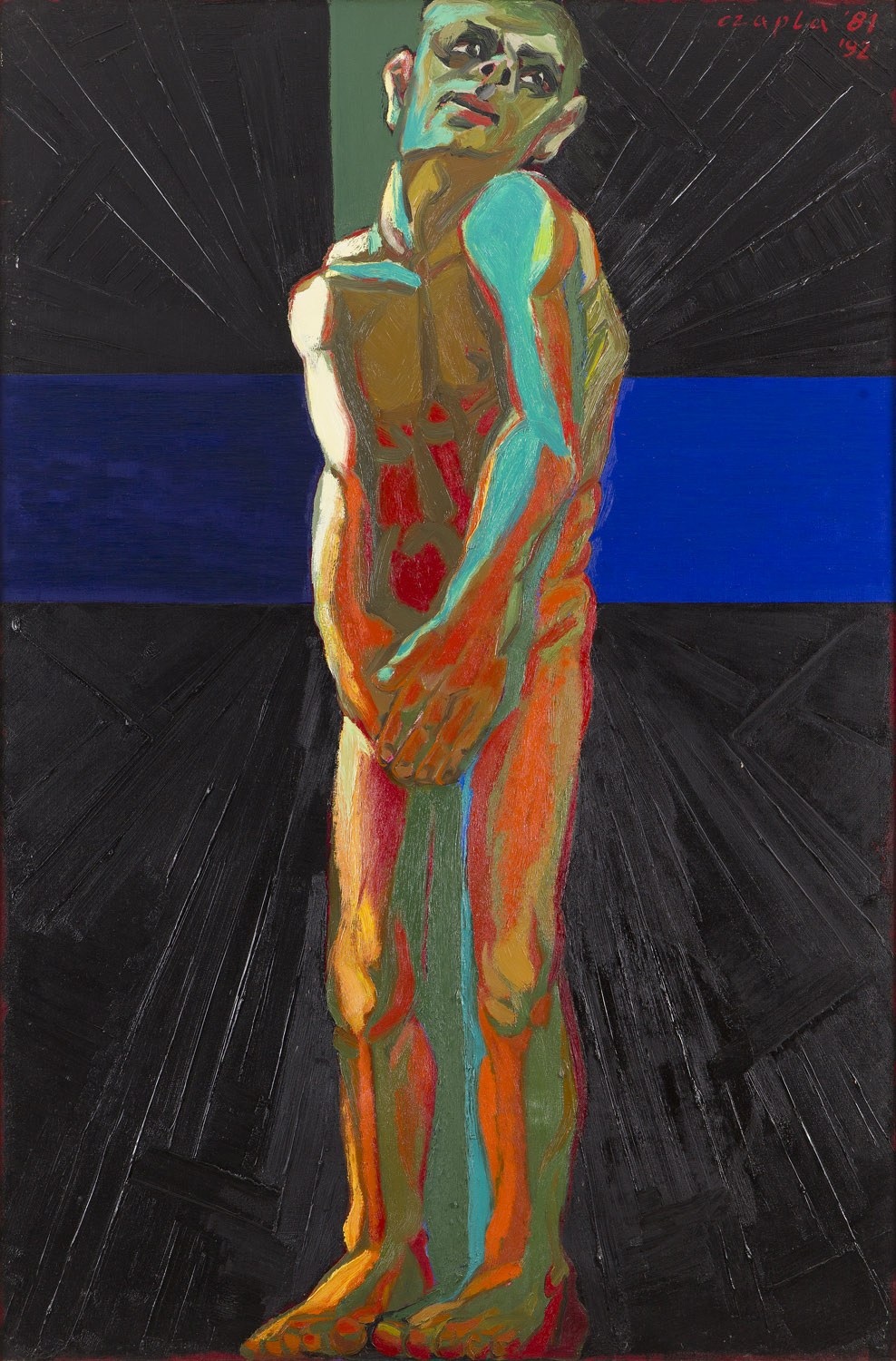
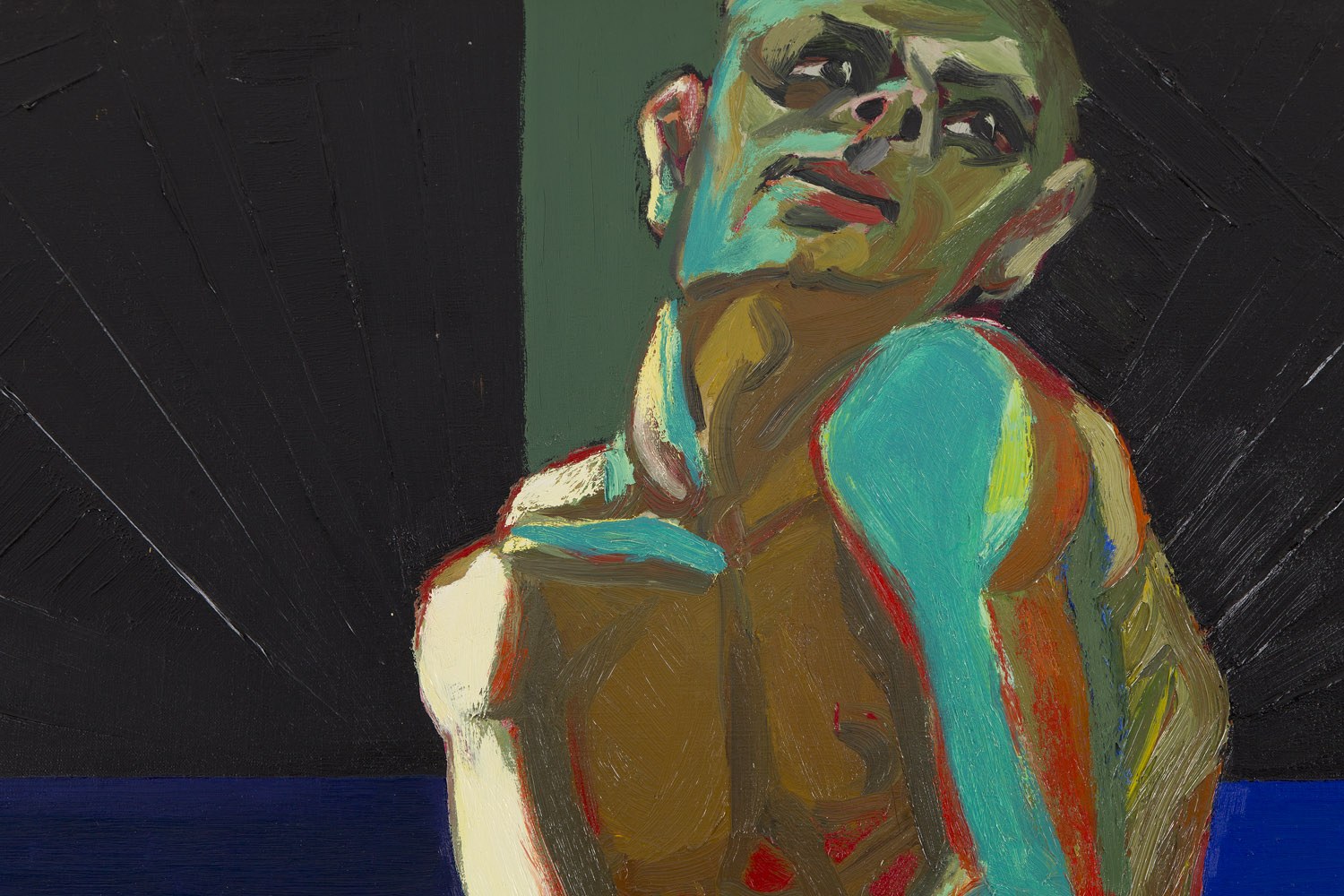
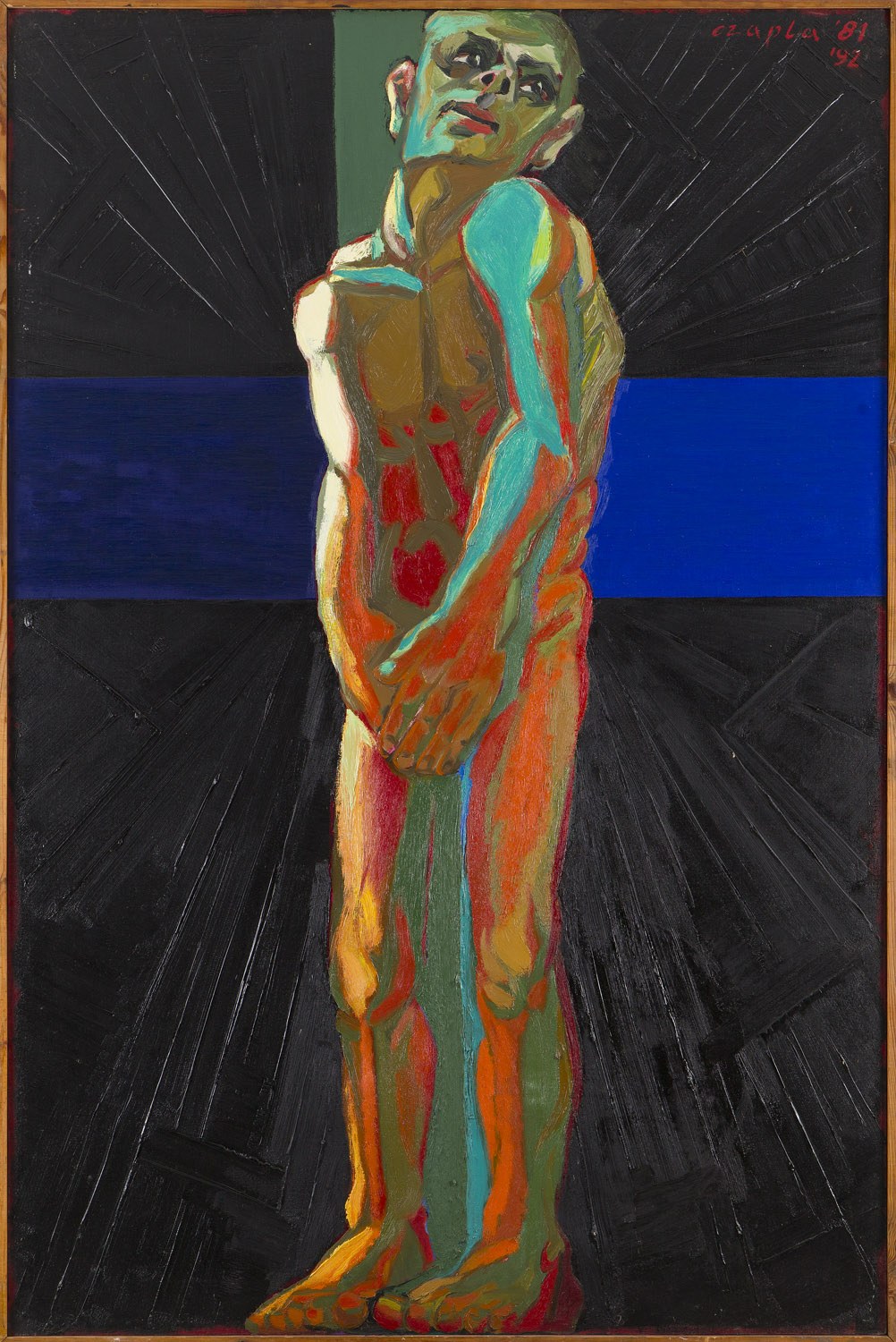
Dimensions: 180 x 120 cm
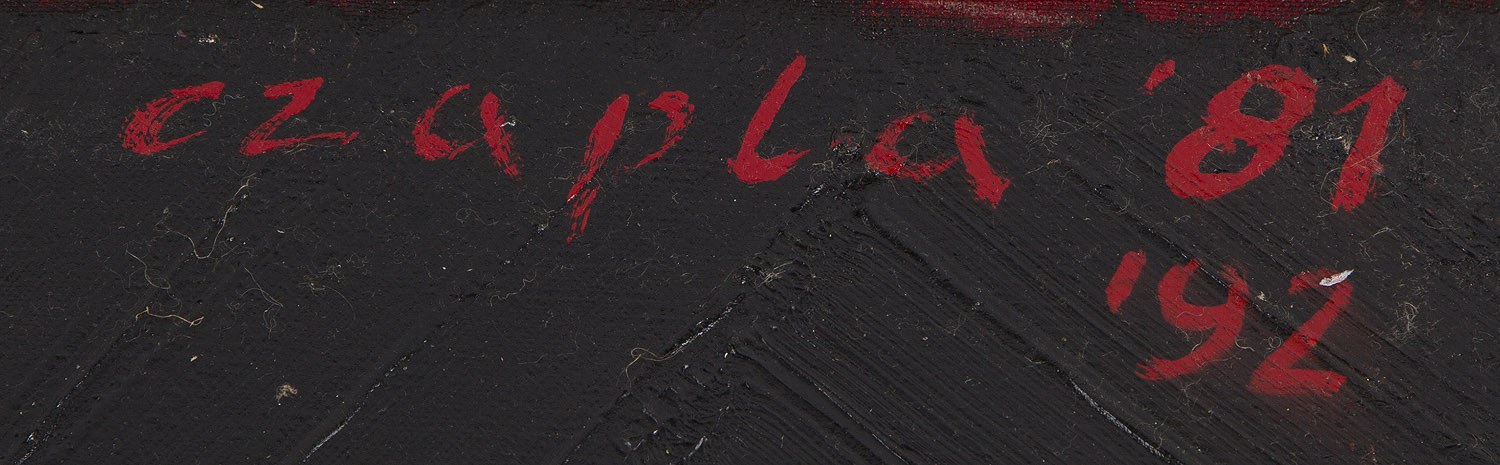
Signed and dated lower left: 'czapla '81 | '92'
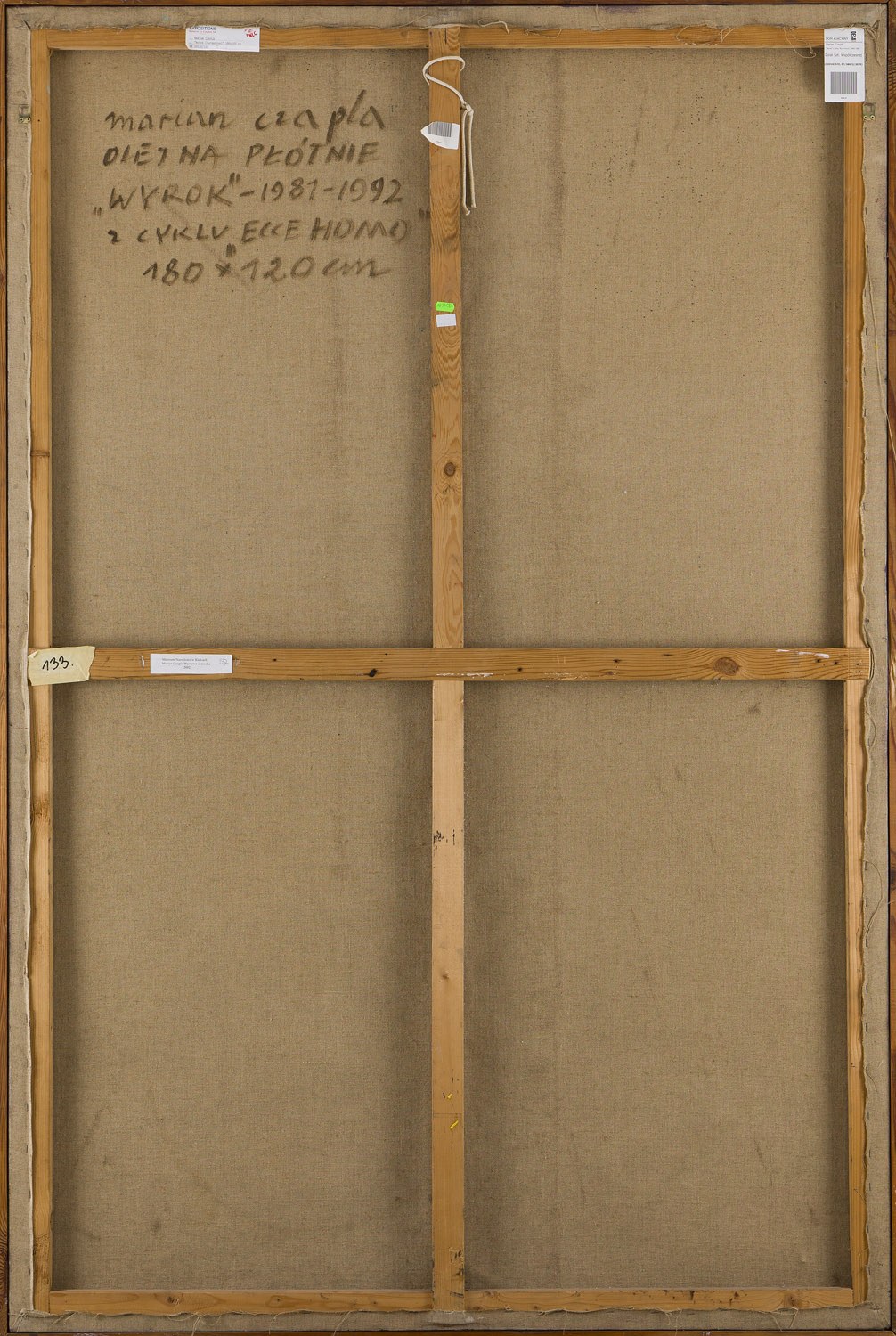
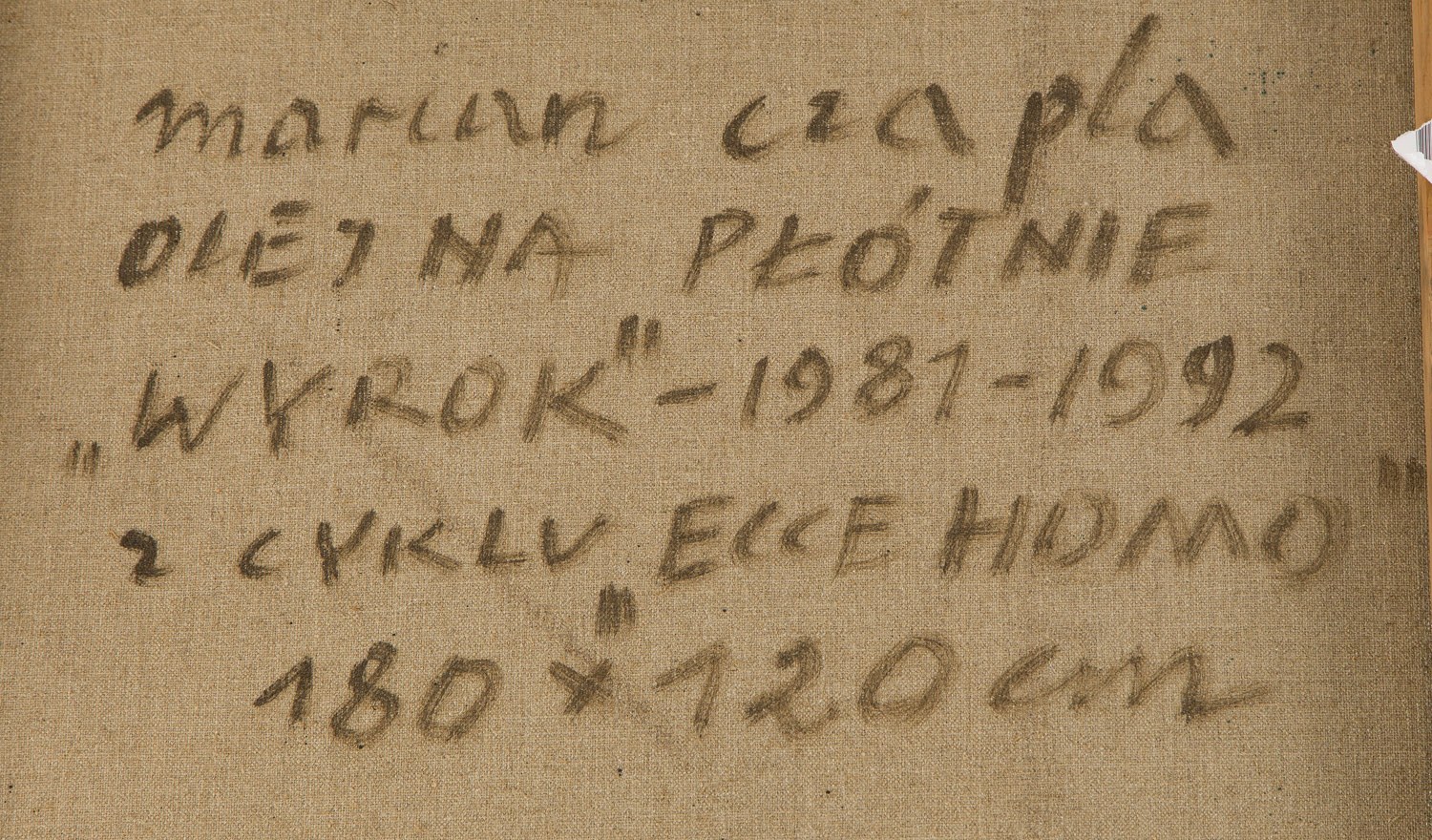
signed, dated, and inscribed on the reverse: 'Marian Czapla | OIL ON CANVAS | "WYROK" - 1981 - 1992 | FROM THE "ECCE HOMO" SERIES | 180 x 120 cm'
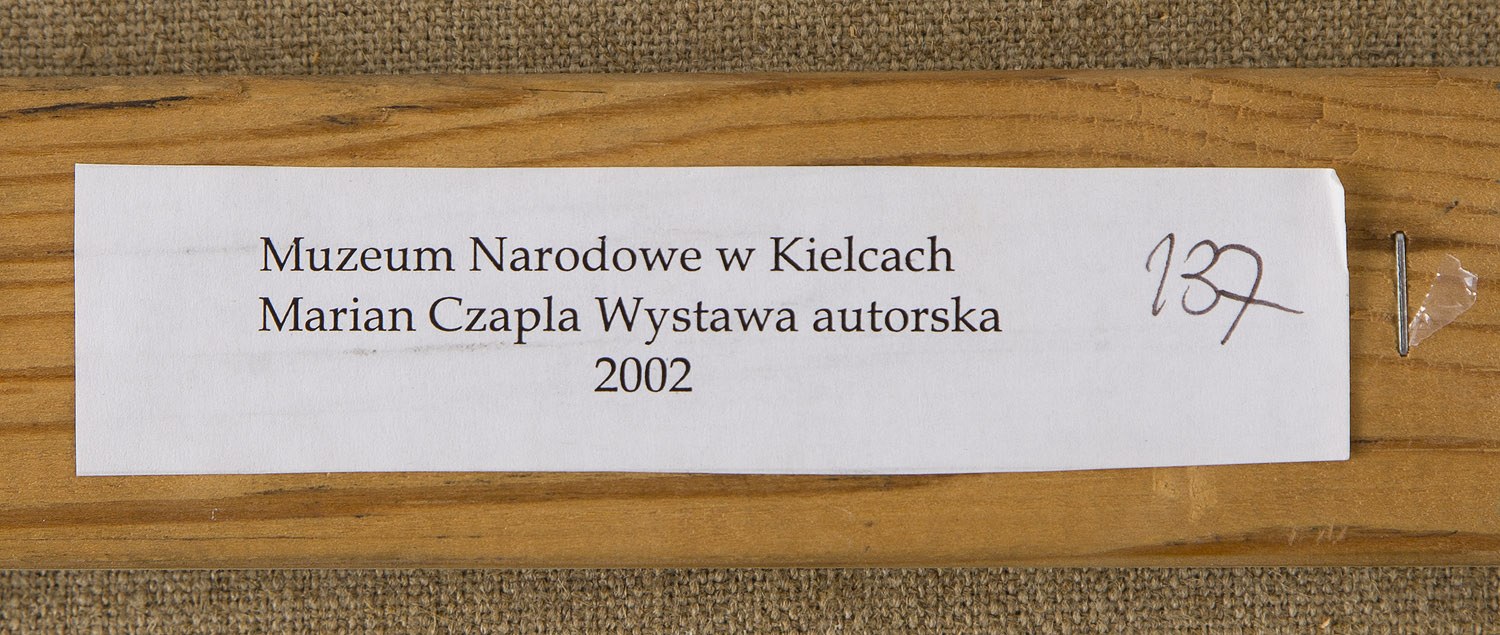
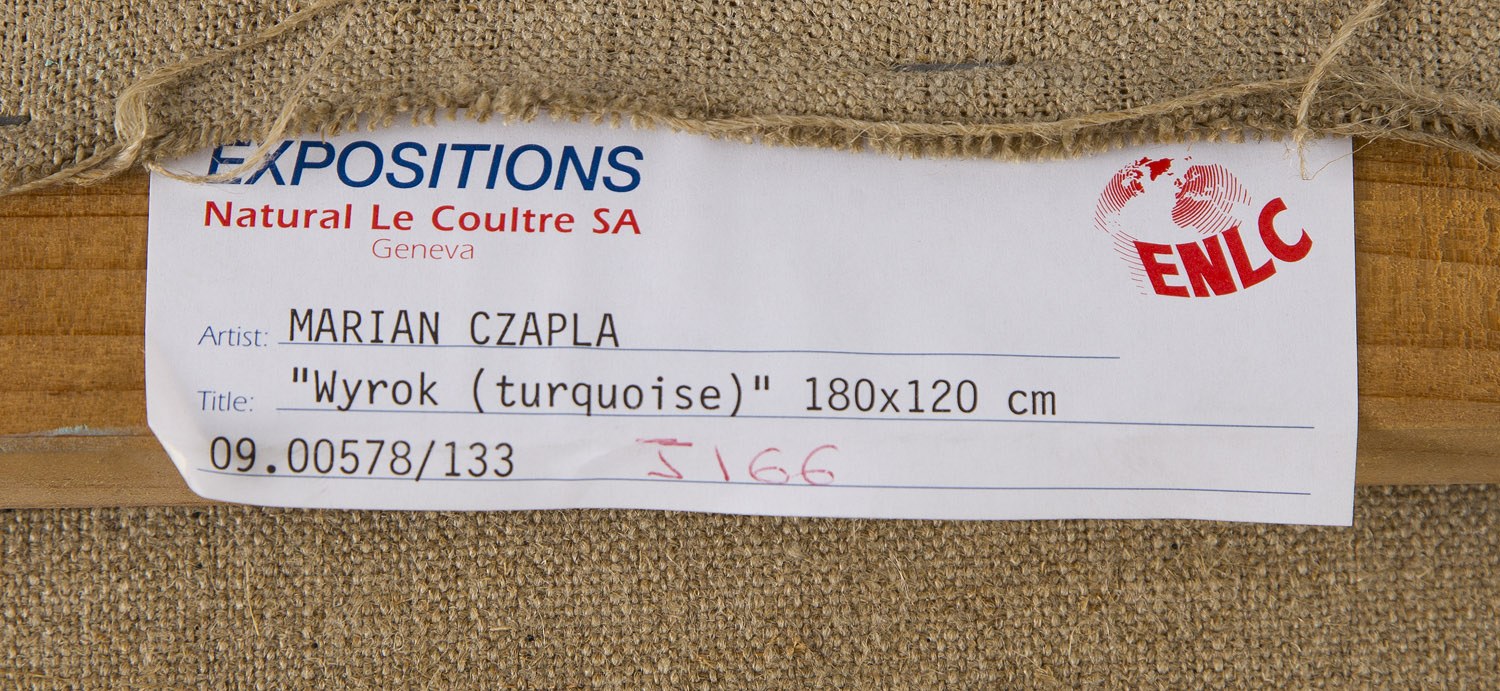
on the reverse: a paper export label, a label with the number '133', and a label from Marian Czapla’s 2002 exhibition at the National Museum in Kielce, numbered 137
Provenance
Private collection, Poland
Exhibited
“Marian Czapla. On the 30th Anniversary of His Creative Work,” National Museum, Kielce, May 23–August 12, 2002
“Marian Czapla: On the 30th Anniversary of His Creative Work,” Xawery Dunikowski Królikarnia Sculpture Museum, a branch of the National Museum, Warsaw, August–September 2002
“Marian Czapla. Marking 30 Years of Creative Work,” National Museum of the Przemyśl Region, Municipal Cultural Center in Przemyśl—Kazimierzowski Castle Gallery, Przemyśl, October 2002
Bibliography
Marian Czapla. On the 30th Anniversary of His Creative Work, exhibition catalog, National Museum in Kielce, ed. Marzena Maćkowska et al., Kielce–Warsaw 2002, cat. no. 71, p. 42 (list), 86, 145 (ill.)
Biography
He studied at the Academy of Fine Arts in Warsaw, earning his diploma in Prof. Stefan Gierowski’s studio in 1972. He also studied graphic arts in Prof. Halina Chrostowska’s studio. Co-founder of the “Sympleks S 4” group. Following in the footsteps of his professor, Stefan Gierowski—a classic figure of Polish geometric abstraction—he began his artistic career with “warm” abstract works bearing metaphorical titles. He worked in series—the abstract works he created in the 1970s were grouped into the series “Man in Space,” “The Mystery of the Four-Pointed Figure,” and “Romantic.” He practiced expressive painting, thematically devoted to human suffering and drawing on religious experiences. He has had dozens of solo and group exhibitions in Poland and abroad. His works are held in museum and private collections in Poland, as well as in Italy, France, Finland, England, Switzerland, and the United States. From 1972 onward, he served as a faculty member at his alma mater—until his death in 2016, he led the painting studio at the Academy of Fine Arts in Warsaw.