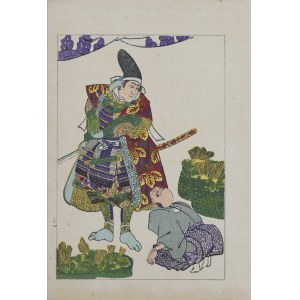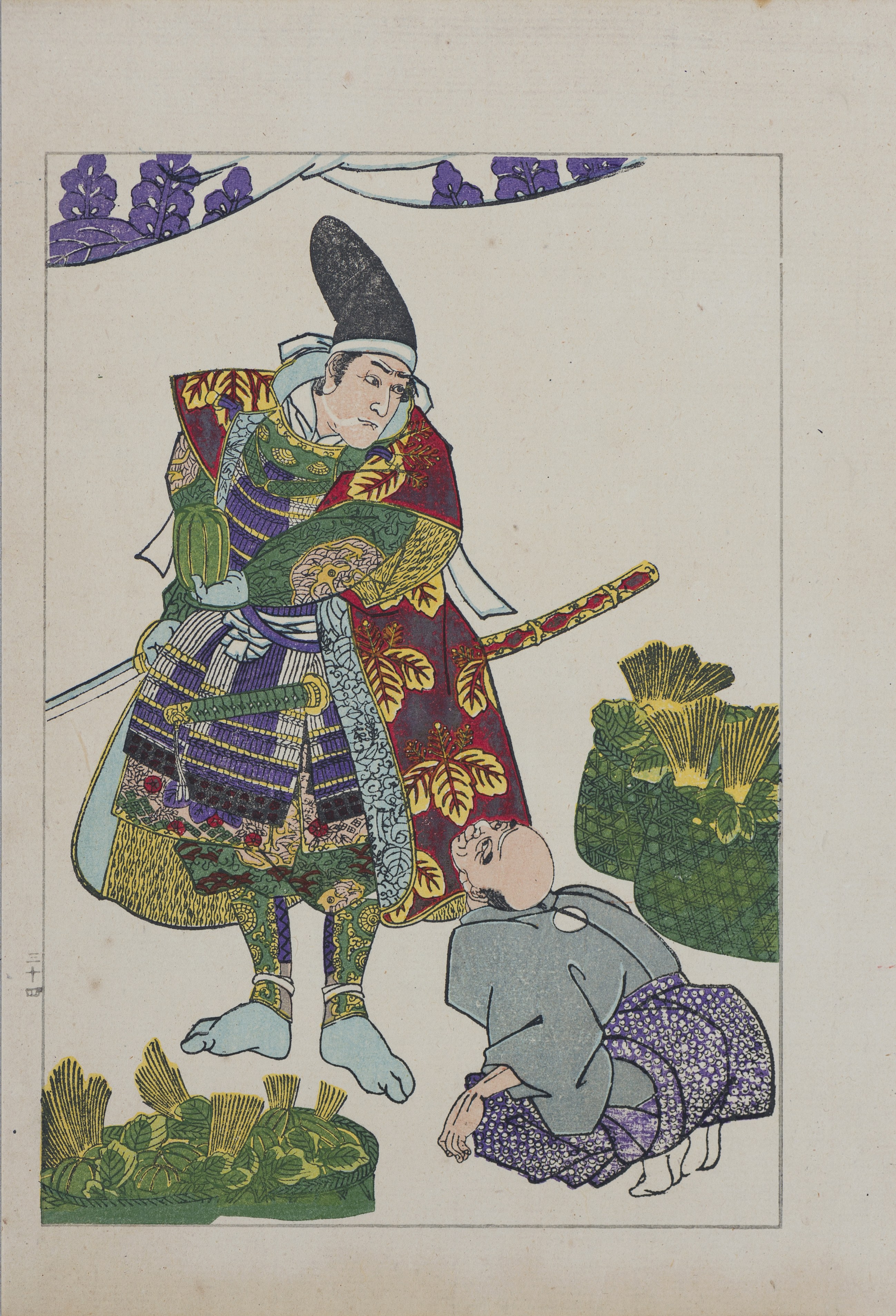
Color woodcut, ink, paper, 24.5 x 16 cm (paper size)
The woodcut is from the series "From the Lives of the Heroes of Taiheiki - A Novel of Great Peace," designed by Utagawa Kuniyoshi between 1848 and 1849, published by Yoshikawa Kobunkan in 1917. The dramatic woodcuts of this series show various leaders engaged in battles or posing heroically in all their military glory. The series is a testament to the artist's mastery in conveying the prowess and heroism of Japan's legendary warriors. It depicts iconic figures from Japanese history and folklore who played a key role in maintaining peace and order in times of turmoil. Through dynamic compositions and vibrant colors, Kuniyoshi has brought to life the bravery and unwavering loyalty of these heroes, immortalizing their deeds for future generations. From mythical samurai to historical generals, each work in the series is a visual tribute to the indomitable spirit of the warriors who contributed to Japan's stability and prosperity in an era of great upheaval.
Nakaura Sarukichiro Hisayoshi (Hideyoshi Toyotomi) - Japanese political and military leader of the Azuchi-Momoyama period. One of the most important figures in the country's history. The second of the "three unifiers of the state" - after Nobunaga Oda and before Ieyasu Tokugawa. He changed names and surnames many times during his life.
Utagawa Kuniyoshi ( 1798 - 1861) was one of the last great masters of Japanese ukiyo-e woodcut. Kuniyoshi's range of subjects covered many genres: landscapes, warriors, women, kabuki actors, cats and mythical animals. He is known for his depictions of battles of legendary samurai heroes. Kuniyoshi was born the son of a silk dyer and was originally named Yoshisaburō. He helped his father in business as a pattern designer, and some researchers suggest that this experience influenced his rich use of color and textile patterns in prints. Yoshisaburō proved his drawing talents at the age of 12, quickly attracting the attention of the famous ukiyo-e printing master Utagawa Toyokuni. He was officially admitted to Toyokuni's studio in 1811 and became one of his main students. He remained a student until 1814, when he was given the name "Kuniyoshi" and became an independent artist. Between 1815 and 1817, he created a number of book illustrations, and also printed his own independent color prints of kabuki warriors and actors. In the 1820s. Kuniyoshi created a series of heroic triptychs, which show the first signs of an individual style. In 1827, he received his first major commission for a series of depictions of one hundred and eight heroes from the hugely popular Chinese tale Shuihu Zhuan. Despite his artistic success, Kuniyoshi faced challenges in his personal life. He was accused of producing prints critical of the Shogunate, which led to him being placed under government surveillance.