


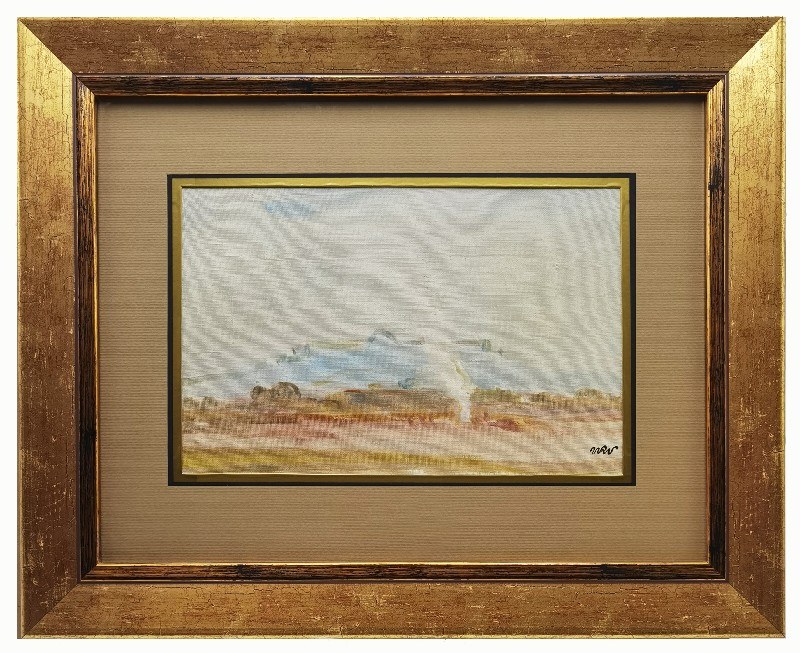
Oil, canvas; 21 x 32 cm (light frame);
Signed p. d.: WW;
on the back pasted sheet of paper with an oval stamp with an inscription around it: FROM THE COLLECTION OF WORKS BY WOJCIECH WEISS. THE ARTIST'S HOUSE with facsimile of the artist's signature in the middle; and number below: 000381.
The vast space of Krakow's Blonia emanates a melancholy mood of decline and transience. The muted colors correspond with the calming of nature before the coming winter. The shepherds have lit a bonfire to warm themselves for the last grazing cows. Puffs of smoke rise, obscuring the bastion of the fortification visible in the distance, topped by the distinctive cone of Tadeusz Kosciuszko Mound.
The offered image is an interesting document of city life in the interwar period. Today, Krakow's Błonia is treated as a recreational area. Reaching back into history, it was here, many years ago, that the parades received by Marshal Jozef Pilsudski took place, and in the not-too-distant past the solemn masses of John Paul II and Pope Francis.
In Weiss' painting, the Błonia is an agricultural area used for grazing cattle. It is worth mentioning that the artist's surviving drawings show cows grazing here, or lying on the grass chewing their food.
Looking at this painting, we feel a certain nostalgia for a world that has passed away irretrievably. Today it is difficult to even imagine the peace and quiet of an autumn bonfire amidst the hustle and bustle of urban traffic arteries. This composition can certainly be regarded as a document of a bygone era.








हाल ही में देखी गई
लॉट लिस्ट देखने के लिए कृपया लॉग इन करें
पसंदीदा
लॉट लिस्ट देखने के लिए कृपया लॉग इन करें