Dimensions: 185 x 88.5 x 48 cm
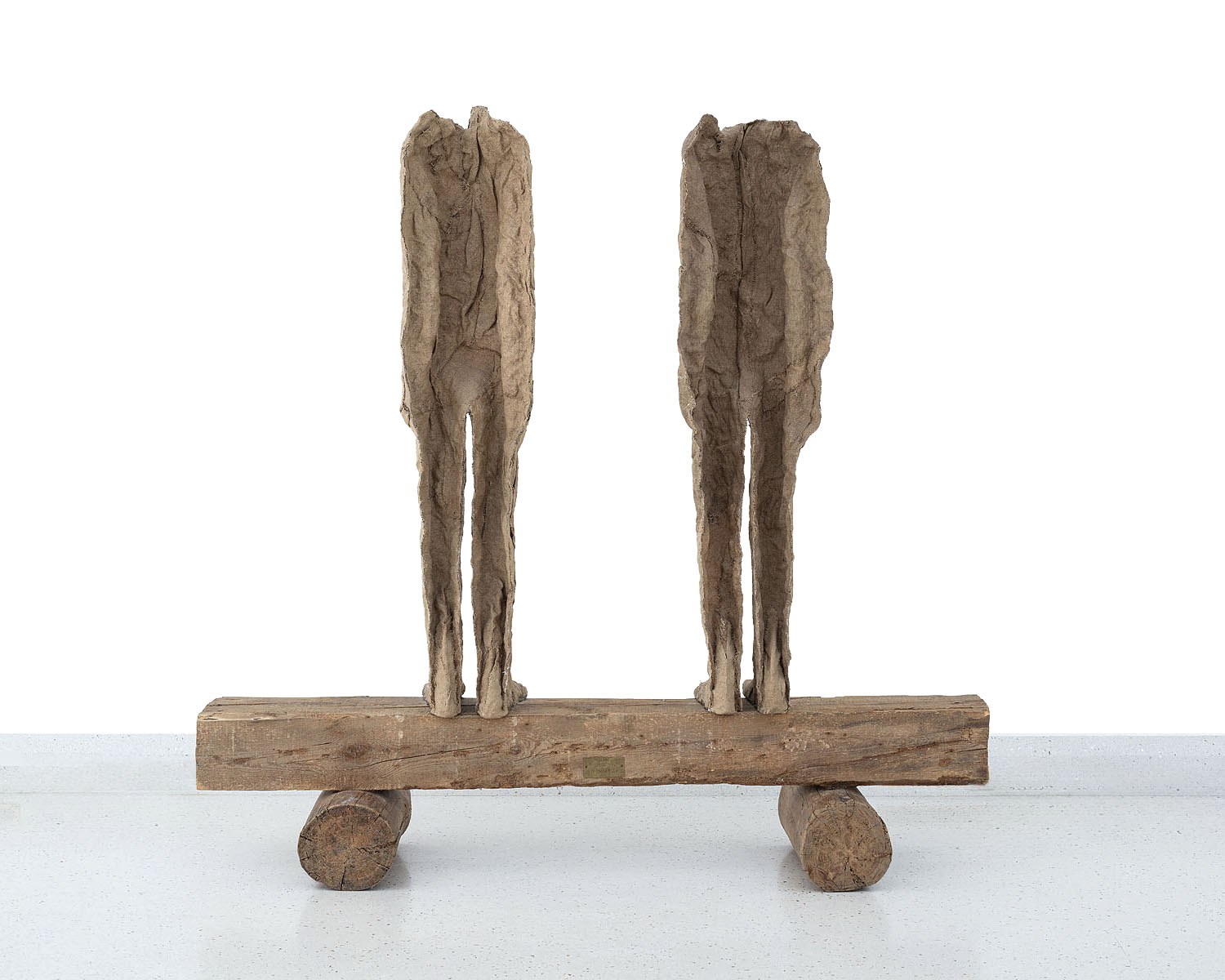
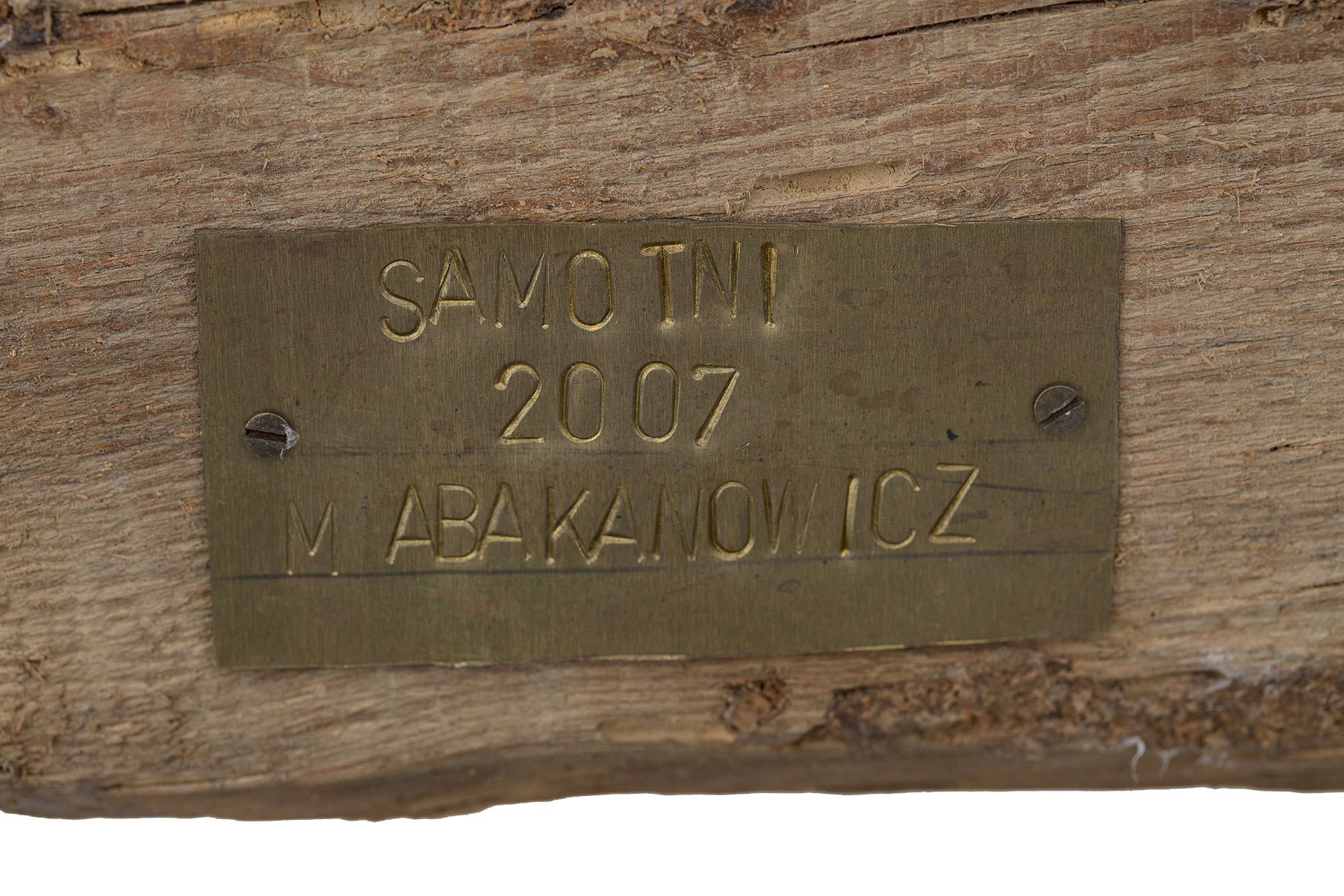
Signature: on the reverse a metal badge: SAMOTNI / 2007 / M. ABAKANOWICZ
Provenance
Poland, private collection Cracow, collection of the Starmach Gallery
Reproduced
Gola J., Magdalena Abakanowicz. Catalogue Raisonné, published by the All That Art! Foundation, item 1349, p. 721.
Literature
Gola J., Magdalena Abakanowicz. Catalogue Raisonné, published by the All That Art! Foundation, item 1349, p. 525.
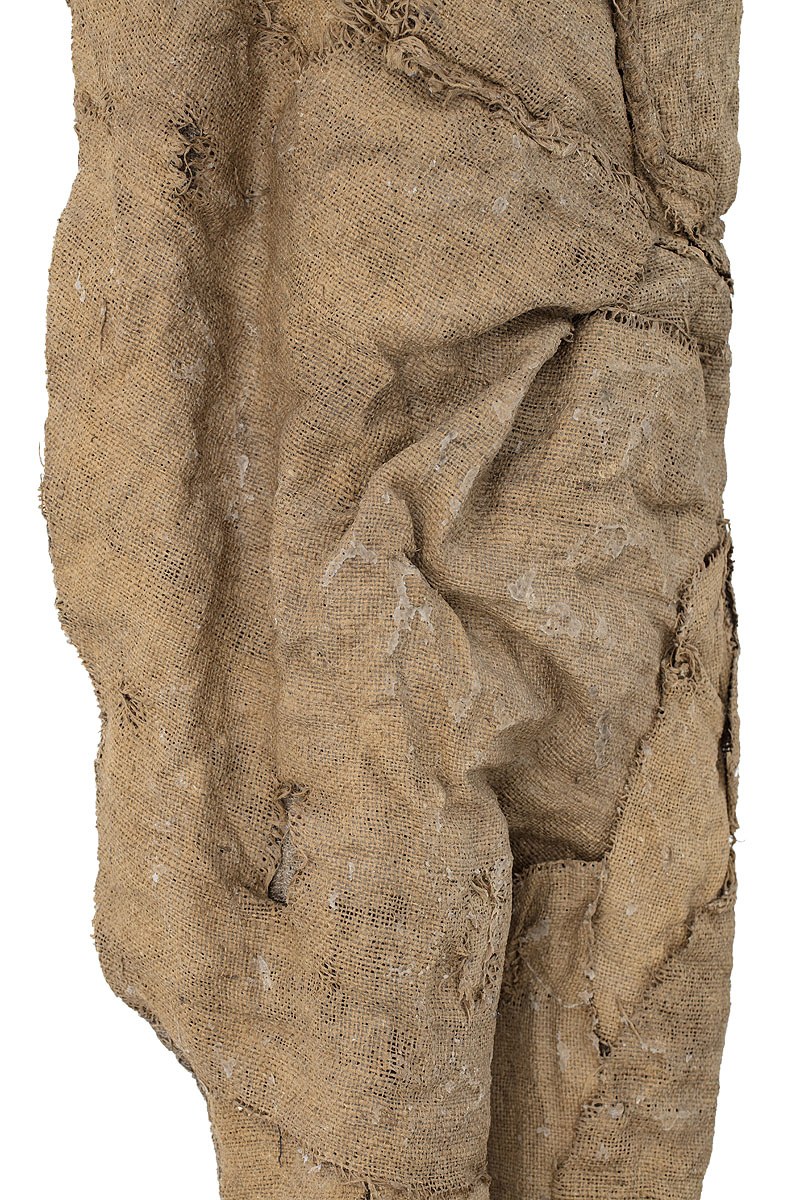
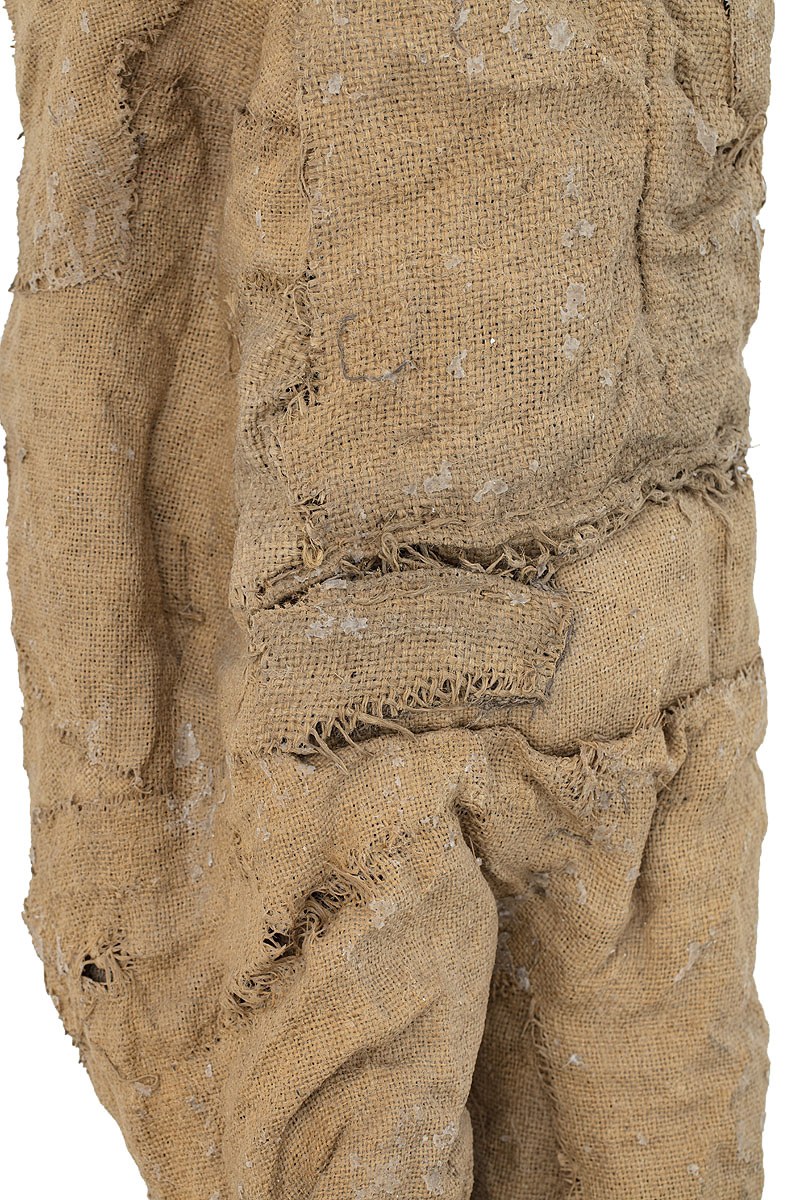
For more than half a century, Magdalena Abakanowicz created critically acclaimed, poetic sculptures about the precarious and fragile human condition, shaped by her own experiences. "What is sculpture?" - this question was posed by the artist on many occasions. In response, she stressed that sculpture, with impressive continuity, testifies to the evolving sense of reality in man and fulfills the need to express what cannot be verbalized. Through sculpture, Abakanowicz communicated what she perceived as an inexpressible, dichotomous relationship between the individual and society. The human figure, whether overt or covert, occupies a central place in her work, from her early woven fiber forms depicting ropes and organic structures, to her later expressionist human and animal figures and trees. Often depicted in groups, with surfaces resembling bark or wrinkled skin, Abakanovich's figures appear vulnerable and damaged, as if marked by their history.
The use of the series effect was among the most powerful expressive procedures that Magdalena Abakanowicz used in her large series achieving a strong impression emphases. Crowds of figures, rows of statues, multiplied mutants, body parts, objects of embryology, were created in dozens of completely complete, unique elements forming, however, in the overall view, a mass in which their individuality is lost. This paraphrase of human individuality, is one of the most important aspects of the story of the condition of modern man.
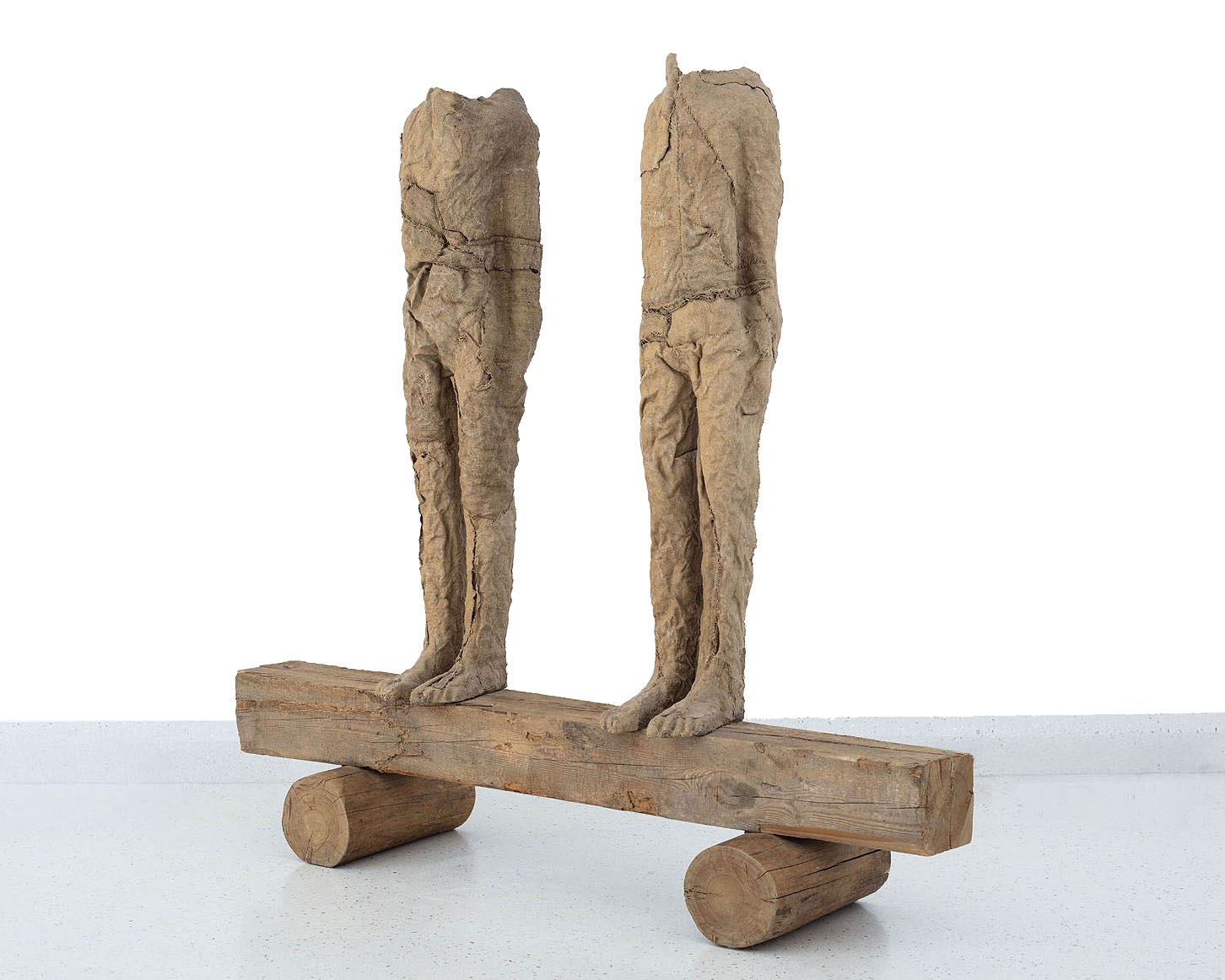
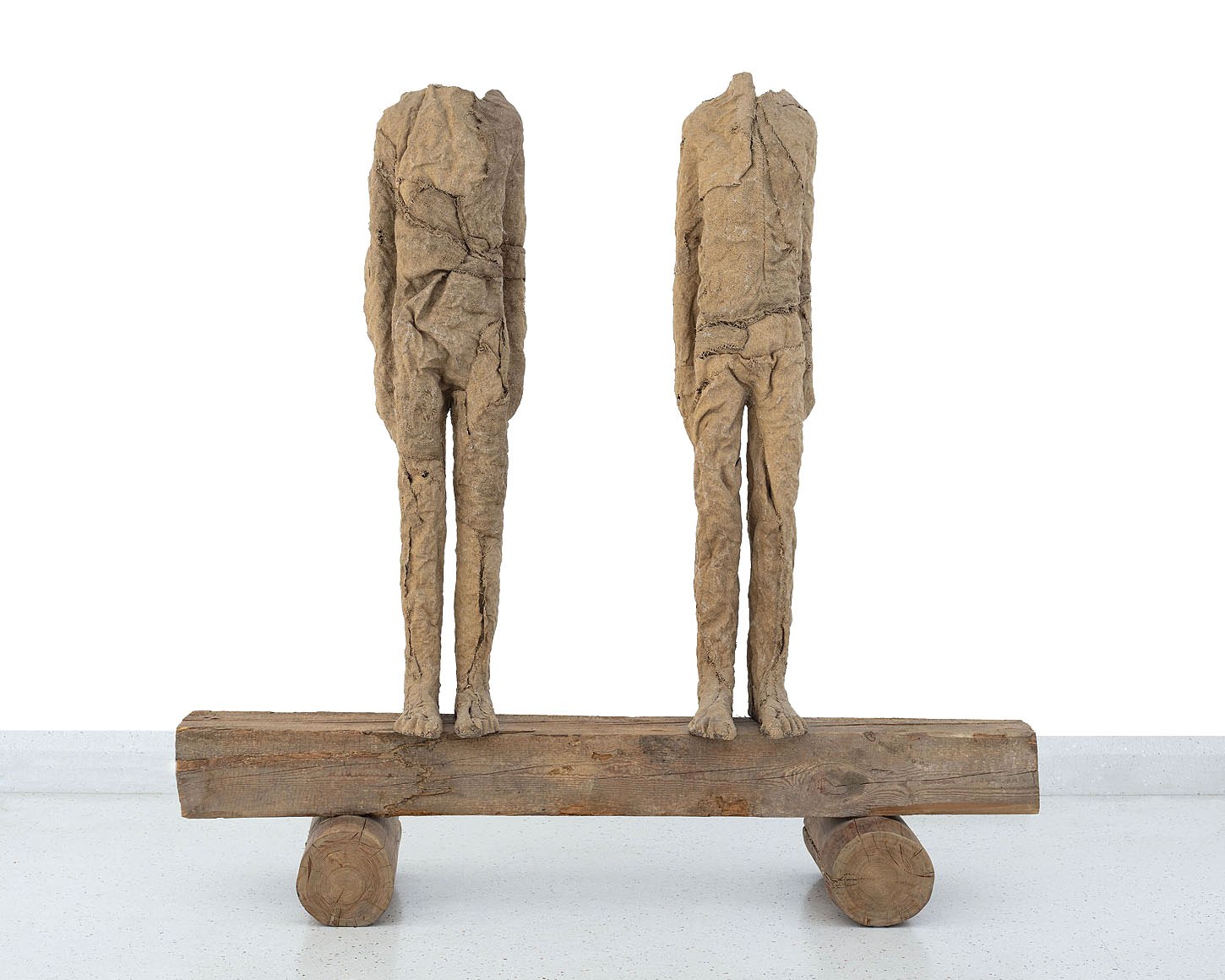
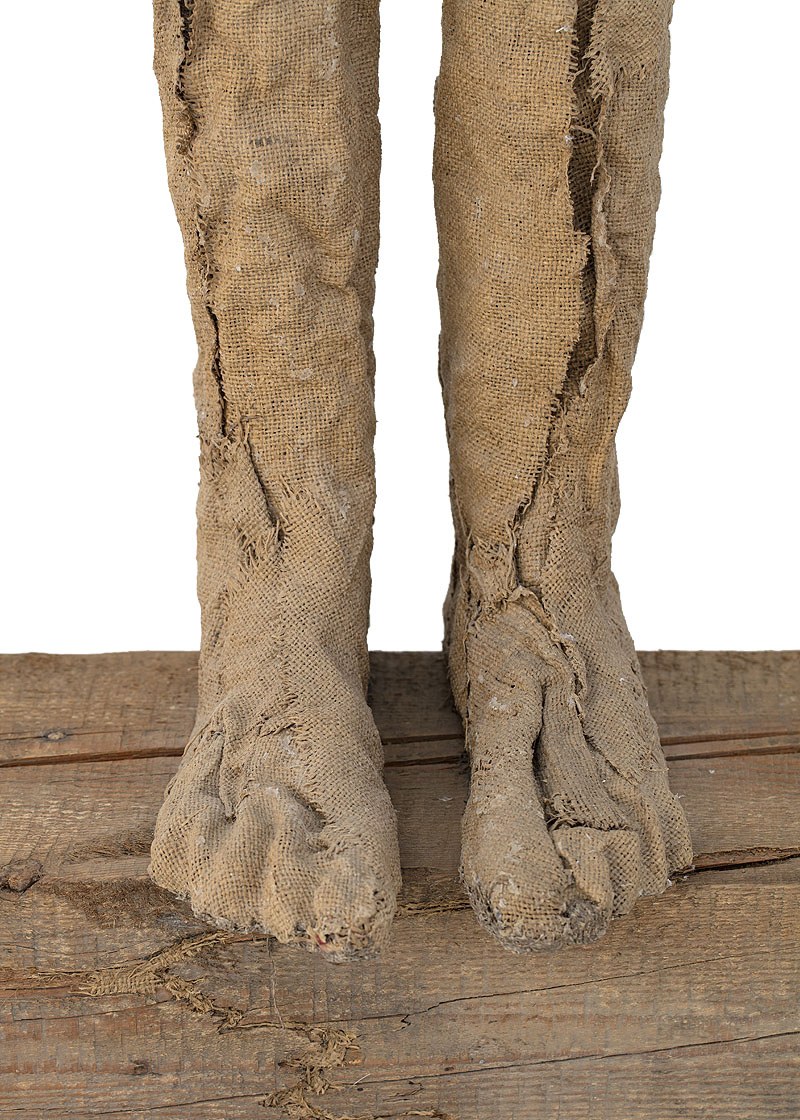
In all the ubiquitous depersonalizing multiplication, Abakanovich returned to the theme of the individual by accentuating his individuality and at the same time showing the accompanying sense of otherness, loneliness. The figures elevated by the artist above the crowd, placed on a wooden beam as if on a pedestal, show themselves in all their being. Upright, with their arms lowered along their bodies, they resemble punitive soldiers. Since the creation of the most numerous sets of figures, i.e. since the 1980s, Abakanowicz liked to return to the human being as an individual, showing him in his most sensitive, vulnerable sphere. Alone (2007) is not an isolated case in this canon. She has returned to the theme of the uniqueness of the individual on several occasions, including in Three-Handed (2008), in which, in turn, she wished to accentuate otherness, frailty. In both cases, placing a jute figure on a wooden beam, thereby elevating it above others, this peculiar "ecce homo" becomes an expression of the artist's concern for individual existence, a reminder of the importance that every human being has, regardless of his or her condition.