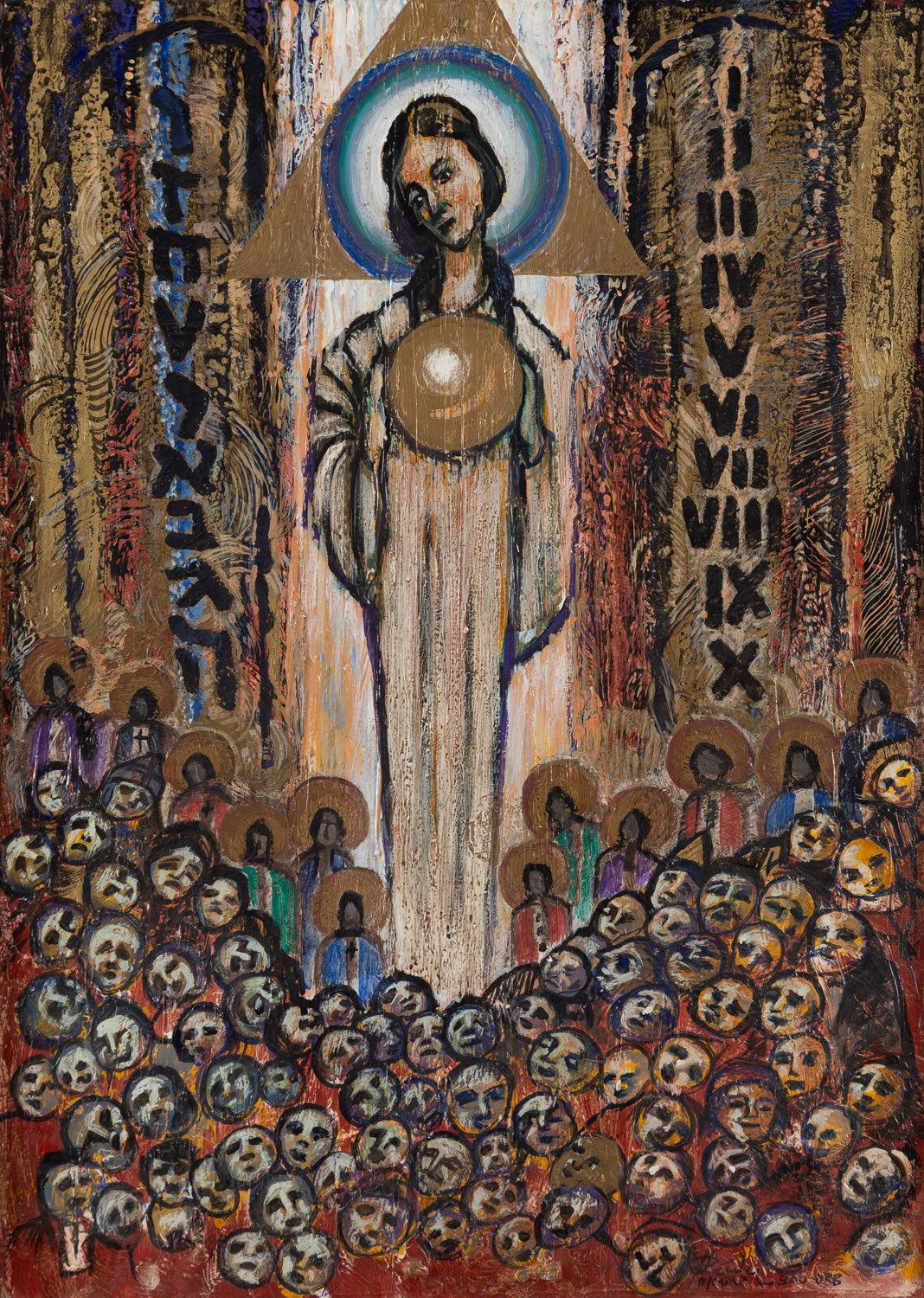
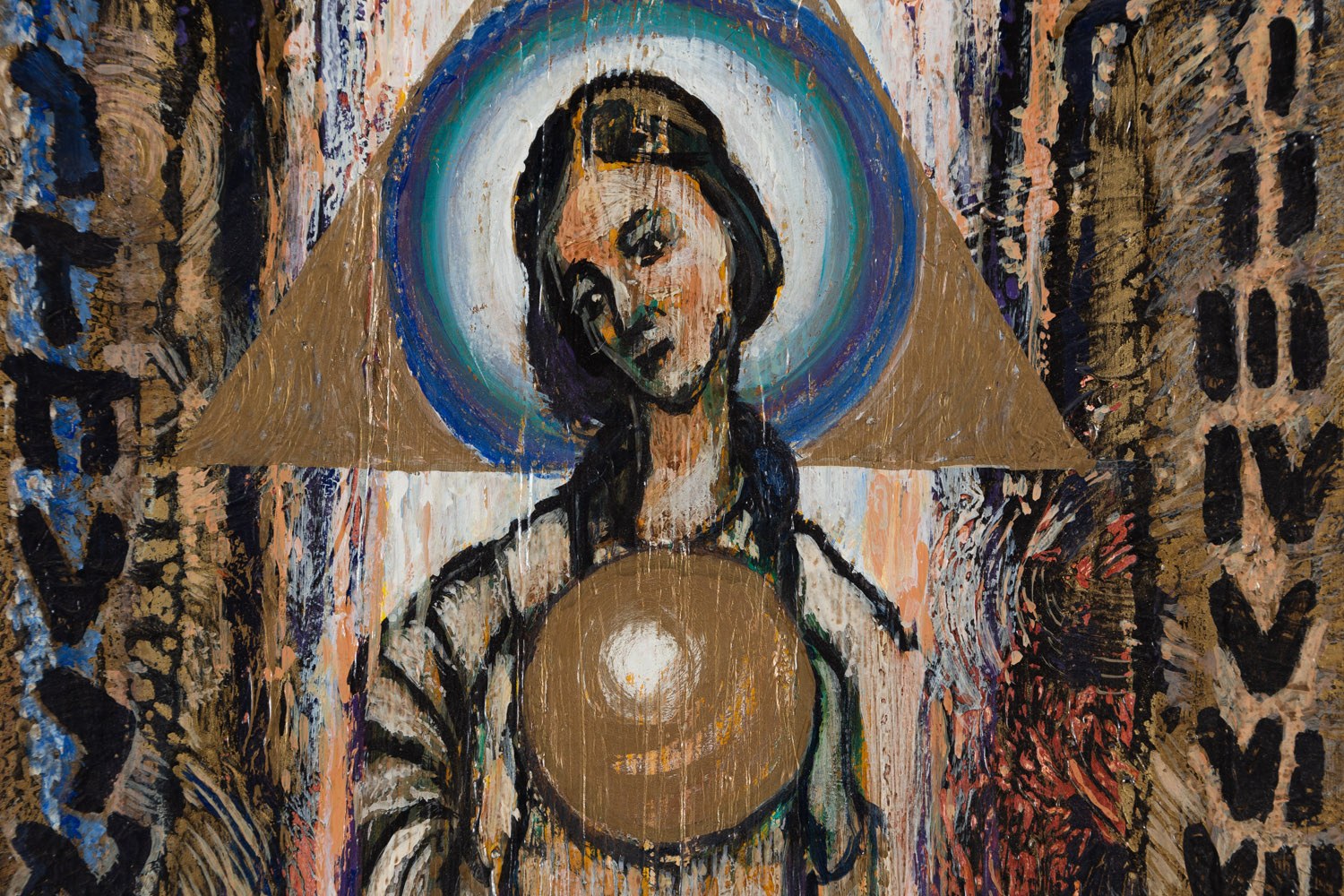
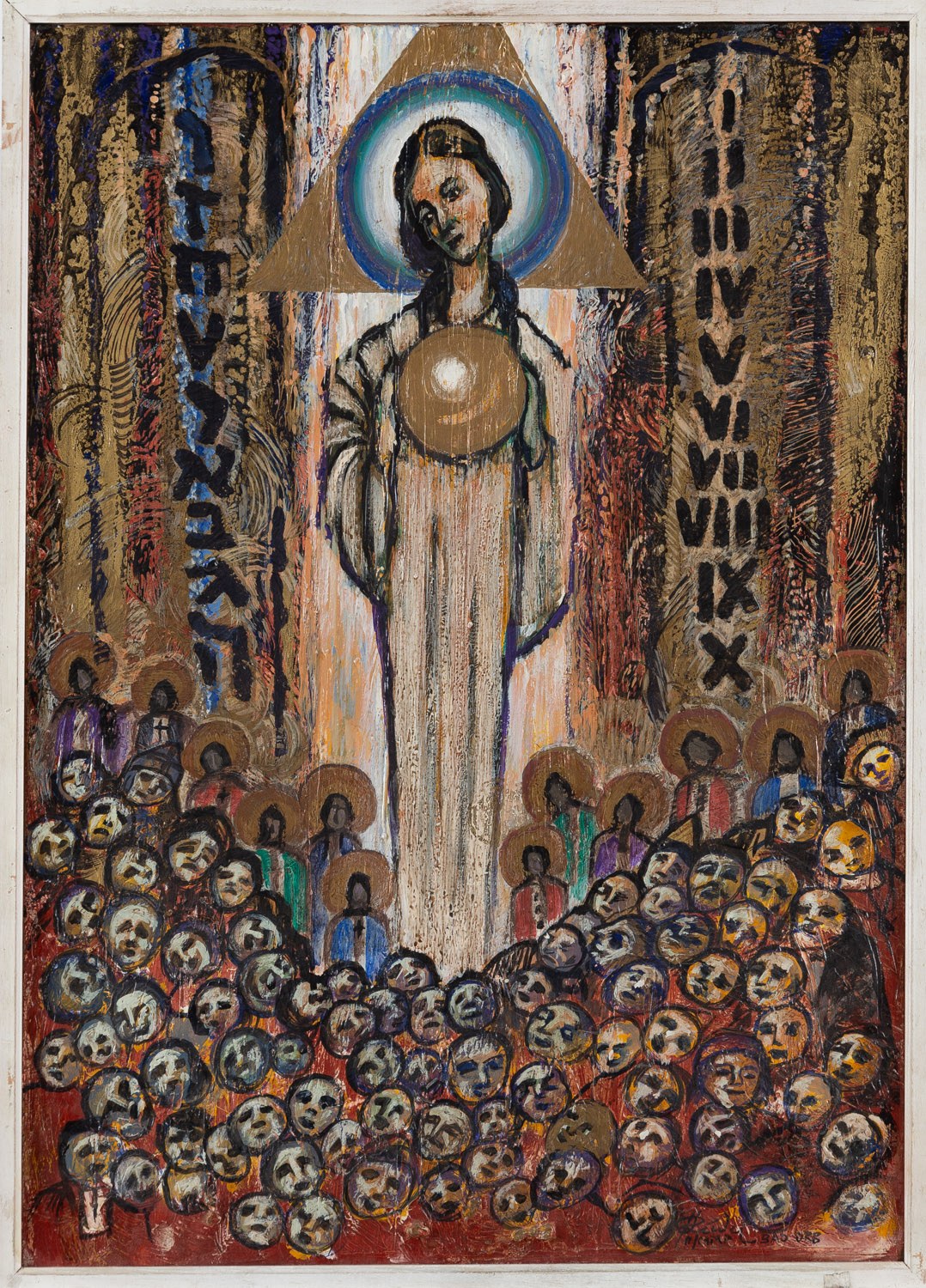
Dimensions: 70 x 50 cm
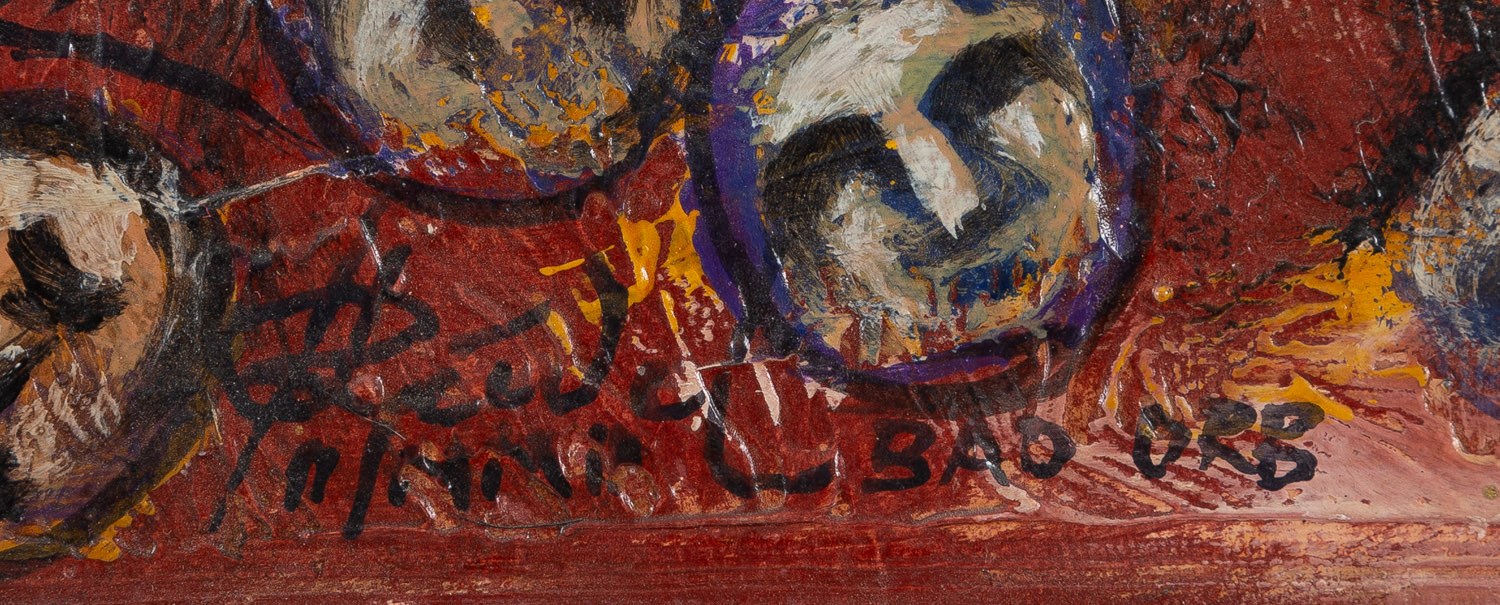
signed, dated and inscribed p.d.: 'RRiedel | V/ MMIII BAD ORB'
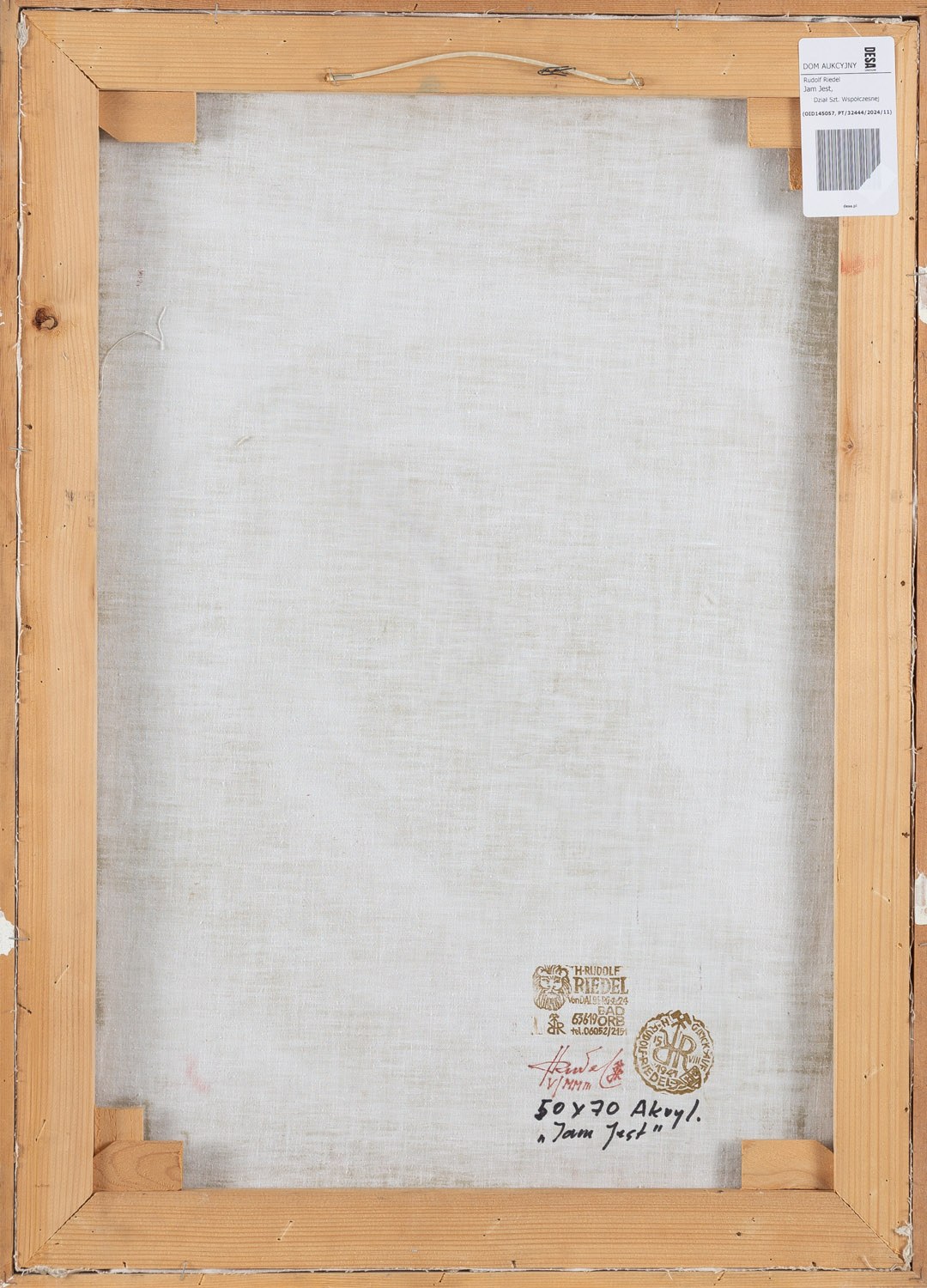
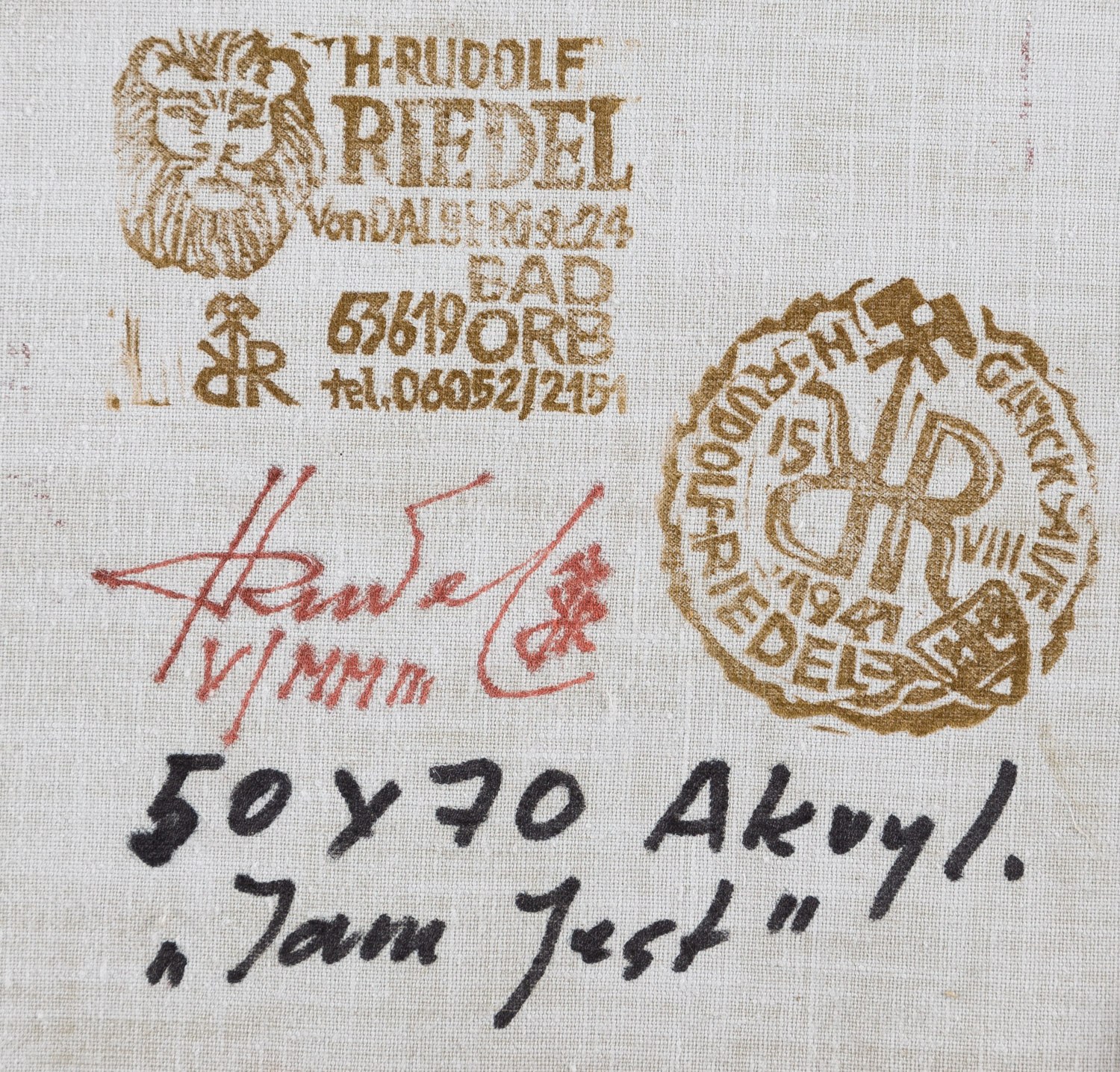
signed, dated and described on the reverse: 'RRiedel | V/ MMIII | 50x70 acrylic| "I Am"'.
on the reverse author's seals
Biography
Born in 1941 in Katowice, Poland. Since 1989 he has been living in Germany. He grew up in Polish orphanages run by nuns, where socialist pedagogy was officially in force. His German-sounding first and last names made it difficult for him to interact with his peers, especially since it was just after World War II. Before he defined himself, the terms came from outside and were often brutal. The stigma of being different, an outsider, unfortunately, remained with him for life. Early on, he discovered a love of painting and drawing. These talents were helped to develop by his sister, the charismatic Janina Meissner, a graduate of art studies in Lviv. It was thanks to her that he passed to the high school of fine arts. At the entrance exam, however, he was given to understand that, as a Silesian-born person, he should tie his future to mining or metallurgy. And so he did.
At the time, amateur art groups, supported by company community centers, were active at practically every mine and major plant. Their official purpose was to promote the workers' toil of Silesia. Thus, when Rudolf Riedel got his first job at the Katowice Coal Mine, he went to sign up for classes at the community center. He was also a co-founder of the art group Gwarek 58. In his next job, at the Zofiówka coal mine in Jastrzębie-Zdrój, he served as a decorator. He also worked at the Central Mining Institute in Katowice, where his tasks included organizing exhibitions, discussions and meetings about miners' work. At the time, he promoted mining art not only in Poland, but also abroad. He also liked to take up religious motifs in his work. He was involved in decorative work at the church in Welnowiec. He took part in the classes of the Study of Sacred Art at the Diocese of Katowice. While working at the Gottwald coal mine in Katowice, he was in turn a member of the art group Filar 72. From this period came the linocuts "Immortals for Solidarity 90 of the Wujek mine", "St. Barbara Solidarity", "Silesian Pieta", the most ideologically committed works of the artist and a kind of record of those historical events.
In addition to prints, Rudolf Riedel paints multicolored paintings, rich in symbolic content. Over the years, in his work he increasingly presents allegorical visions of the world and the cosmos.