


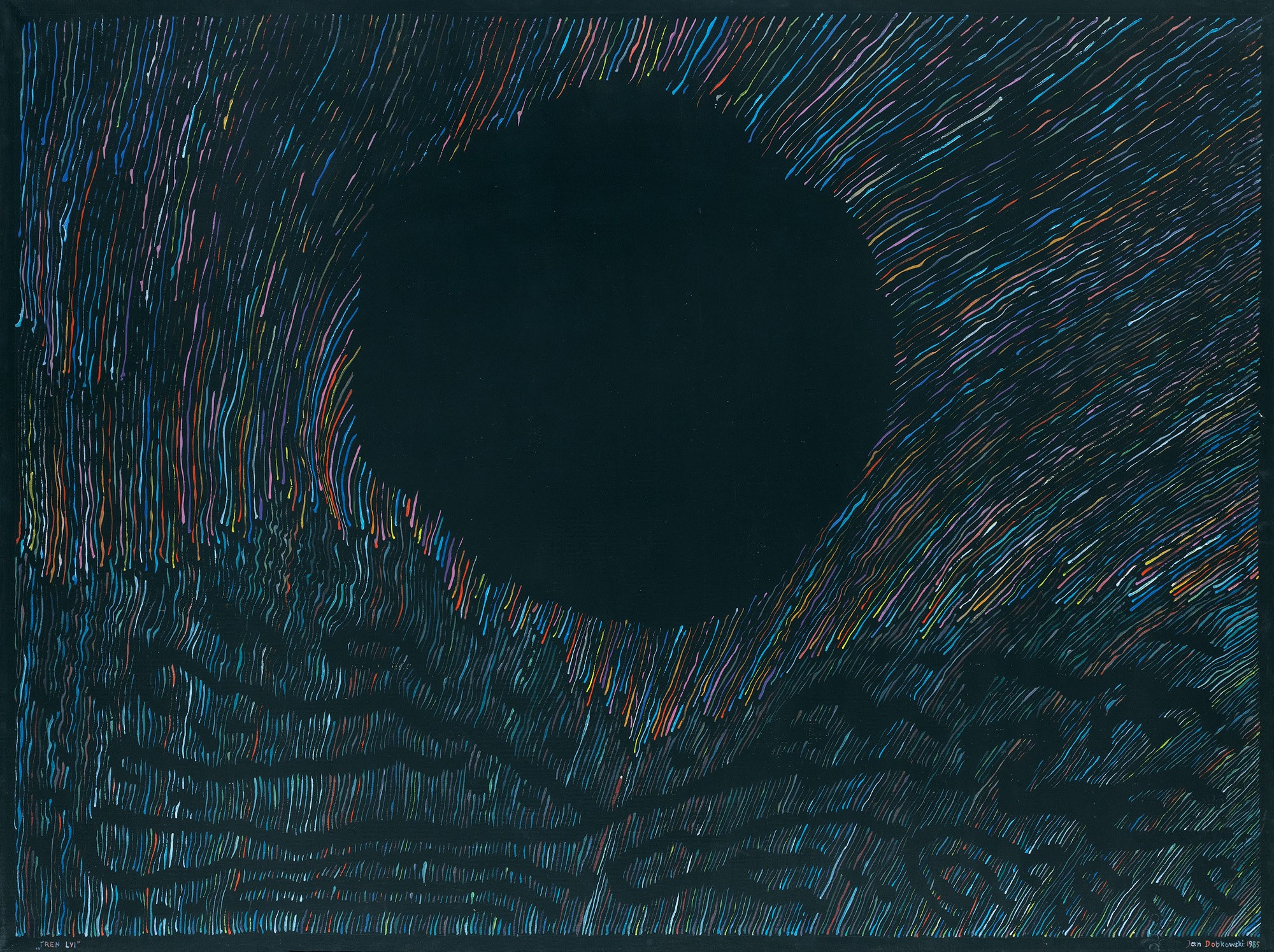
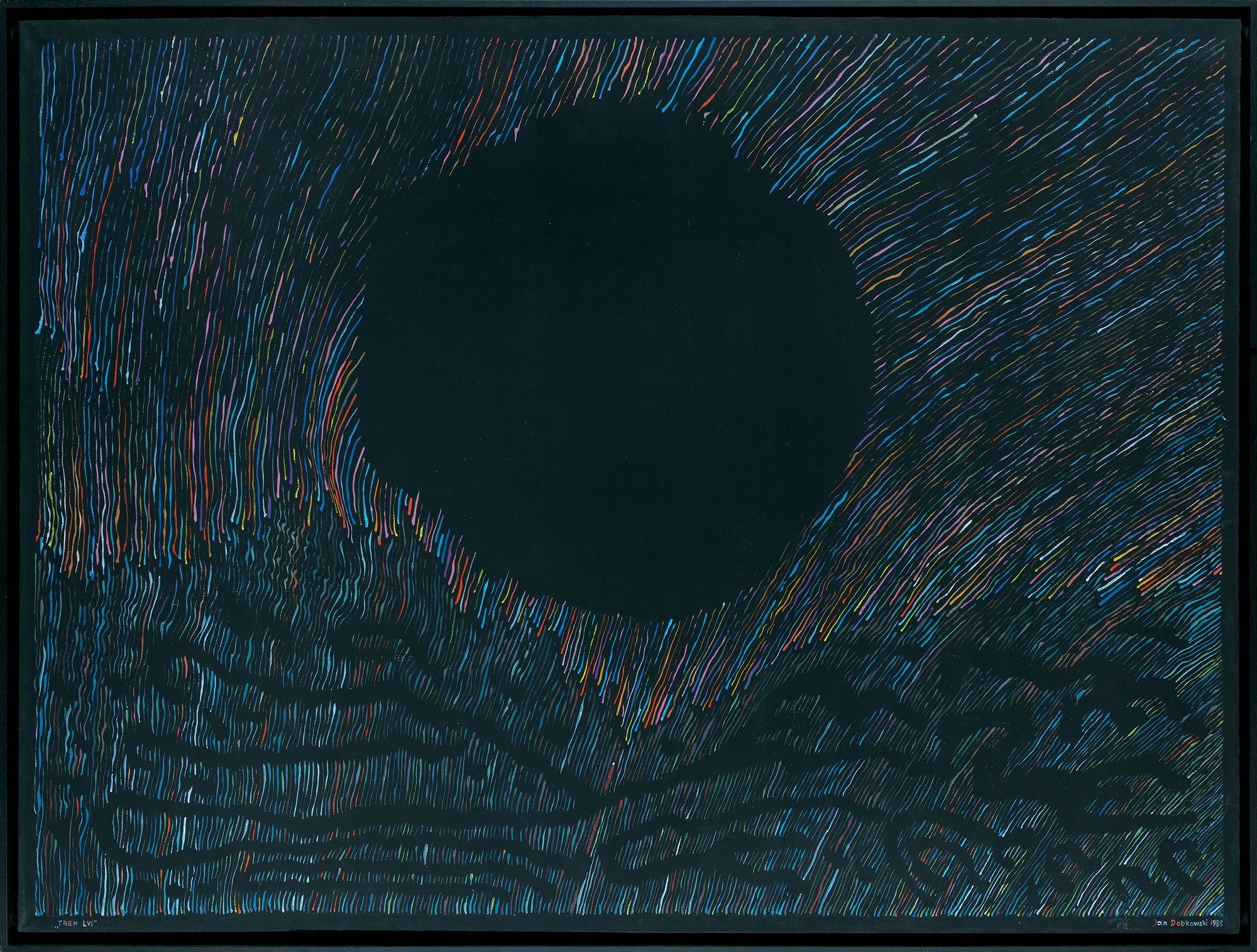
120 x 160 cm - oil, acrylic, canvas
signed lower left: “TREN LVI,” lower right: Jan Dobkowski 1985
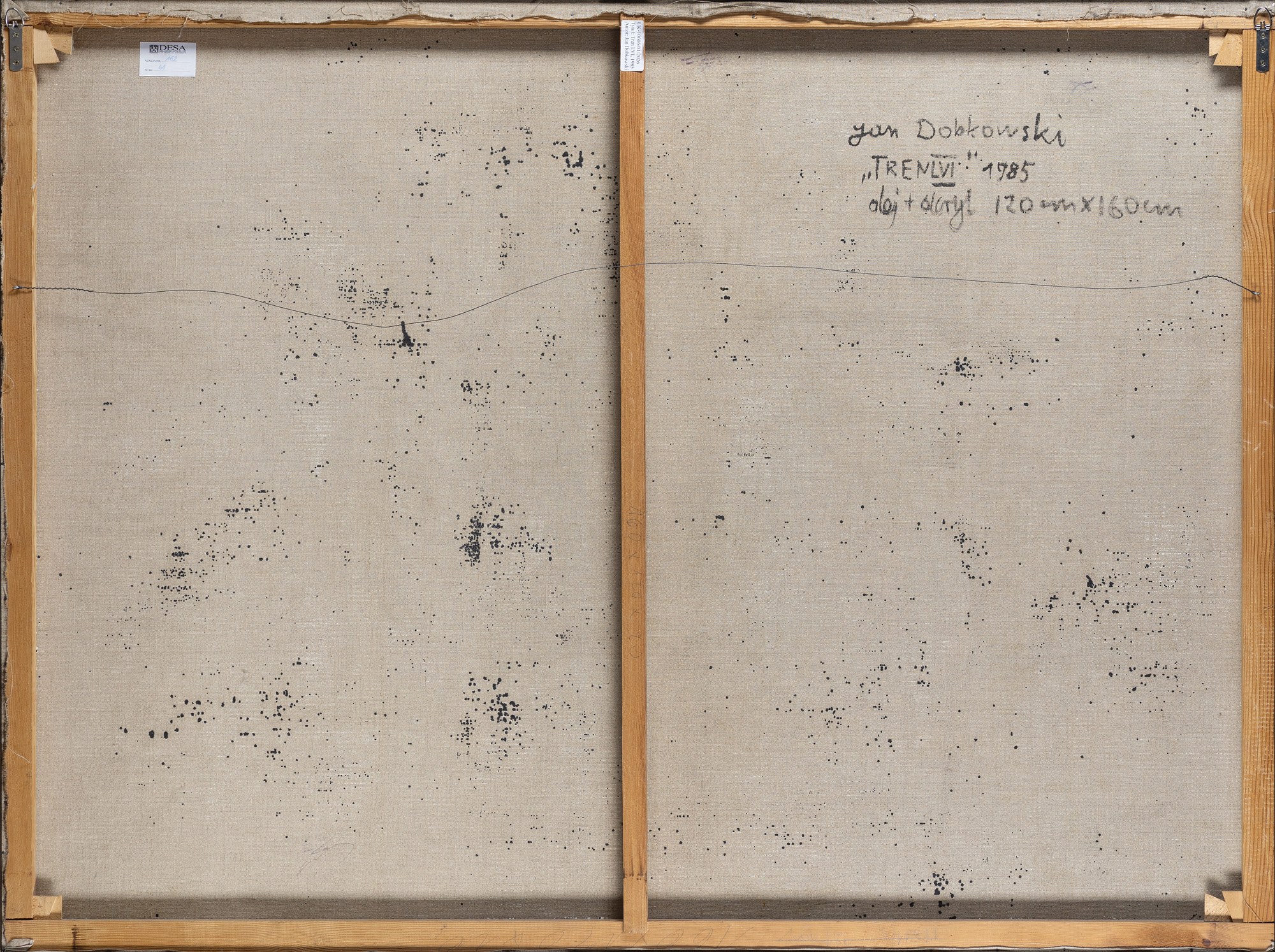
On the reverse, bottom left: Jan Dobkowski | “TREN LVI.” 1985 | oil + acrylic 120 cm x 160 cm; bottom left: a sticker from Desy in Kraków; on the center bar of the stretcher: a sticker with the painting’s details.
♣ Droit de suite: ♣ A fee resulting from the right of the artist and his heirs to receive remuneration in accordance with the Act of February 4, 1994, on Copyright and Related Rights (droit de suite) will be added to the Purchase Price.
Jan Dobkowski (born in Łomża in 1942, lives in Warsaw) studied from 1962 to 1968 at the Faculty of Painting of the Academy of Fine Arts in Warsaw under the guidance of Prof. Juliusz Studnicki and Jan Cybis. While still a student, in 1966, he formed an artistic duo with Jerzy (Jurry) Zieliński as his partner. Their first joint exhibition, titled “Neo-Neo-Neo,” took place in Warsaw in 1967. They exhibited together until 1970. In 1968, Dobkowski (who was using the pseudonym “Dobson” at the time) created his first green-and-red paintings. In these works, characterized by supple, undulating lines in which Art Nouveau influences were discerned, the artist employed techniques derived from Op Art to create optical illusions (spinning, blurring, and the apparent movement of forms). In parallel with his paintings, he also created three-dimensional forms from panels and foil for installation in space. A gold medal at the Złote Grono Symposium in Zielona Góra in 1971 and a nearly year-long stay in the U.S. on a Kosciuszko Foundation fellowship in 1972 marked further milestones in the painter’s successful career. The events of 1980–1981, particularly the imposition of martial law, brought about a marked change in the mood and message of his works. At that time, he marked his monochromatic, dark canvases with faint, delicate lines. The most common motifs were patriotic and religious symbols, accompanied by titles alluding to the realities of the time. Another radical change took place around 1990. A symbolic harbinger of the new period was the enormous, joyful painting ...and life goes on...—exploding with a wealth of colors, shapes, and movement— (394 x 588 cm) from 1990–1991. Similar formal characteristics define the artist’s work throughout the 1990s. Alongside his painting, Dobkowski works on drawings, which serve as a very important complement to his body of work.










हाल ही में देखी गई
लॉट लिस्ट देखने के लिए कृपया लॉग इन करें
पसंदीदा
लॉट लिस्ट देखने के लिए कृपया लॉग इन करें