


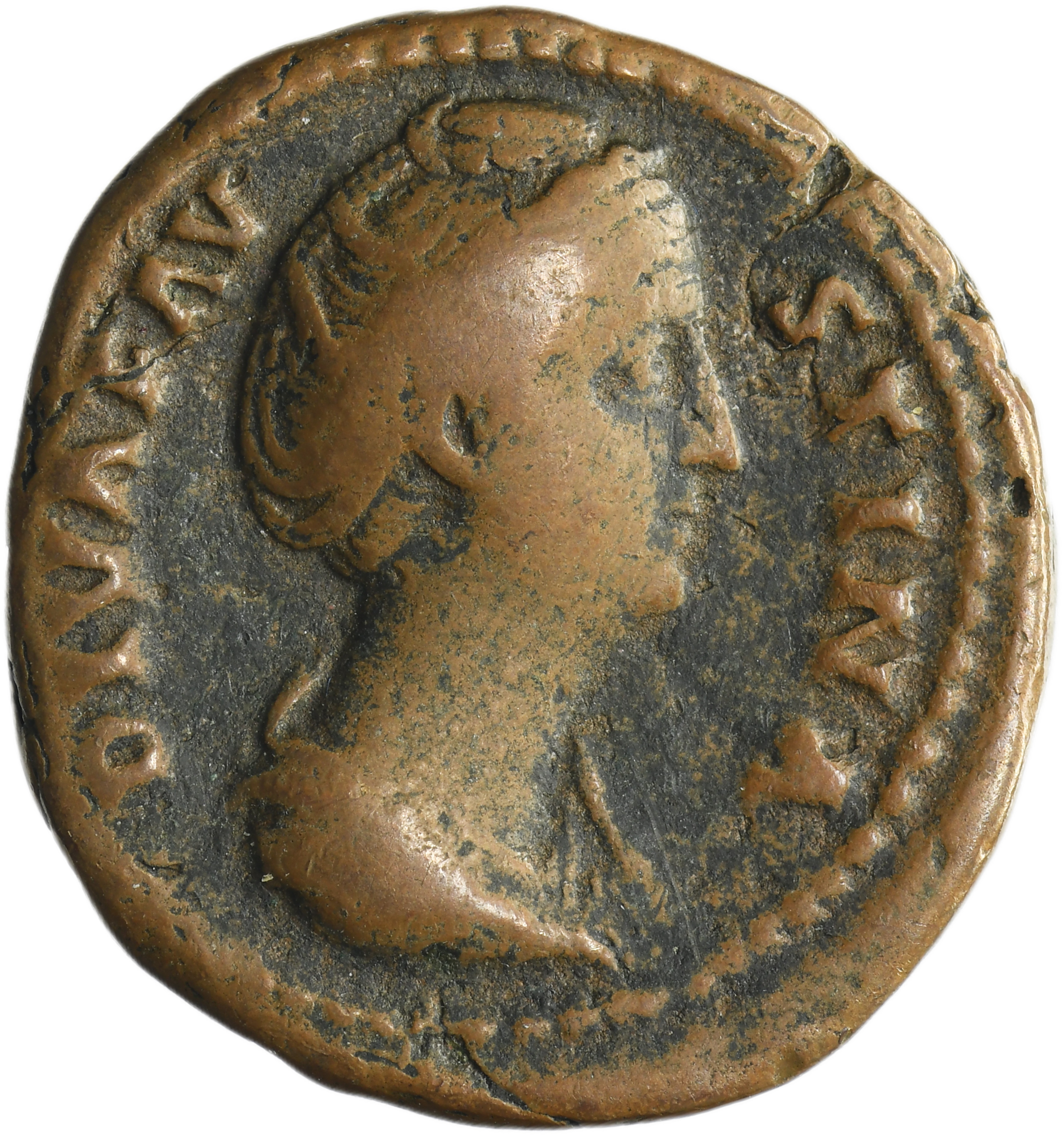
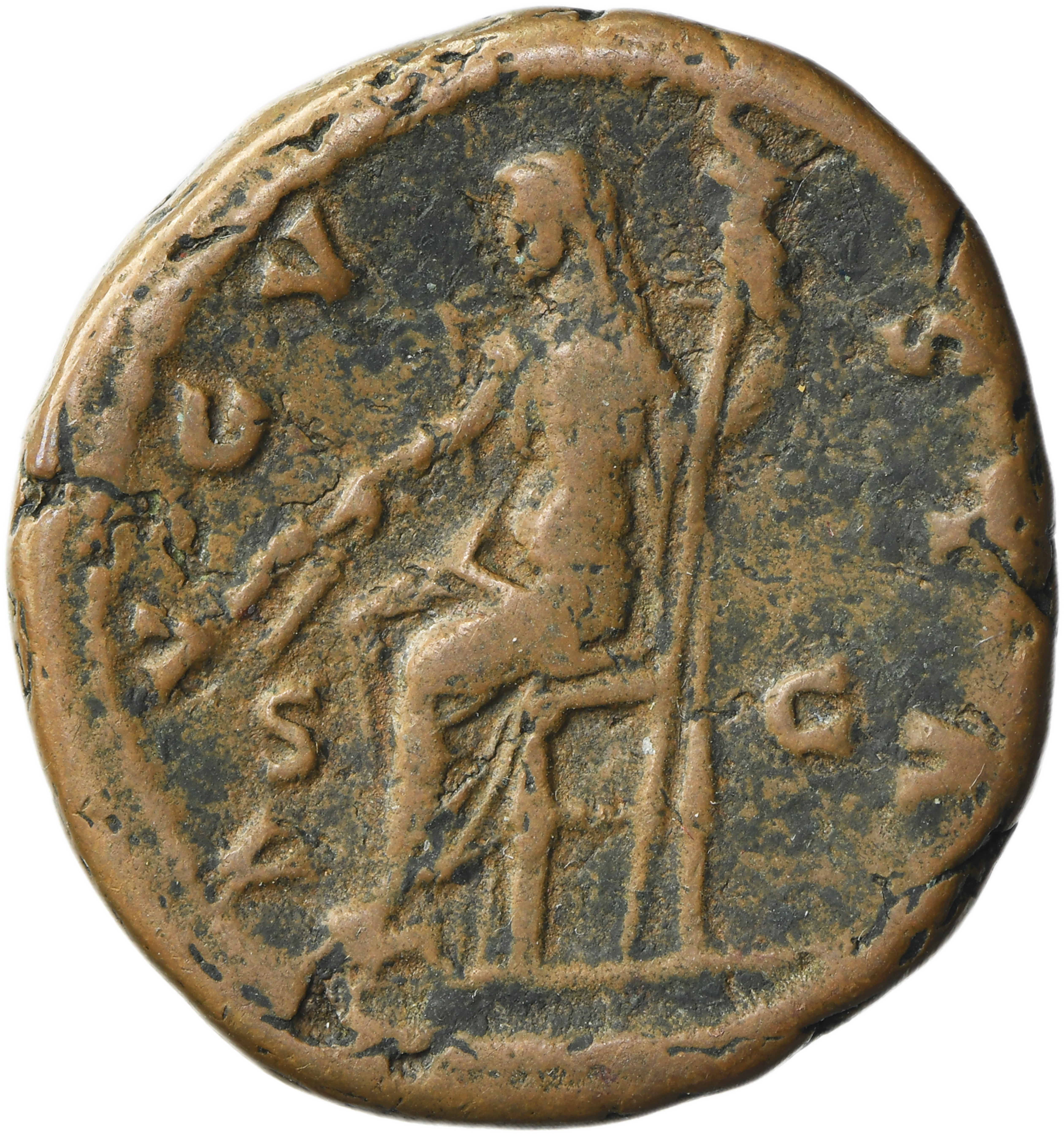


Bronze as of Faustina the Elder, wife of Antoninus Pius, struck at the Rome mint after her death in AD 141, belongs to the earliest series of posthumous issues (consecratio) produced immediately following her deification.
The obverse presents the bust of the deified empress facing right with the legend DIVA FAVSTINA, identifying Faustina as a member of the imperial dynasty elevated to divine status.
The reverse depicts Ceres seated left, holding ears of grain and a scepter, accompanied by the legend AVGVSTA. Ceres, the Roman goddess of agriculture and fertility, appears frequently in imperial coinage as a symbol of abundance, prosperity, and the well-being of the state. In the context of the posthumous coinage of Faustina the Elder, this representation emphasized the traditional virtues attributed to the empress, particularly her role as a matron and as a figure associated with the prosperity and continuity of the imperial dynasty.
Through the combination of the legend DIVA FAVSTINA with the imagery of protective and beneficent deities, Roman coinage underscored the divine status of the deceased empress and her enduring place within the Antonine dynastic cult, which during the mid-second century AD formed an important component of imperial ideological representation.
Roman Imperial
Faustina I (138-141, wife of Antoninus Pius), Posthumous As 141, Rome mint
Obverse: draped bust right, hair waved and coiled on top of head
DIVA FAVSTINAReverse: Ceres seated left, holding two corn ears and sceptre, S-C across fields
AVGVSTA
Diameter 28 mm, weight 11.51 g











