


Dimensions: 44 x 34 cm
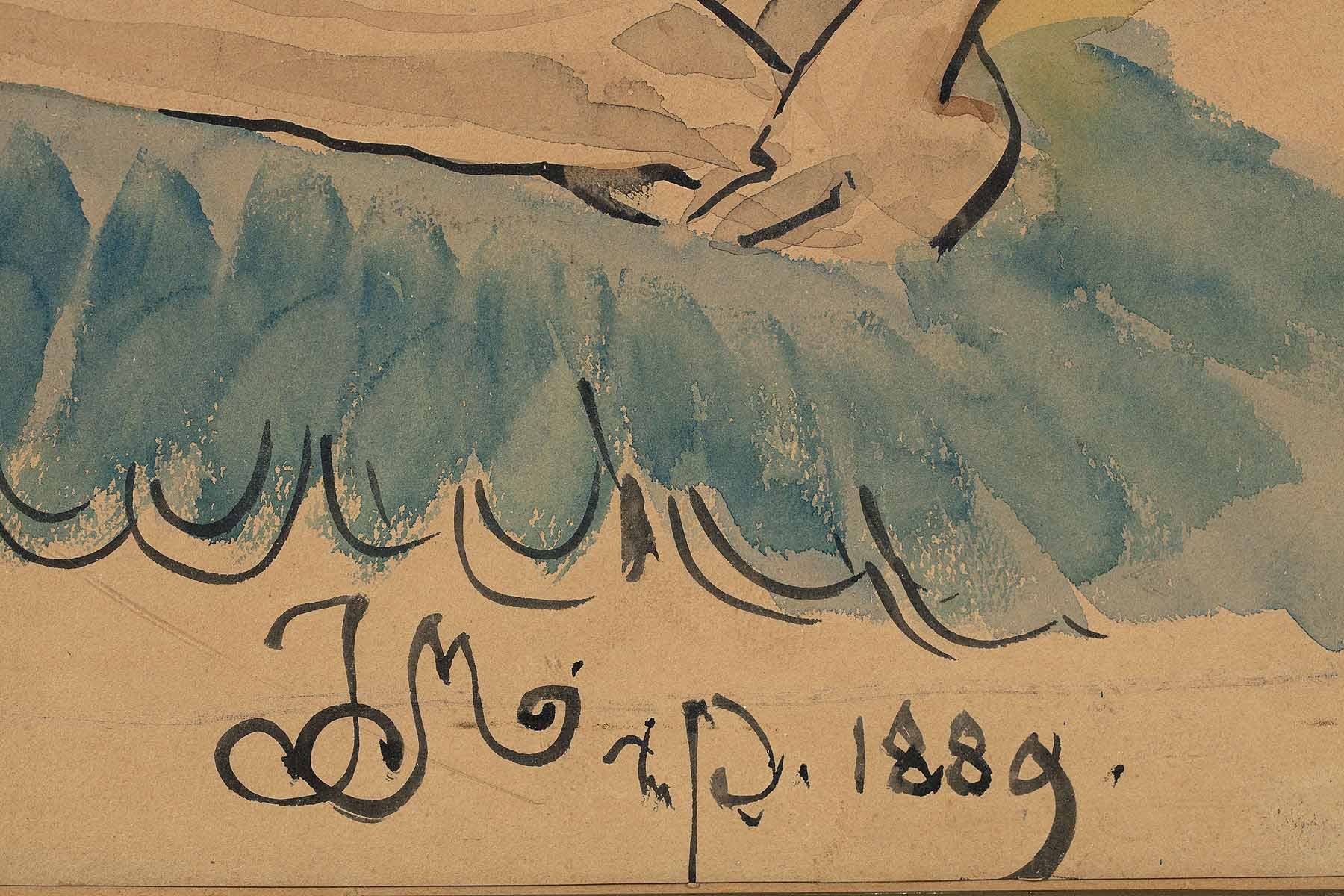
Signing: signed at the bottom: J M r. p. 1889.
Provenance
Warsaw, private collection
Literature
Ryżewska E. [ed.], Jan Matejko - Opus Magnum. Polychromy of St. Mary's Church in Cracow, National Museum in Cracow, Cracow 2001.
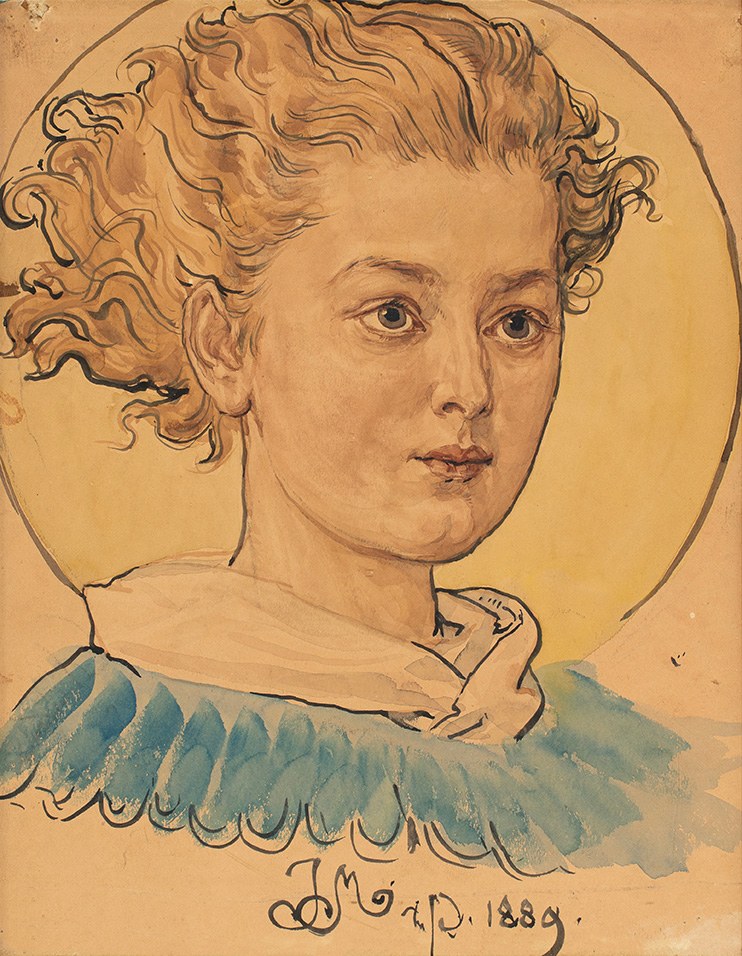
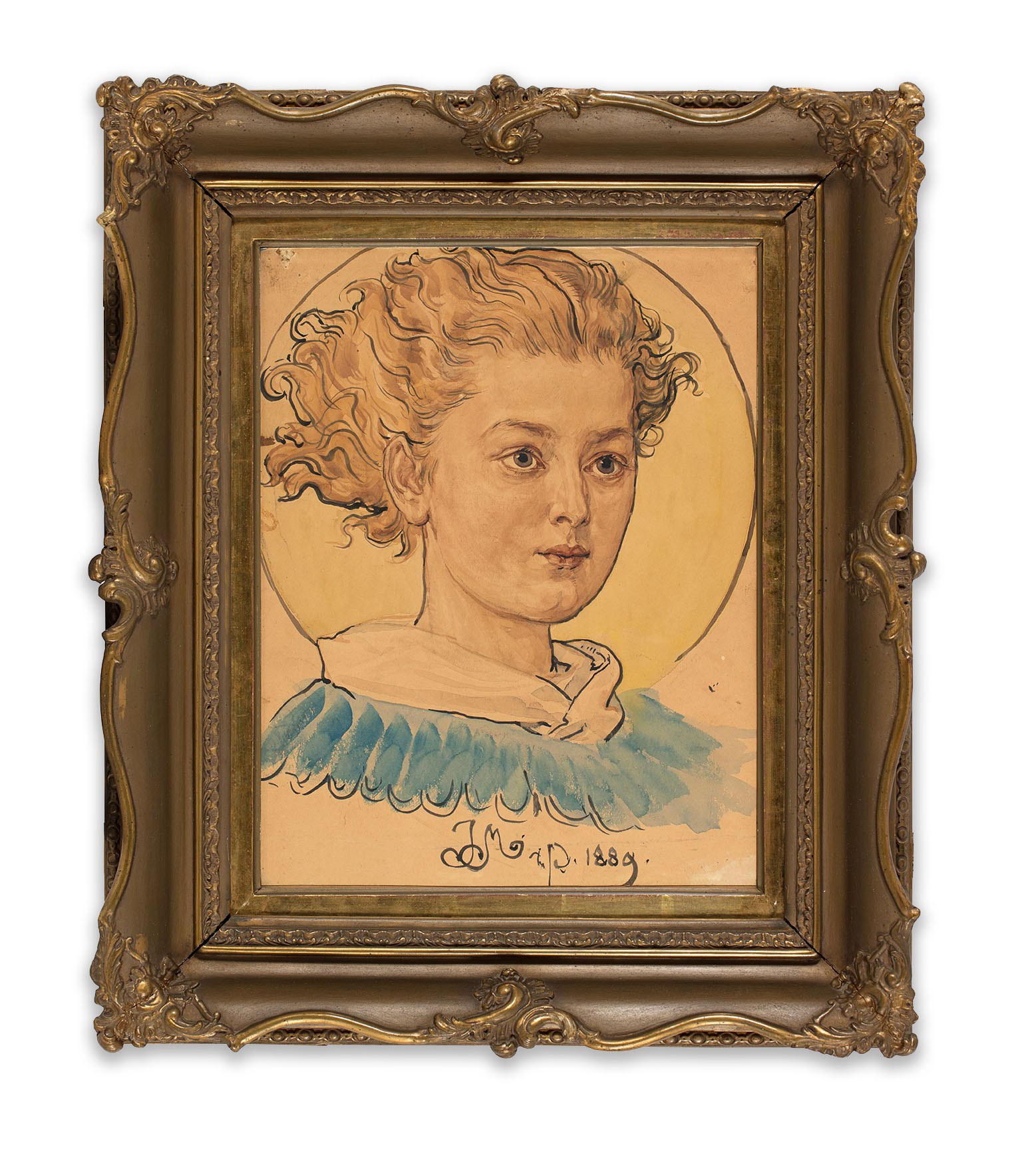
The work presented here is Jan Matejko's original design for the polychrome of St. Mary's Church in Cracow and shows a bust of an angel - one of the numerous heavenly musicians with which the artist filled the space of the chancel. While working on the decoration of the temple, Matejko "(...) transferred his creative thought to the middle ages, to the epoch that built St. Mary's Church" (Jan Matejko: studies and sketches, with the effort and expense of the Board of Stoł. Król. m. Kraków, Kraków 1938, p. 65). Referring to Malopolska's Gothic painting, he created a series of figures of angels and cherubs playing medieval instruments or holding sashes with texts of the Litany of Loretto. "These angels - for how could it be otherwise with Matejko! - are individuals (...) it is a separate vision in each, straight from the artist's soul," we read in a pre-war study devoted to polychrome (Jan Matejko: studies..., op. cit., p. 67).
The offered drawing is maintained in a manner characteristic of polychrome designs: a flat, sure contour line outlines the young angel's head, while delicate watercolor glazing models his face. Matejko consciously dispenses with idealization - the angelic face bears individual features that make it possible to recognize in it Beata Matejkowna, the artist's younger daughter. Matejko's children were often his models, and in the designs for the Marian polychrome - as in many other works - they gave the figures close and heartfelt features, set in the everyday life of the master's home.
This portrait was created in 1889, at the stage of intensive design work for the interior decoration, when the artist created sketch after sketch: ornaments, cartouches and coats of arms, seraphs and devils.... It was such studies that formed the basis of the monumental undertaking that in time was referred to as his "opus magnum." For Matejko, the work on St. Mary's Church had a profound spiritual and patriotic dimension: he believed that the polychrome would become a source of encouragement, a "comfort to the aching heart" of his fellow countrymen (quoted in Ryżewska E. [ed.], Jan Matejko - Opus Magnum. Polychromy of St. Mary's Church in Cracow, National Museum in Cracow, Cracow 2001, p. 7). Thus, projects such as the presented "Angel" are not only a masterful character study, but also a testimony to the great idea that art was meant to evoke memory, hope and admiration.










