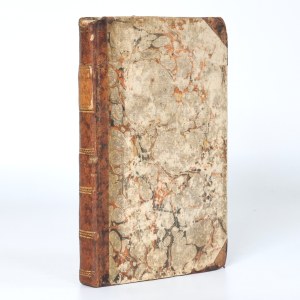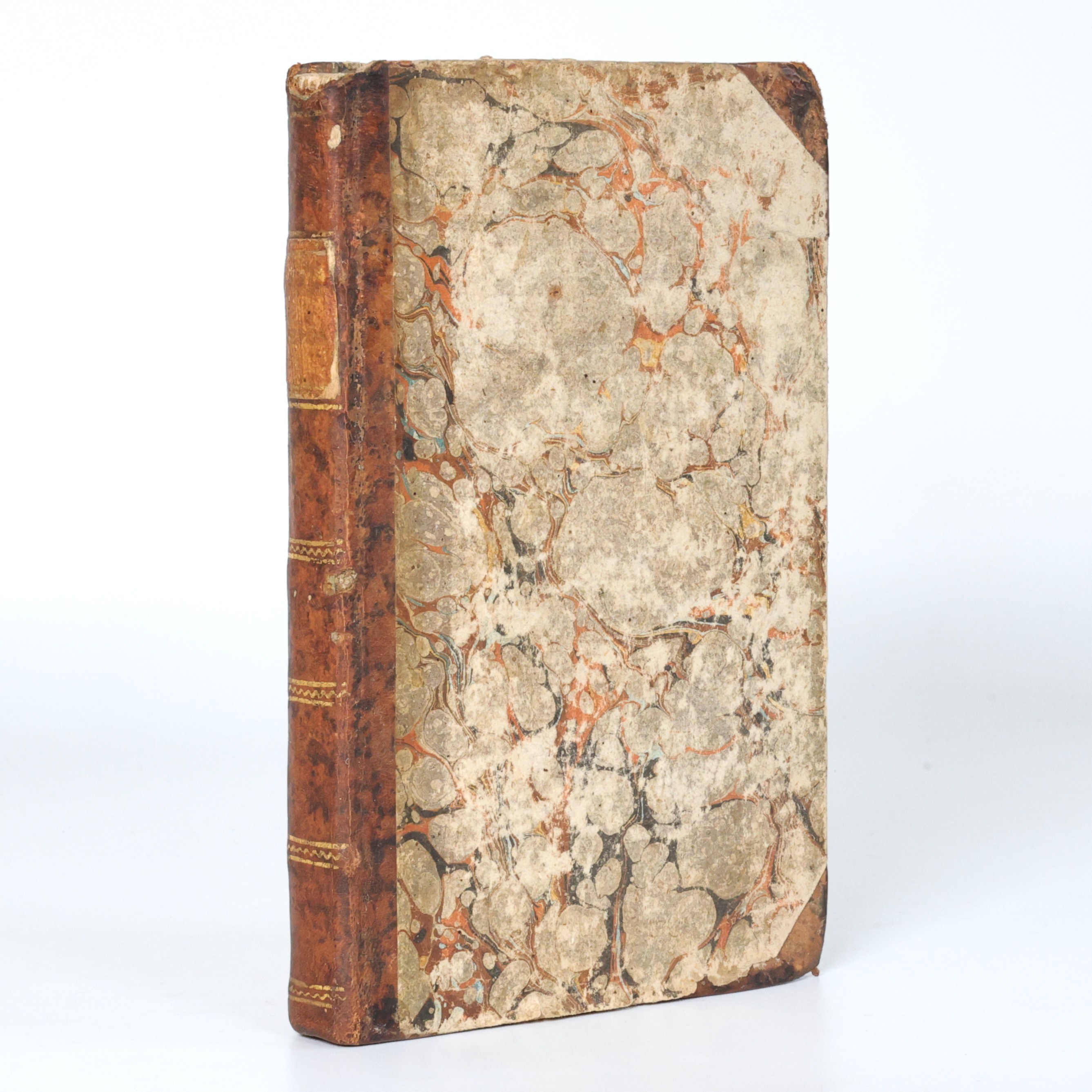
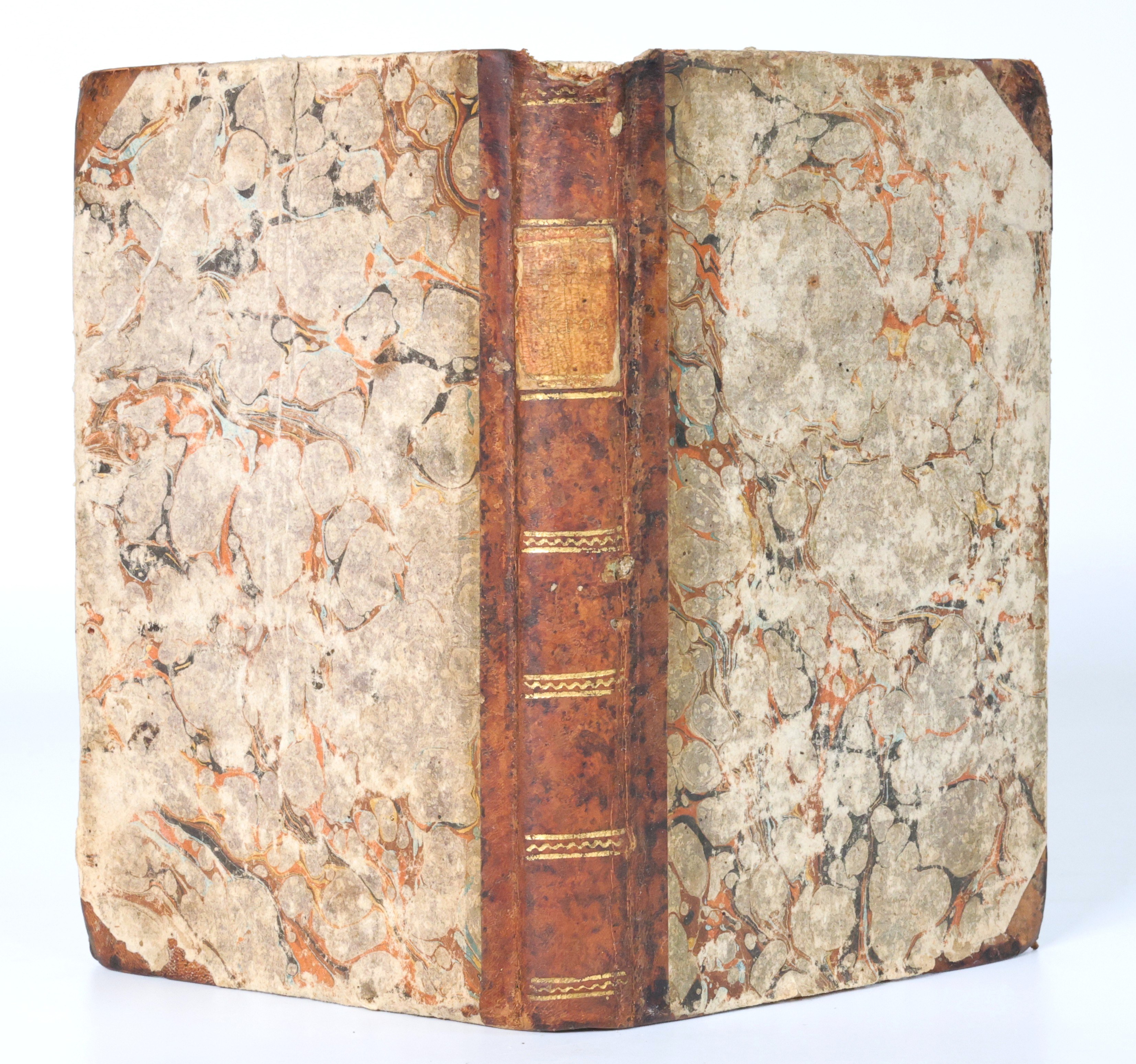
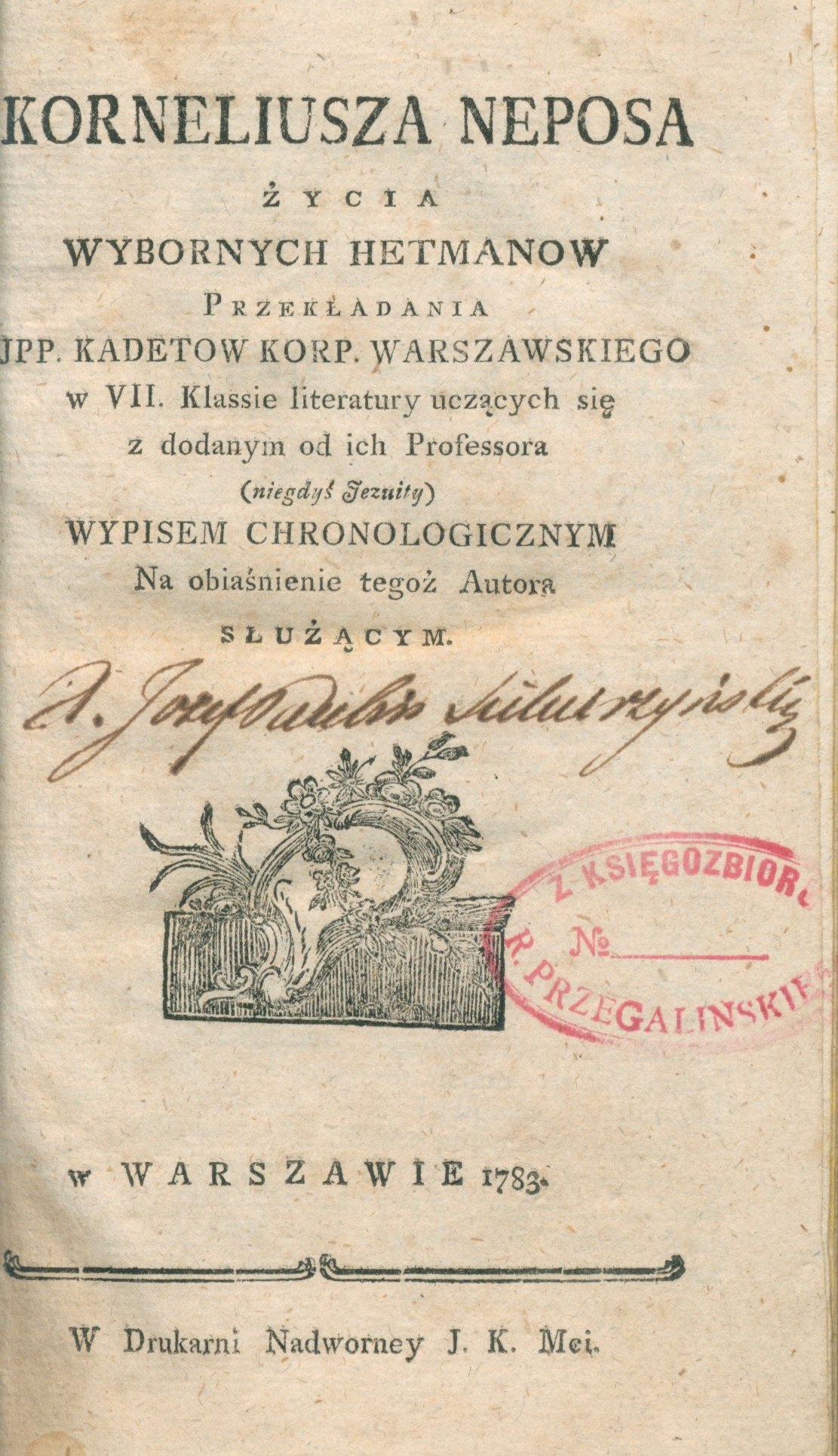
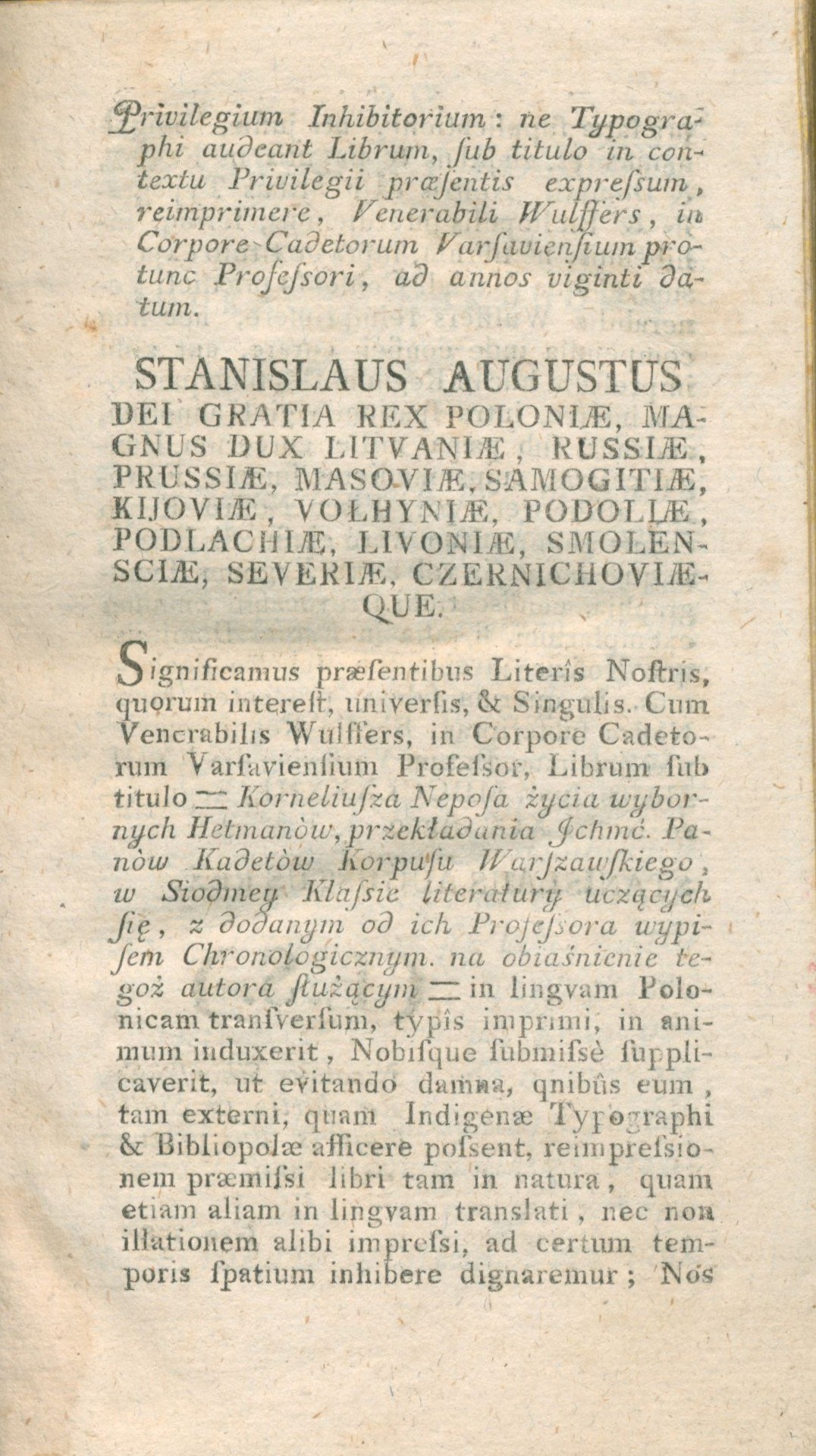
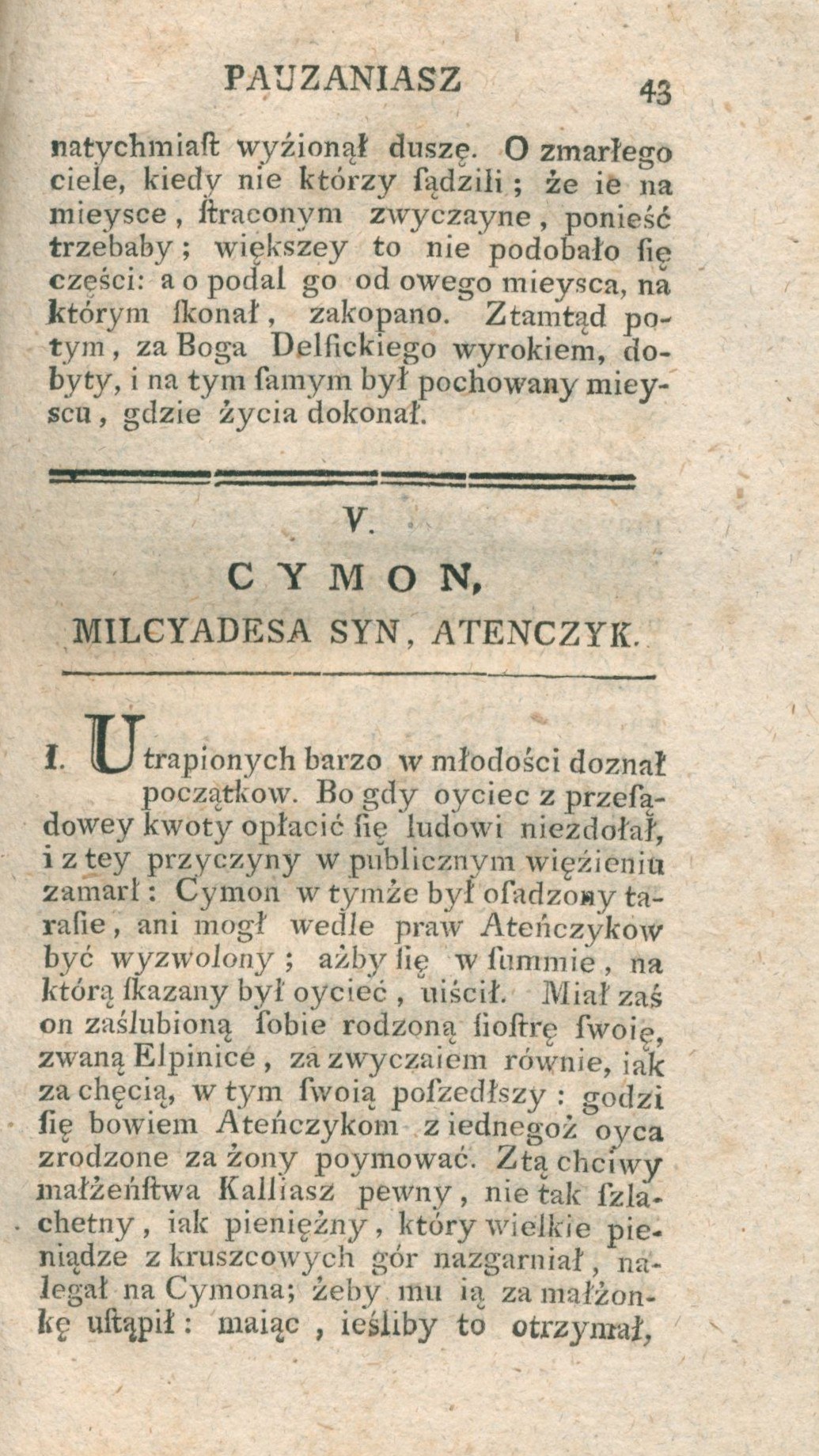
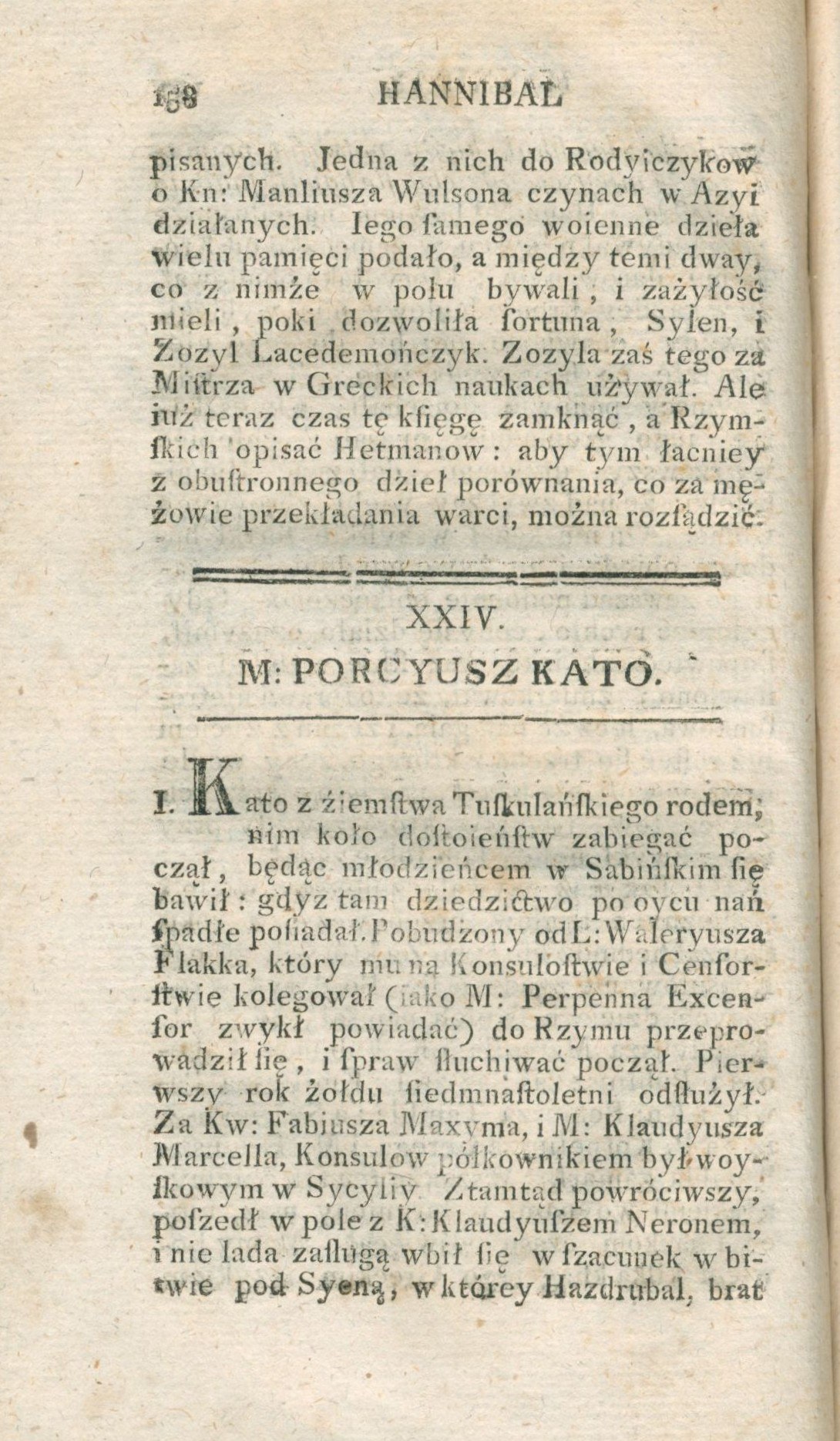

Cornelius Nepos Lives of the elective hetmans. Translation of the JPP.Cadets of the Warsaw Corps in the VII. Klassie literatury uczcych się z dodanym od ich Professora (niegdy Jezuita) wypisem chronologiczny na obiaśnienie tegoż Autor służącym/ Warsaw 1783/ W Drukarni Nadworney J.K.Mci./ binding of the epoch in half leather; spine flat with signboard and gilding; covers covered with marbled paper of pebbled type/ pp.[8] pages, 182 [actually 180] pages, [2] pages, LXXI, [1 clean]/ errors in pagination (see polona)/ very good- condition, minor loss of leather on spine, rubbing of binding edges, provenance stamps before text proper, yellowing in text in places. Rare.
An Enlightenment edition of Nepos, one of the more interesting examples of the reception of classical biography in Poland of the late 18th century. The core of the publication consists of the lives of outstanding leaders and men of antiquity, primarily Greek, Persian and Carthaginian, portrayed through the prism of their war talents, political activities, character traits and public fortunes. Among those who appear on the pages of the book are Themistocles, Alcibiades, Dion, Datames, Pelopidas, Eumenes, Hannibal and T. Pomponius Atticus. Thus, the book has both historical and moral-didactic value: in addition to accounts of campaigns, intrigues and political changes, it also brings a reflection on the virtue, ambition, weakness and decline of the great figures of the ancient world.
The 1783 edition, published under the title "Kornelius Nepos' Lives of Elective Hetmans," was produced as a collective translation by students of the seventh grade of literature at the Knights' School, or Corps of Cadets, in Warsaw, under the editorship and supervision of Jan Wulfers, an educator associated with the Enlightenment education program. This fact alone gives the publication a special character as a testimony to school practice and, at the same time, to the civic formation program of the era of the National Education Commission. The volume opens with a dedication to the Commission of National Education; the whole is supplemented by a preface, a treatise on the life and writings of Nepos and a chronological excerpt to explain historical realities. The edition was printed at His Majesty's Court Printing House in Warsaw; it also contained a royal privilege from Stanislaw August, protecting it from reprinting. As a result, it is not only a Polish translation of a classical author, but also an important monument of the educational culture of the Polish Enlightenment.
Are you interested in old prints? Click here ⮕ STARODRUK