


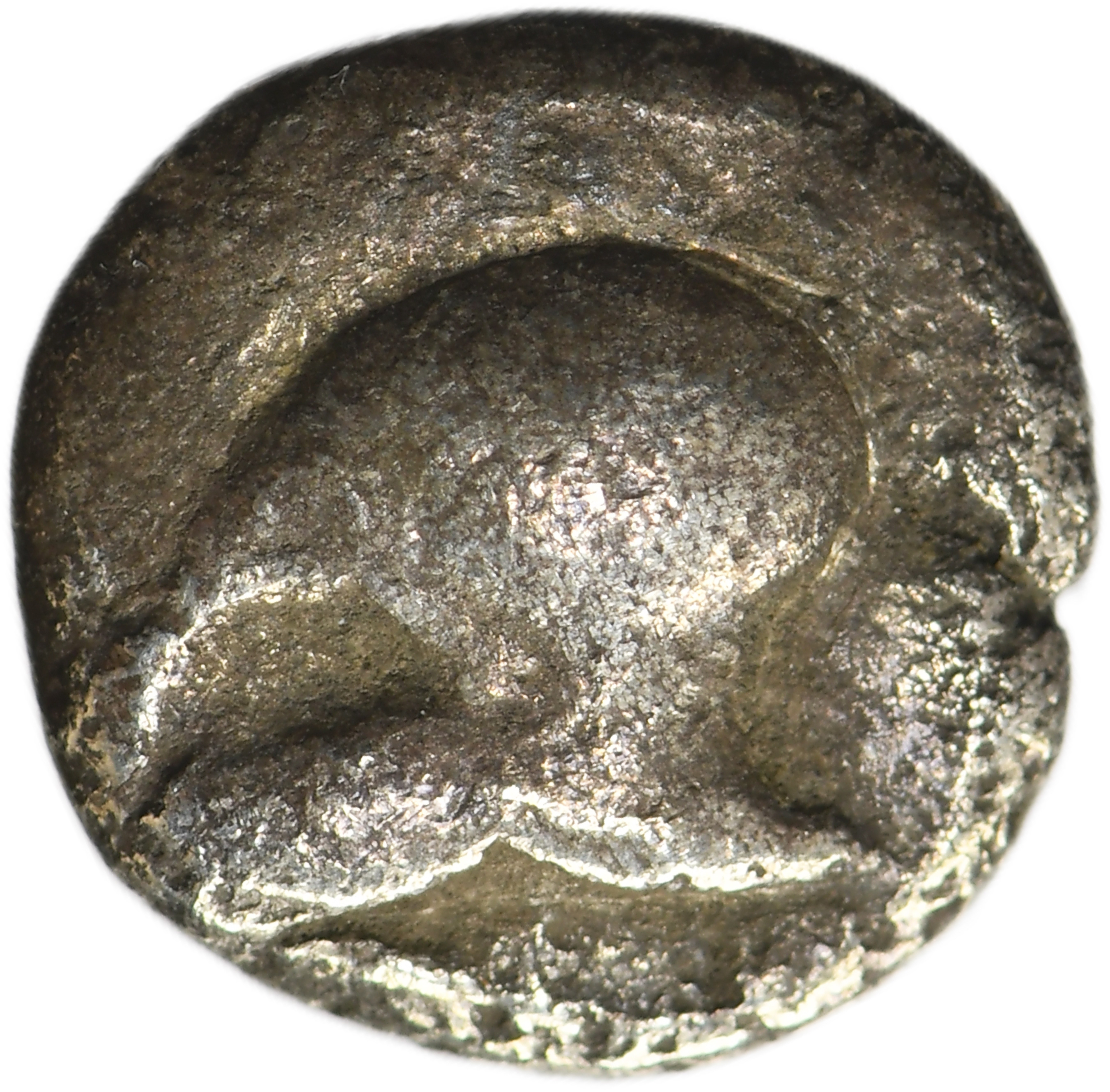
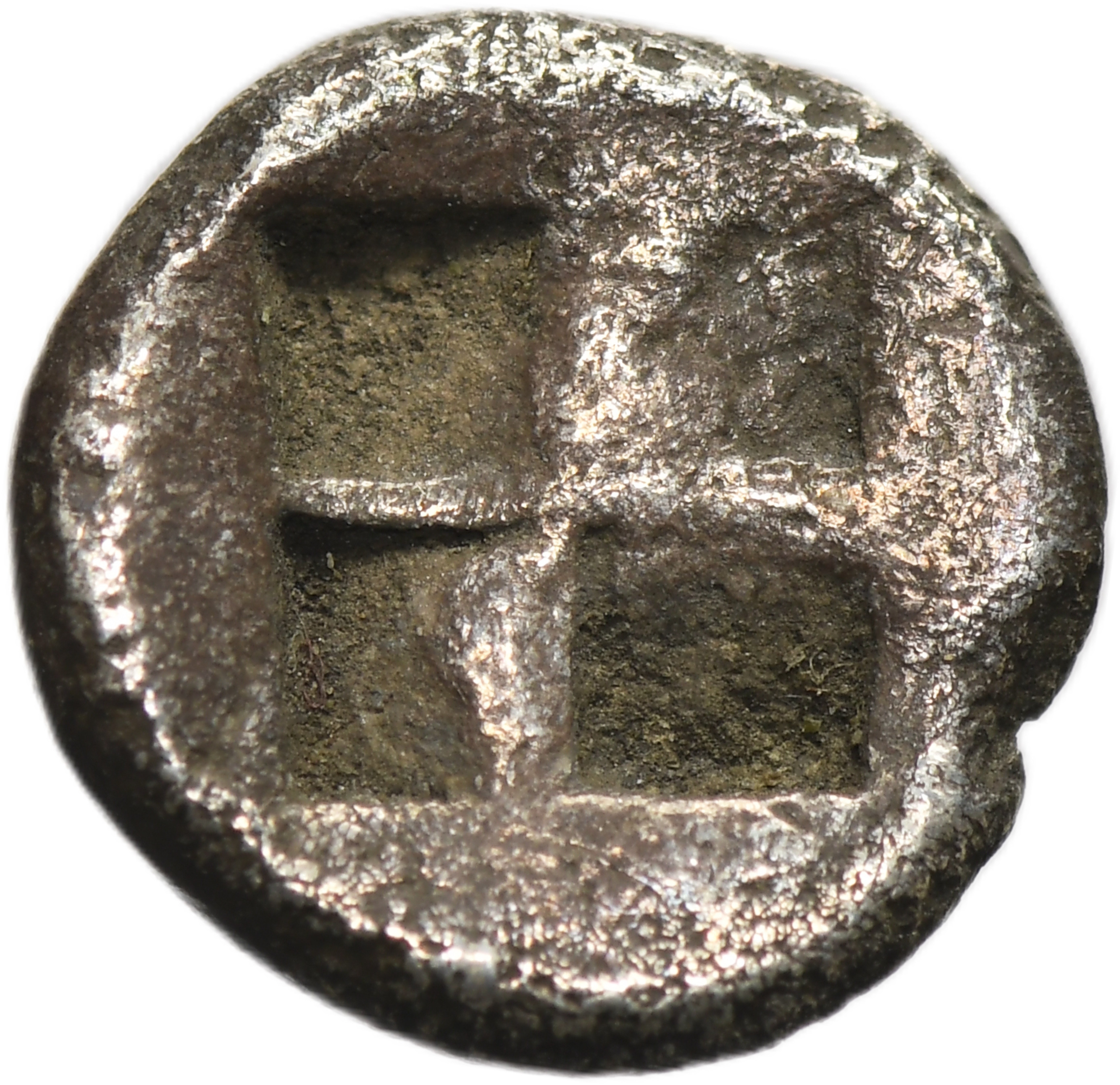


Rare silver obol attributed to Neandreia in the Troad, dated to the late 6th and 5th centuries BC, belonging to the early phase of fractional silver coinage in northwestern Asia Minor.
Neandreia, located in the southern part of the Troad, is mentioned in ancient sources, including Herodotus and Xenophon, as one of the local centers active in the Archaic and early Classical periods. Its coinage is limited in scope and known from only a small number of surviving specimens.
The obverse shows a crestless Corinthian helmet facing left, rendered in an Archaic style. The reverse consists of a quadripartite incuse square, a solution typical of early Greek silver issues and reflecting the minting technique of the 6th–5th centuries BC. Comparable specimens are recorded in the literature: Rosen 109 (there listed as an obol and attributed to Skione in Macedonia), SNG Arıkantürk 664–665 (obols of the same type), and SNG Kayhan 743 (attributed to an uncertain mint in Ionia or Caria). These differing attributions reflect the ongoing scholarly discussion concerning the precise mint of this rare helmet type.
Greece
Troas, Neandria, Obol 600-500 BC
Obverse: Corinthian helmet left
Reverse: quadripartite incuse square
Diameter 8 mm, weight 0.66 g











