


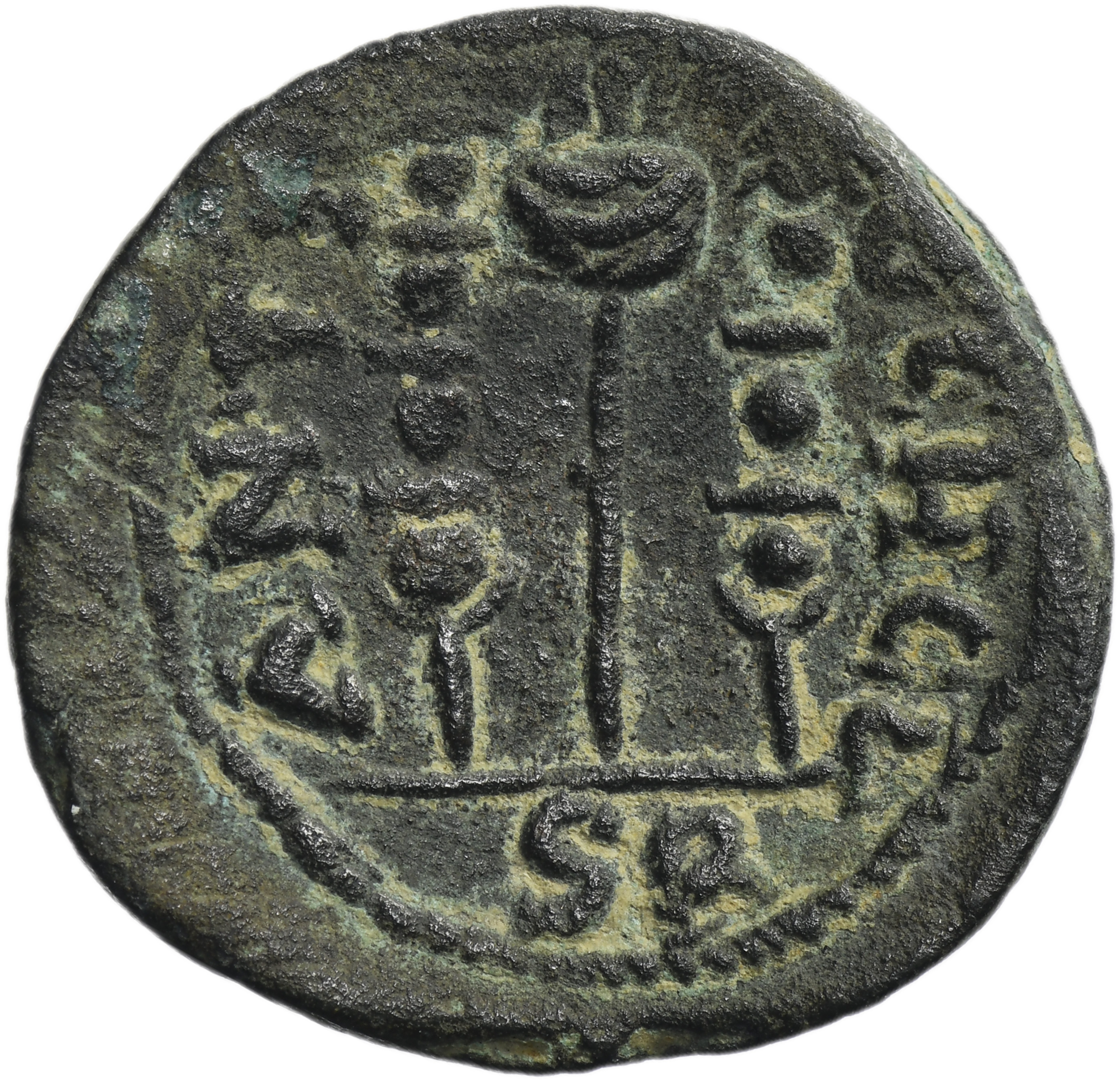


Provincial bronze issue of Claudius II Gothicus (268–270 AD), struck at Antioch in Pisidia, belonging to the local civic coinage operating within the context of the 3rd-century crisis. Coins of this type combine elements of official imperial propaganda with local provincial traditions, retaining simplified titulature and a distinctive style.
The obverse depicts the radiate bust of the emperor facing right, with the legend IMP CAES CLAVDIV, representing a shortened form of his name and titulature.
The reverse shows a legionary eagle (aquila) placed between two military standards, with the legend ANTIOCH CL and the letters SR in the exergue. The legionary eagle was the most important symbol of the Roman legions, associated with honor, loyalty, and divine protection, while the standards emphasize the structure and organization of the army.
This motif clearly refers to the military character of Claudius II’s reign, in which the army and its loyalty played a decisive role. The presence of such iconography on provincial coinage reflects the strong influence of military propaganda even in regions beyond the central imperial mints.
Roman Provincial
Pisidia, Antioch, Claudius II Gothicus (268-270), AE
Obverse: radiate, draped and cuirassed bust right
IMP CAES CLAVDIV
Reverse: vexillum topped by eagle between two standards, SR in exergue
ANTIOCH CL
Diameter 25 mm, weight 9.30 g











