


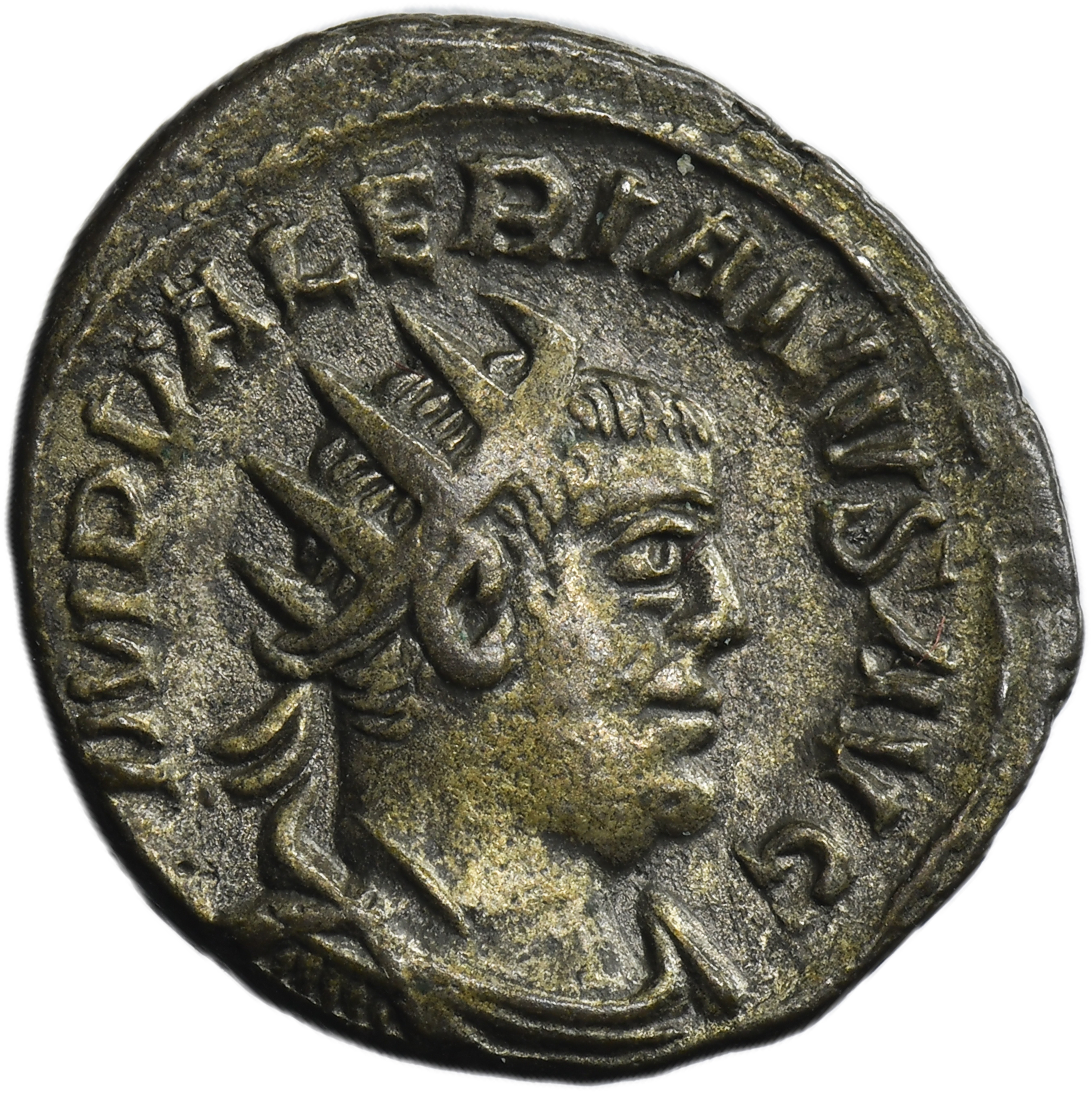
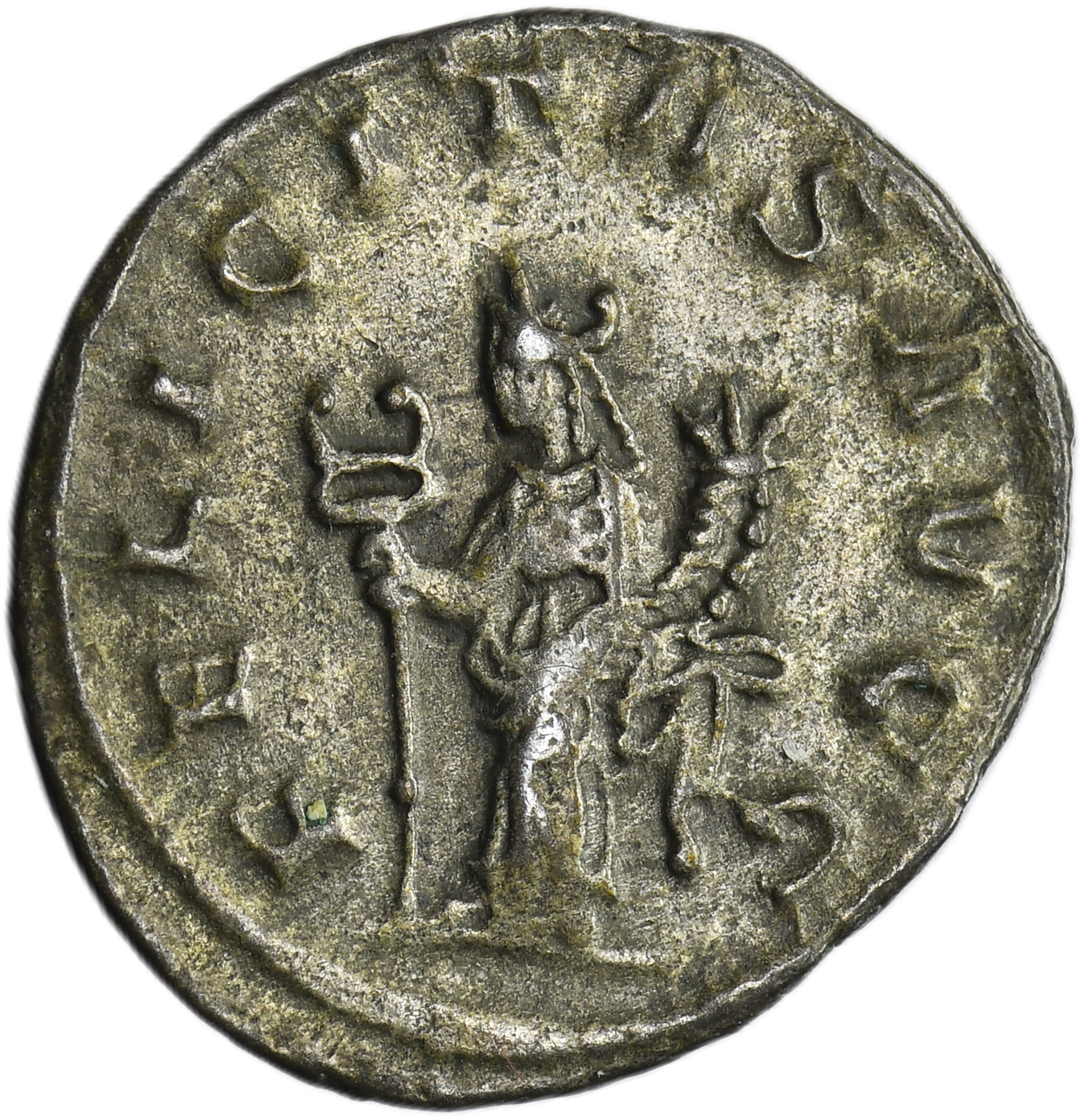


Antoninian of Valerian I (AD 257–259), struck at the Antioch mint, belongs to eastern issues in which particular emphasis was placed on the idea of stability and prosperity of the empire amid increasing external pressures.
The obverse presents a radiate and draped bust of the emperor facing right, with the legend IMP VALERIANVS P F AVG, giving his name and titulature as pius felix augustus. The radiate crown denotes the antoninianus denomination, which at this time functioned as the principal coin in circulation despite the ongoing debasement of silver content.
The reverse depicts Felicitas standing left, holding a caduceus and cornucopia, with the legend FELICITAS AVGG. Felicitas, as the personification of happiness and prosperity, was a standard motif in Roman coinage, particularly in contexts emphasizing the well-being of the state.
The caduceus symbolizes harmony, peace, and balance, while the cornucopia refers directly to abundance and economic prosperity. Together, these attributes form a coherent ideological message pointing to well-being under imperial rule.
The legend FELICITAS AVGG refers to the “prosperity of the Augusti,” encompassing both Valerian I and his co-ruler Gallienus, highlighting the shared nature of authority and the concept of stability during a politically challenging period.
Roman Imperial
Valerian I (253-260), Antoninianus 257-259, Antioch mint
Obverse: radiate, draped and cuirassed bust right
IMP VALERIANVS P F AVG
Reverse: Felicitas standing left, holding caduceus and cornucopia
FELICITAS AVGG
Diameter 21 mm, weight 3.44 g











