


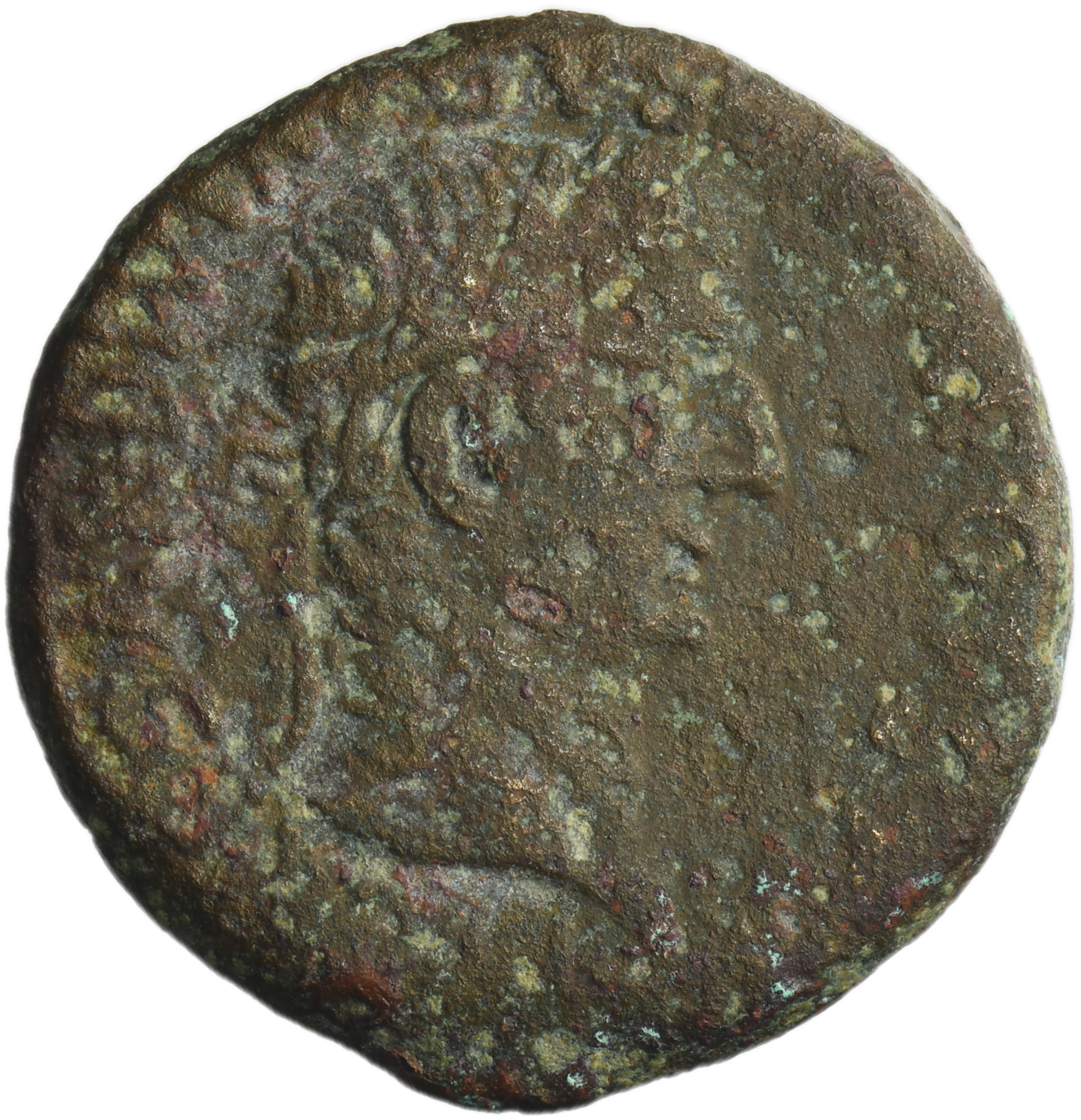
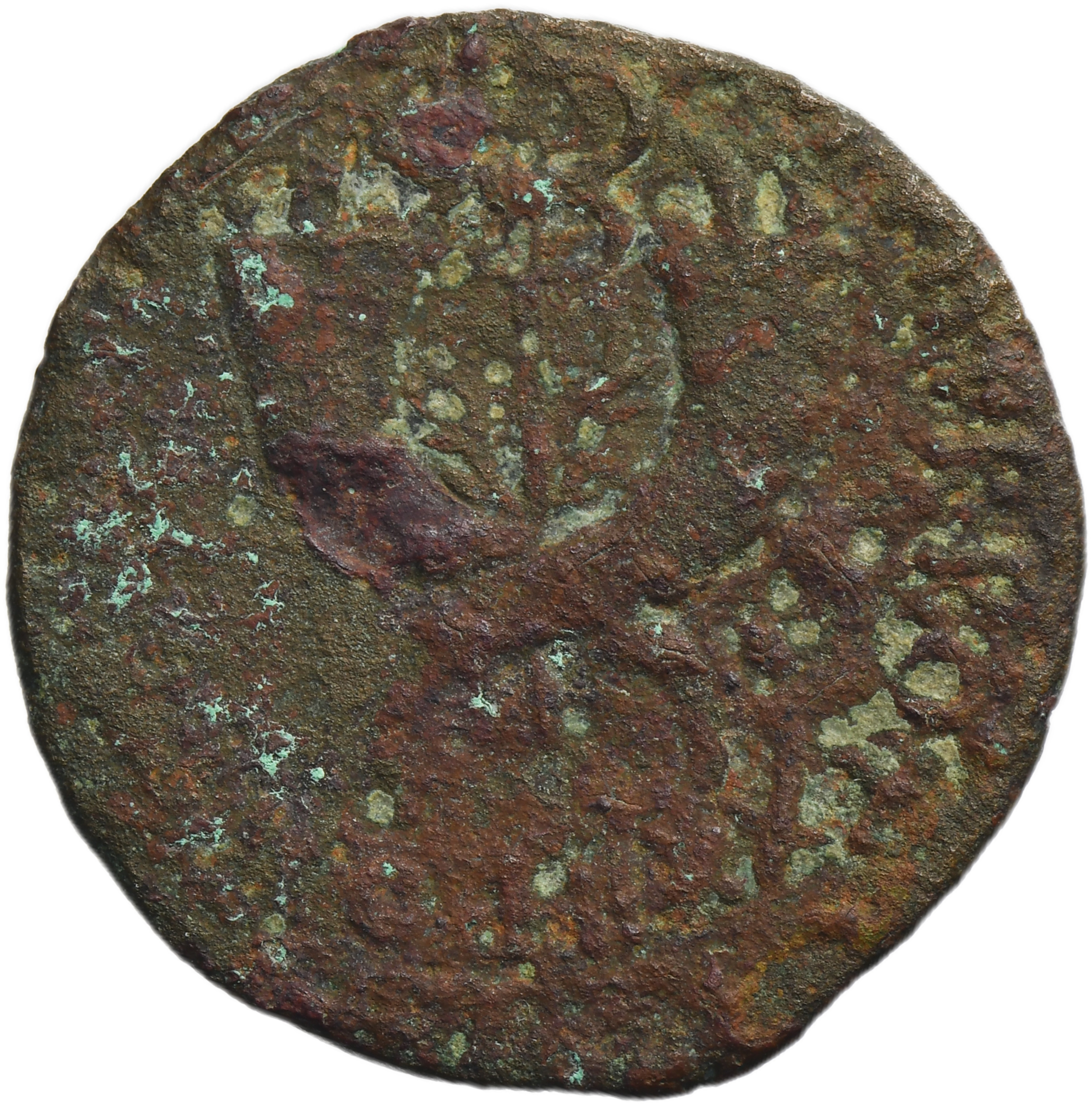


Dupondius of Tiberius (AD 14–37), struck at the mint of Commagene circa AD 19/20, belonging to provincial issues of the early Roman Empire. Coins of this type provide valuable insight into minting activity in the provinces and the adaptation of Roman imperial imagery in local contexts.
The obverse features a right-facing head of the emperor wearing a laurel wreath, with the legend TI CAESAR DIVI AVGVSTI F AVGVSTVS, emphasizing his status as the son of the deified Augustus (Divi Augusti Filius) and legitimate successor.
The reverse depicts crossed cornucopiae and a caduceus, with the legend PON MAXIM COS III IMP VII TR POT XXII. The cornucopiae symbolize prosperity and abundance, while the caduceus, an attribute of Hermes, represents peace, harmony, and economic stability.
The reverse legend presents the emperor’s full titulature, including his religious and political roles: Pontifex Maximus, Consul for the third time, Imperator for the seventh time, and holder of Tribunician Power for the twenty-second time. Together, these elements form a strong propagandistic message emphasizing both authority and stability under Tiberius.
Roman Imperial
Tiberius (14-37), Dupondius 19/20, uncertain mint in Commagena
Obverse: laureate head right
TI CAESAR DIVI AVGVSTI F AVGVSTVS
Reverse: crossed cornuacopiae and winged caduceus
PON MAXIM COS III IMP VII TR POT XXII
Diameter 29 mm, weight 12.8 g











