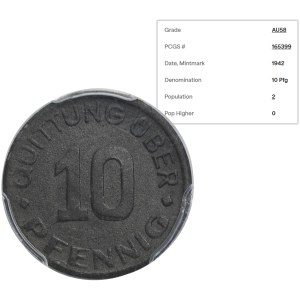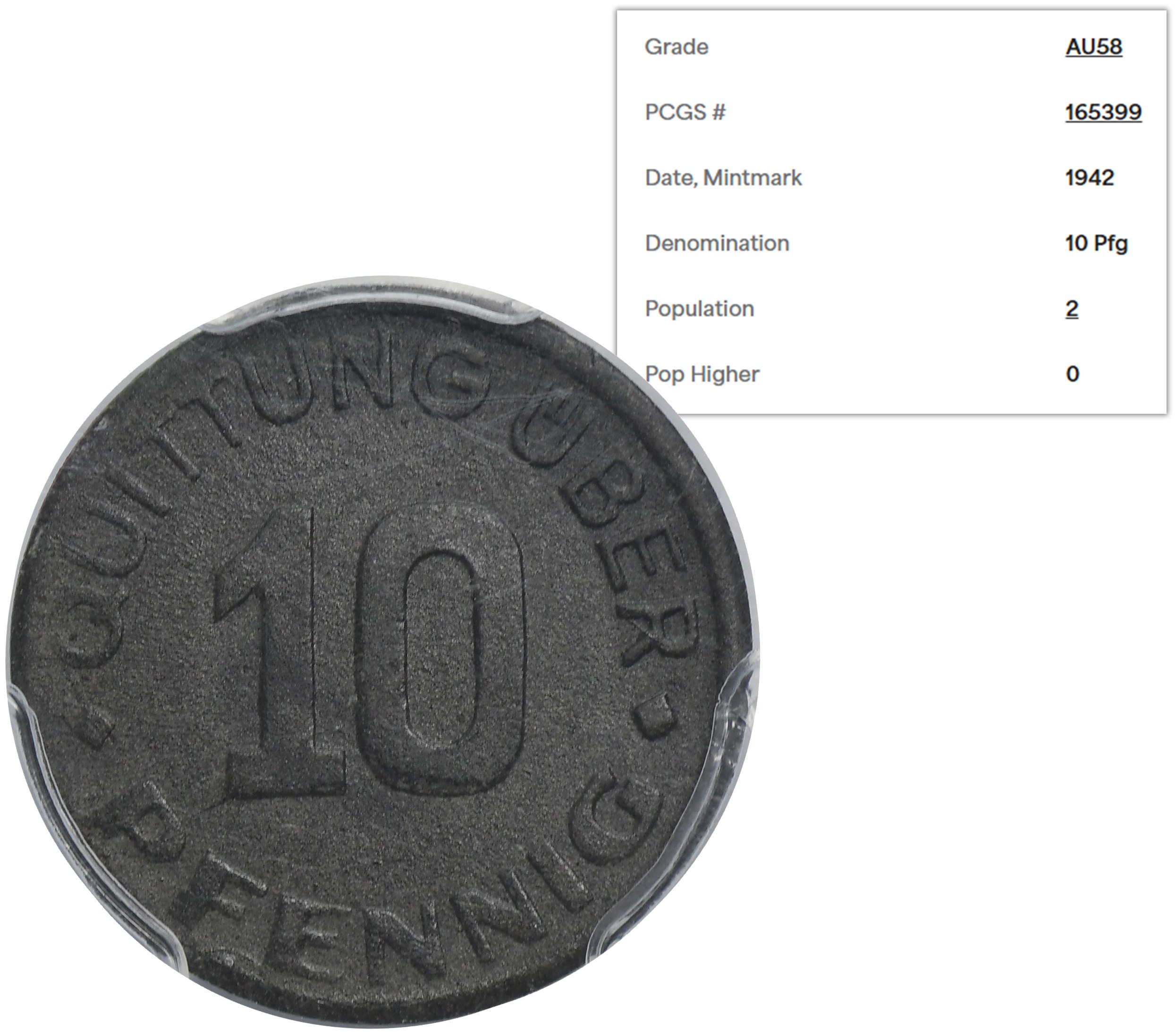
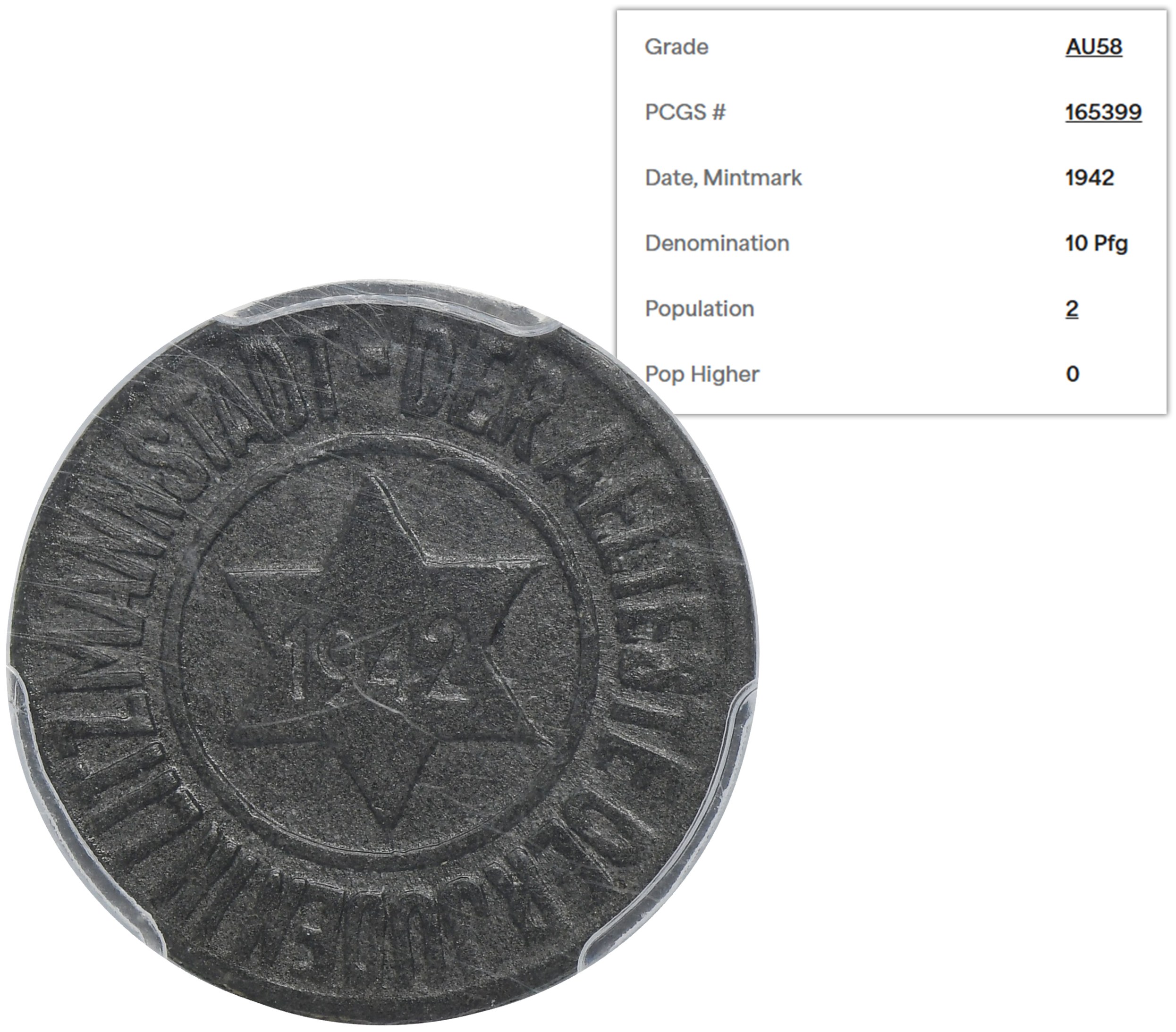


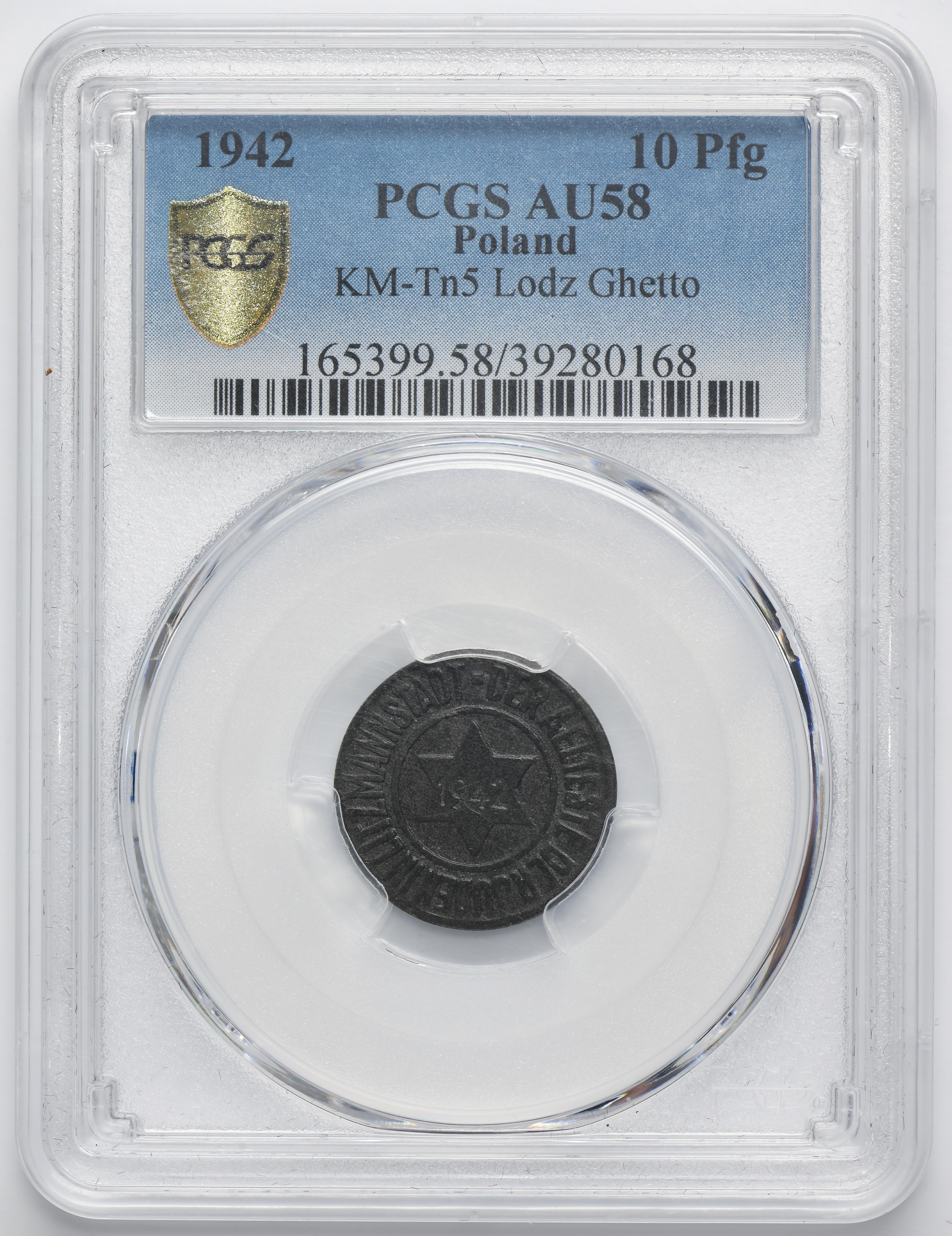
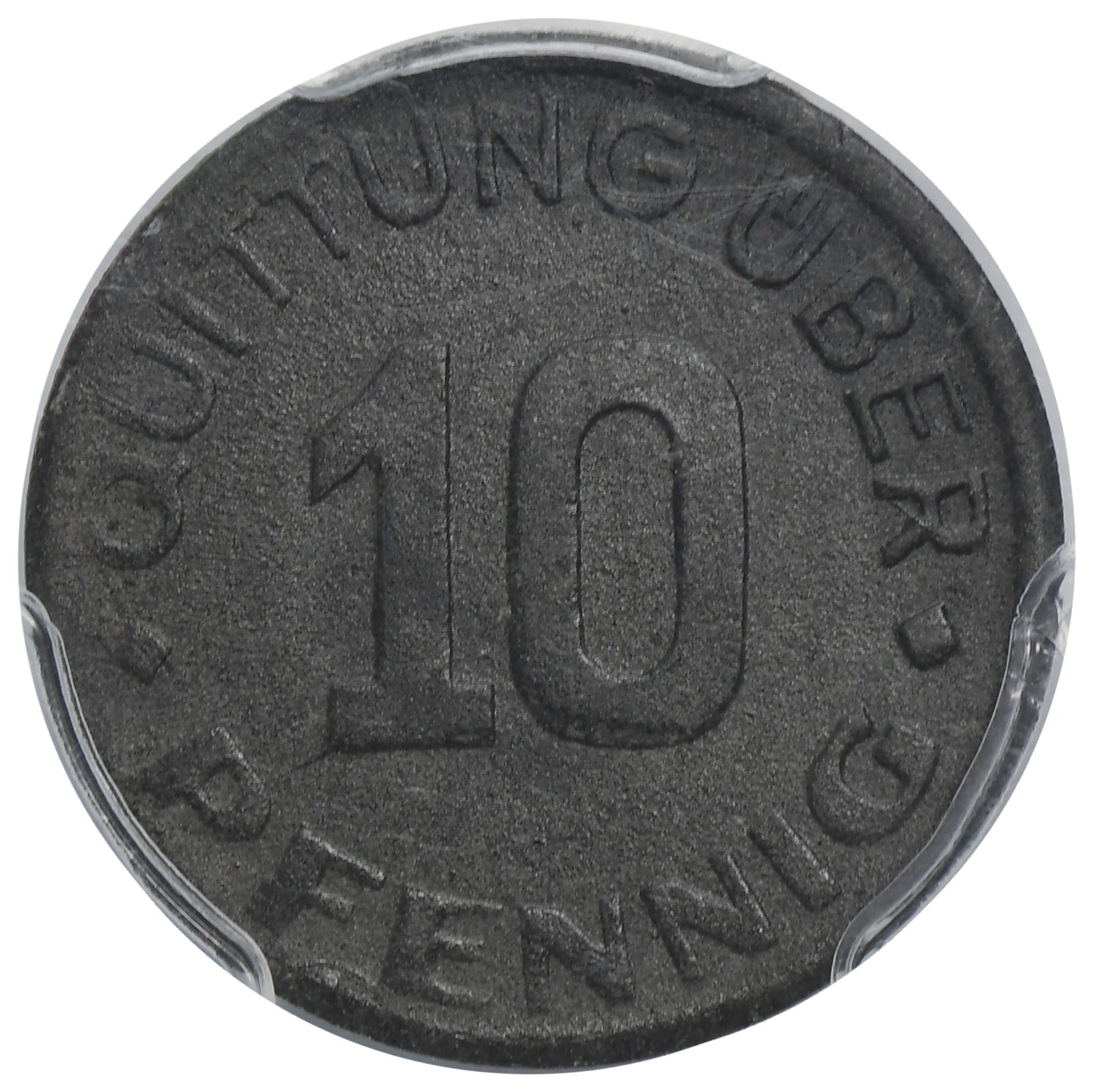
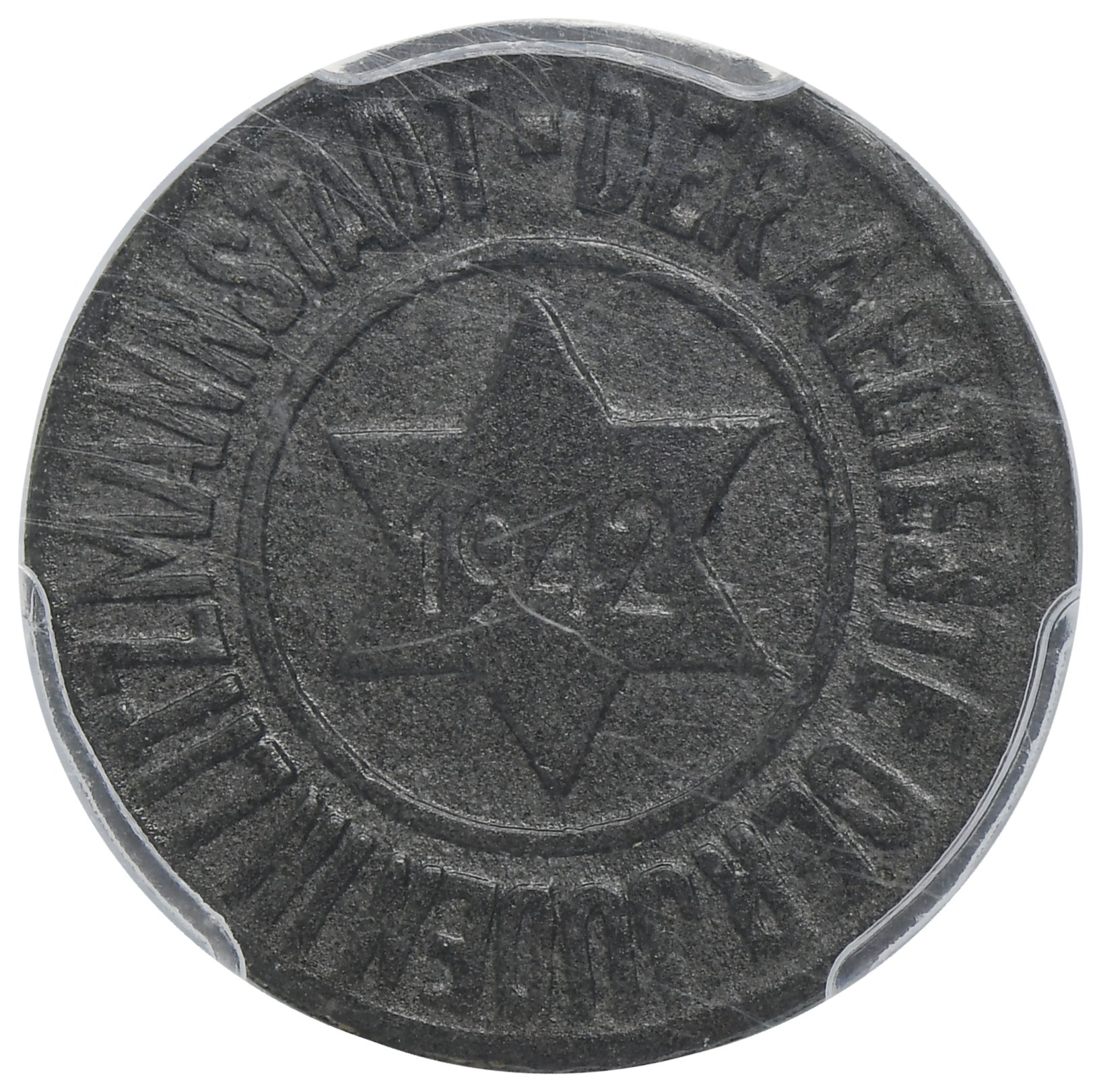
Very rare issue.
Second type, reduced in size compared to the first type.
The first coin of the Łódź Ghetto introduced into circulation on December 8, 1942, according to the design approved in October by Hans Biebow.
Superb specimen. Highest grade in PCGS population report.
In 1942, a decision was made to issue the first coins. At Metalabteilung I, between June 14 and June 24, the first 10 pfennig coins designed by Tiefenbach were struck. Produced in an aluminum-magnesium alloy, they were intended to be released in a quantity of 700,000 pieces. They were to be accompanied by 400,000 five-pfennig coins, whose production was to begin immediately after completion of the larger denomination, with dies already prepared. However, this never came to fruition.
The minting of the 10 pfennig coins was halted on June 24, when Rumkowski received a letter from Biebow, containing a highly critical assessment of the pieces delivered eight days earlier. Biebow’s main objections concerned the size of the coin, which was too similar to Reich coinage, as well as the resemblance of the numeral “10” on the reverse. He also found unacceptable the combination of the Star of David with German oak leaves on the reverse, as well as ears of grain intertwined with the Star of David on the obverse. The letter concluded with an आदेश that all future designs be submitted to him prior to production to avoid unnecessary work.
Rumkowski subsequently submitted another design in July or August, this time prepared by the Łódź engraver Mordechai Glezer. This proposal was also rejected. In a letter dated August 21, Biebow criticized the design as overly complex and stated that the Jewish emblem must not appear on ghetto coinage.
Only on October 13 did Biebow approve one of the submitted designs. Production of the new, smaller 10 pfennig coin was scheduled to begin on December 8, 1942, with 100,000 pieces to be struck on the first day and a total mintage of one million planned. The introduction of this coin was intended to replace the 10 pfennig vouchers previously issued, among others, by the ghetto postal service.
Unfortunately, very few 10 pfennig coins have survived to the present day. There were several reasons for this, one of the primary being the high flammability of the magnesium alloy from which they were made. As a result, towards the end of the war, they were commonly used as fire starters.