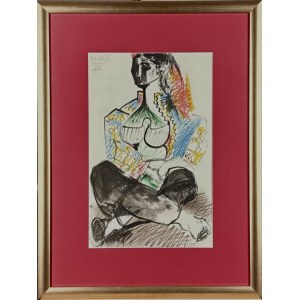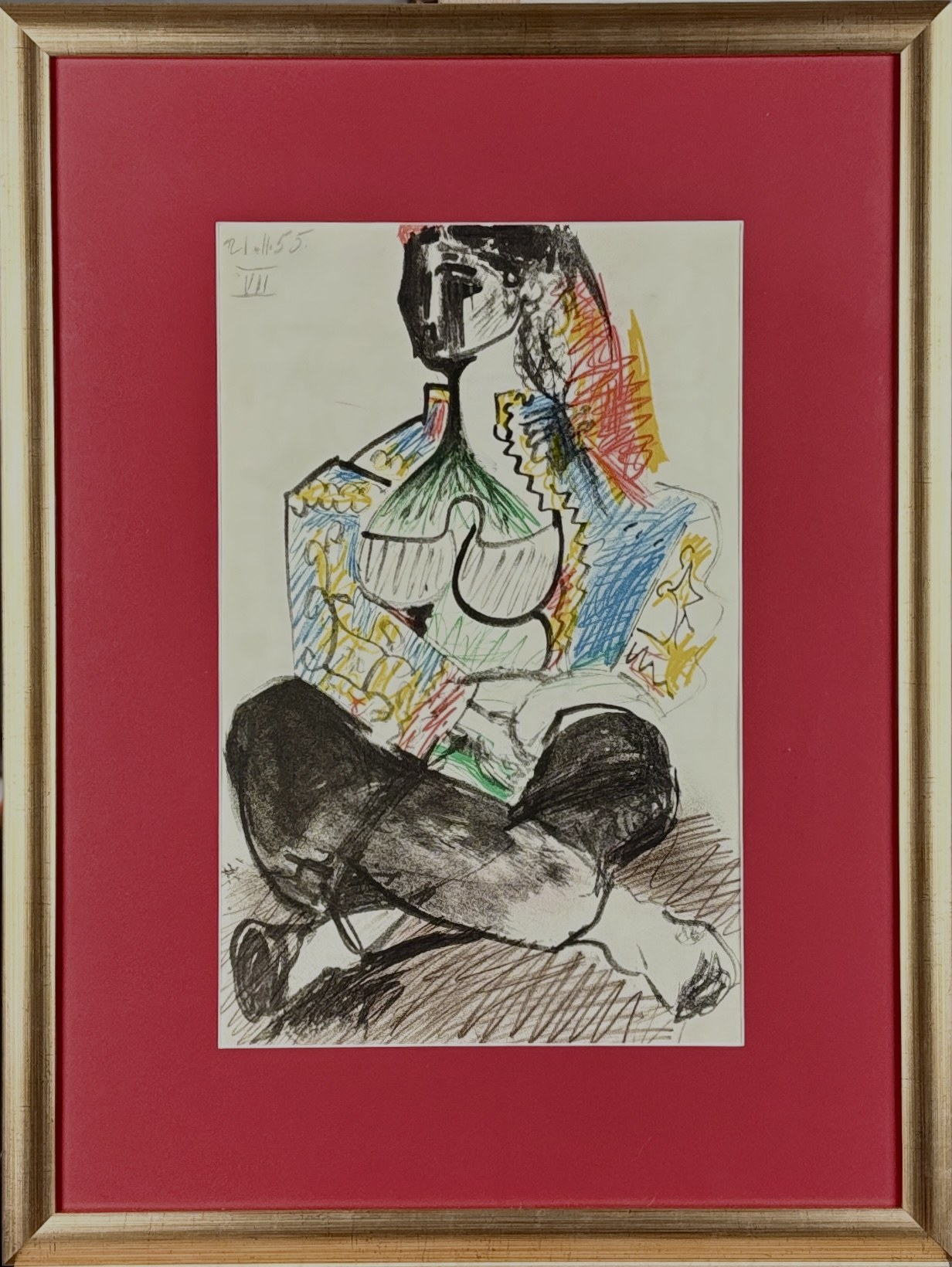
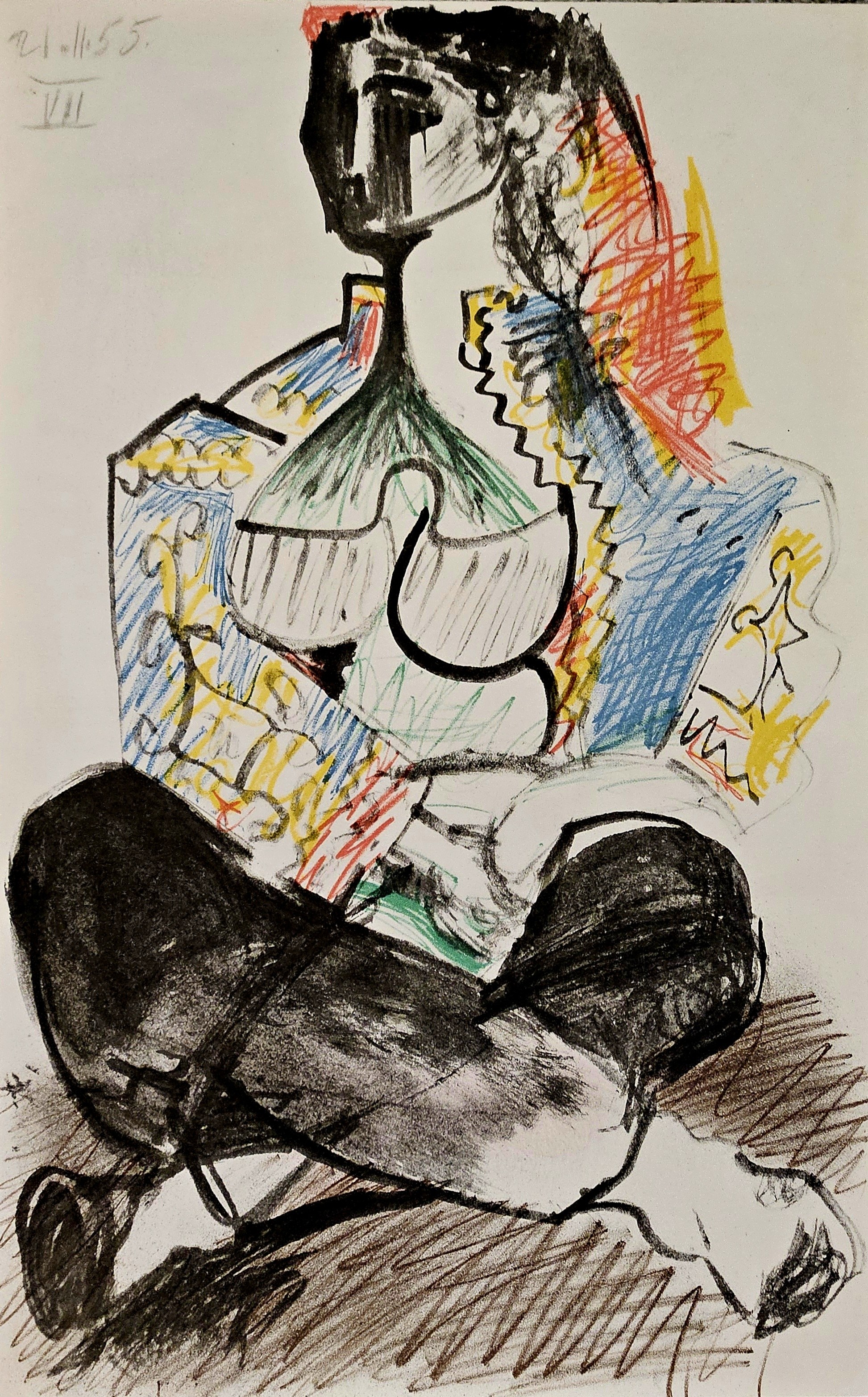
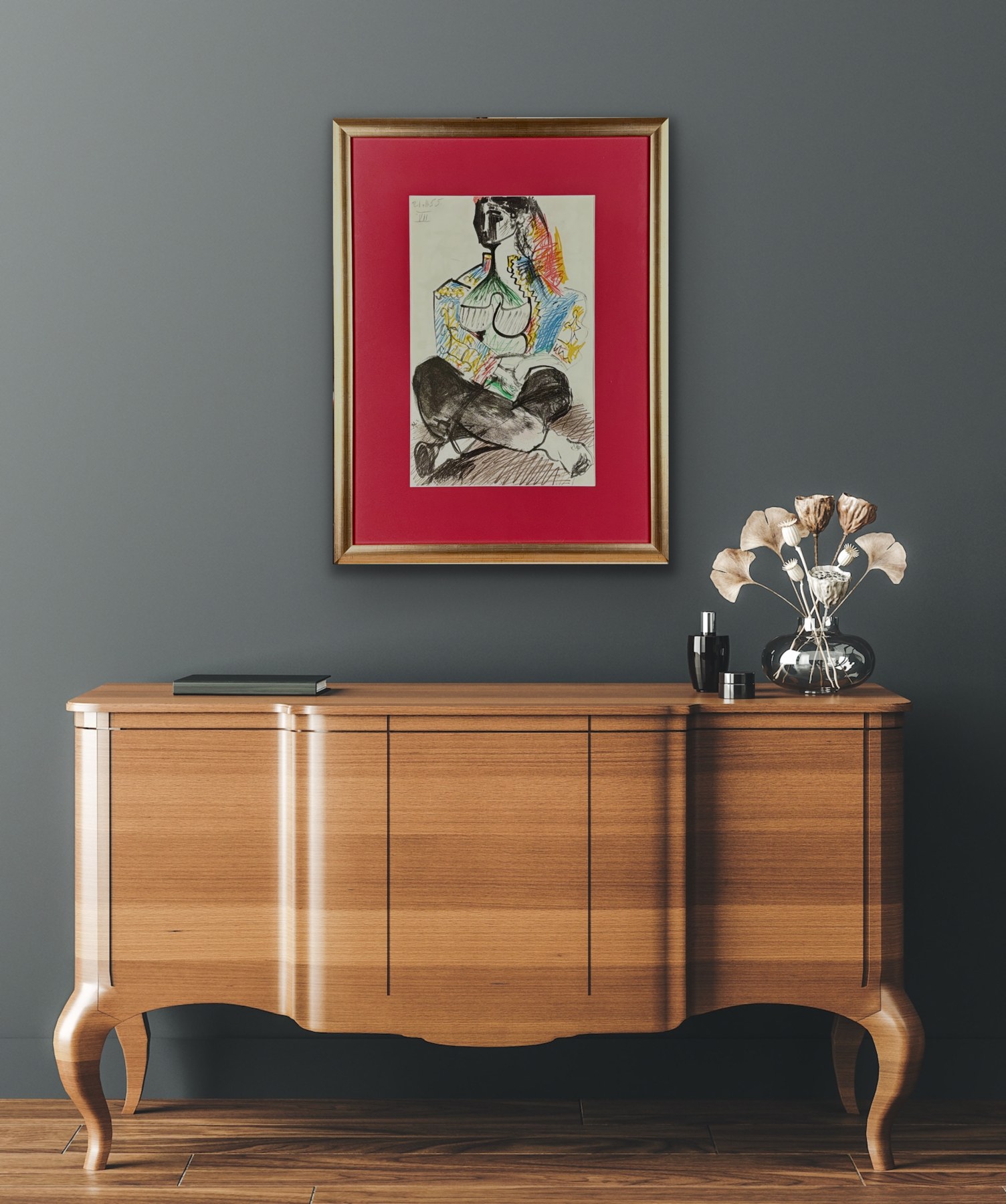
Artist's lithograph on Velin de Rives paper, 42 x 26 cm composition, framed 62 x 48 cm;
Dated on the plate l.g. "21 II 55. VII";
French edition; limited edition of 1400 pieces; inscription on the frame of the portfolio "Edisione Unica"(Unique Edition).
Publisher: Cercle d'Art, Paris, made by the famous atelier Mourlot Frères.
(Éditions Cercle d'art edition. jIt is considered a masterpiece of editorial art. The artist personally supervised the process of creating the lithographs to make sure that the colors and texture of the lithographs perfectly reproduced his original drawings; the famous Paris workshop of Mourlot Frères was the best place in the world to create artistic lithographs, a guarantee of the highest artistic quality of lithographs that are almost no different from Picasso's original drawings).
(Edisione Unica-The term is a statement of exclusivity. It is used almost exclusively for bibliophilic publications, art portfolios and luxury albums. The publisher thus declares that this particular publication has been issued only once. There will be no reprints, reissues or subsequent editions in exactly the same form).
The work comes from a unique collector's edition entitled "Carnet de la Californie" (Sketchbook from California) - Pablo Picasso's personal sketchbook, which the artist kept in late 1955 and early 1956. In 1955, Picasso moved to a magnificent 19th-century villa in Cannes called La Californie. It was there that the sketches were created. The artist turned the grand salon into his studio, and the sketchbook is an intimate record of how he lived and created during this period. Picasso obsessively drew what he saw around him - large Art Nouveau windows, easels, palm trees outside the window and artistic clutter. Many of the drawings in this sketchbook - especially those depicting decorative windows and vegetation - are considered a painterly dialogue with Matisse's style. Picasso once said, "When Matisse died, he left me his gardens."
Many of the sketches feature a "Woman in Turkish Dress Odalisque"-a reference to the classic motif of the odalisque, which for many artists was the personification of the exoticism, mystery and sensuality of the East. A whole series of odalisques was painted by Henri Matisse. For him, they were an excuse to play with color, fabric patterns and interior decoration. Picasso, being greatly influenced by Matisse, often painted his last great love, his muse, and his second wife .Jacqueline Roque, precisely in the pose of an odalisque or in Turkish costume.