


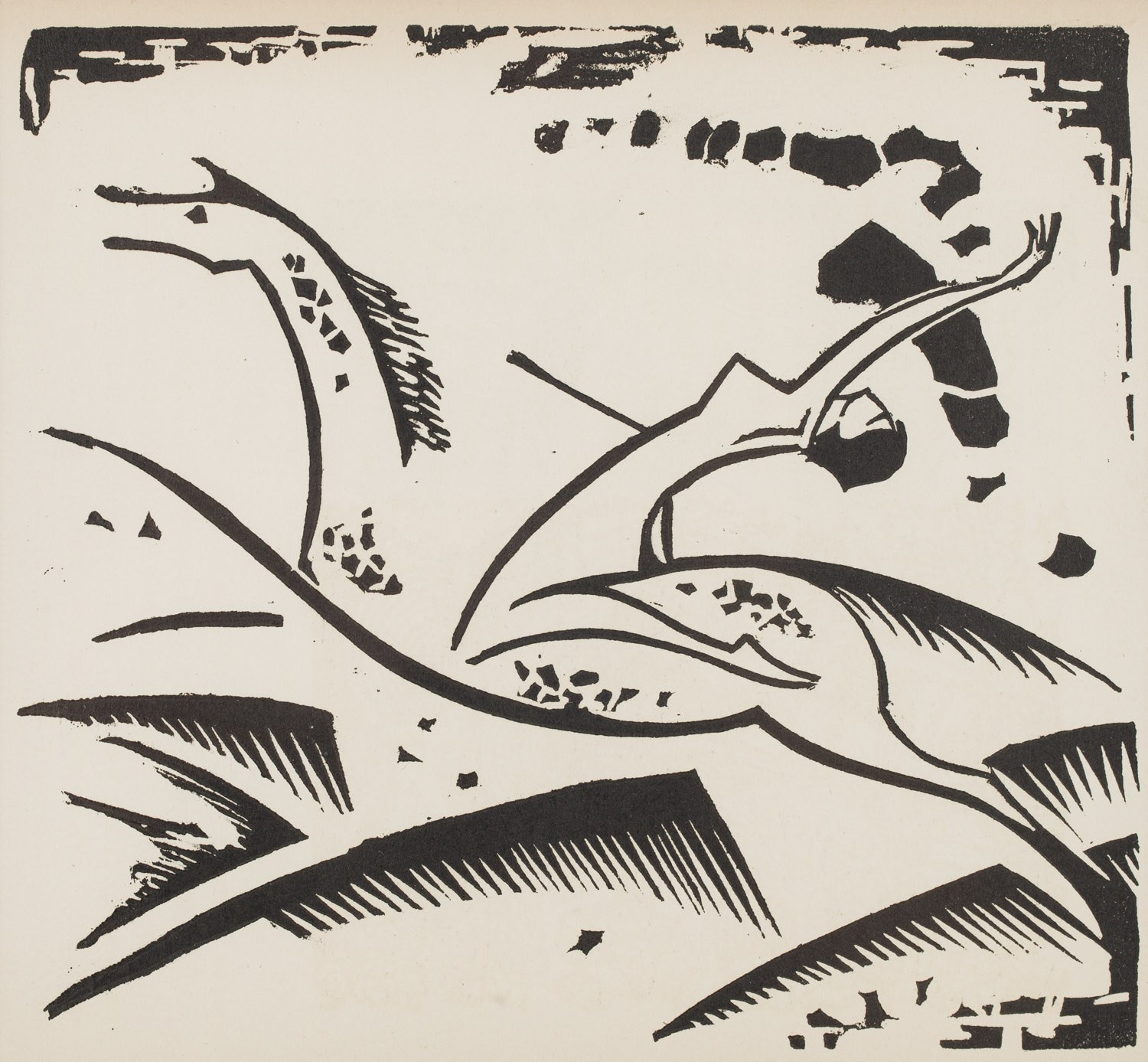
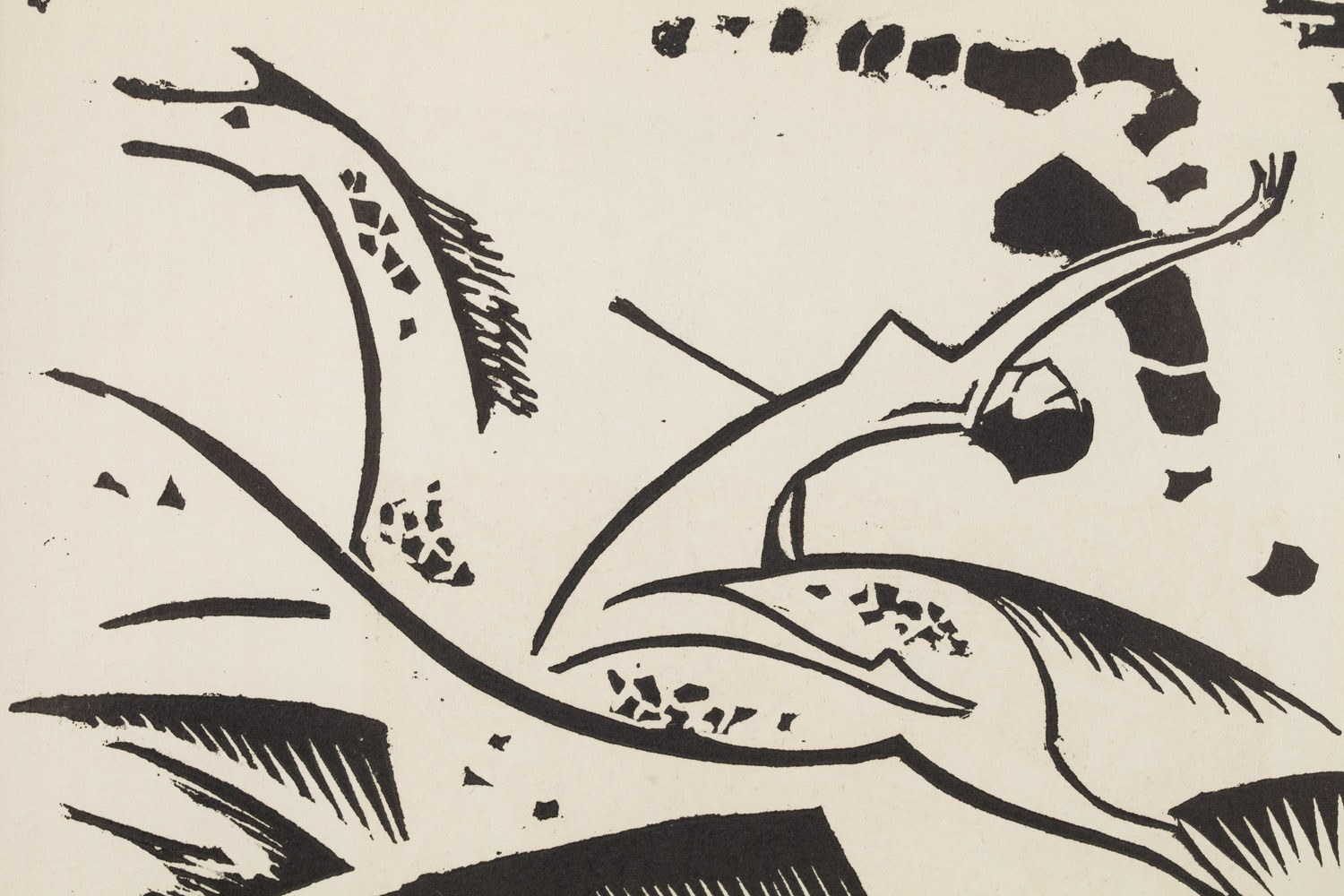
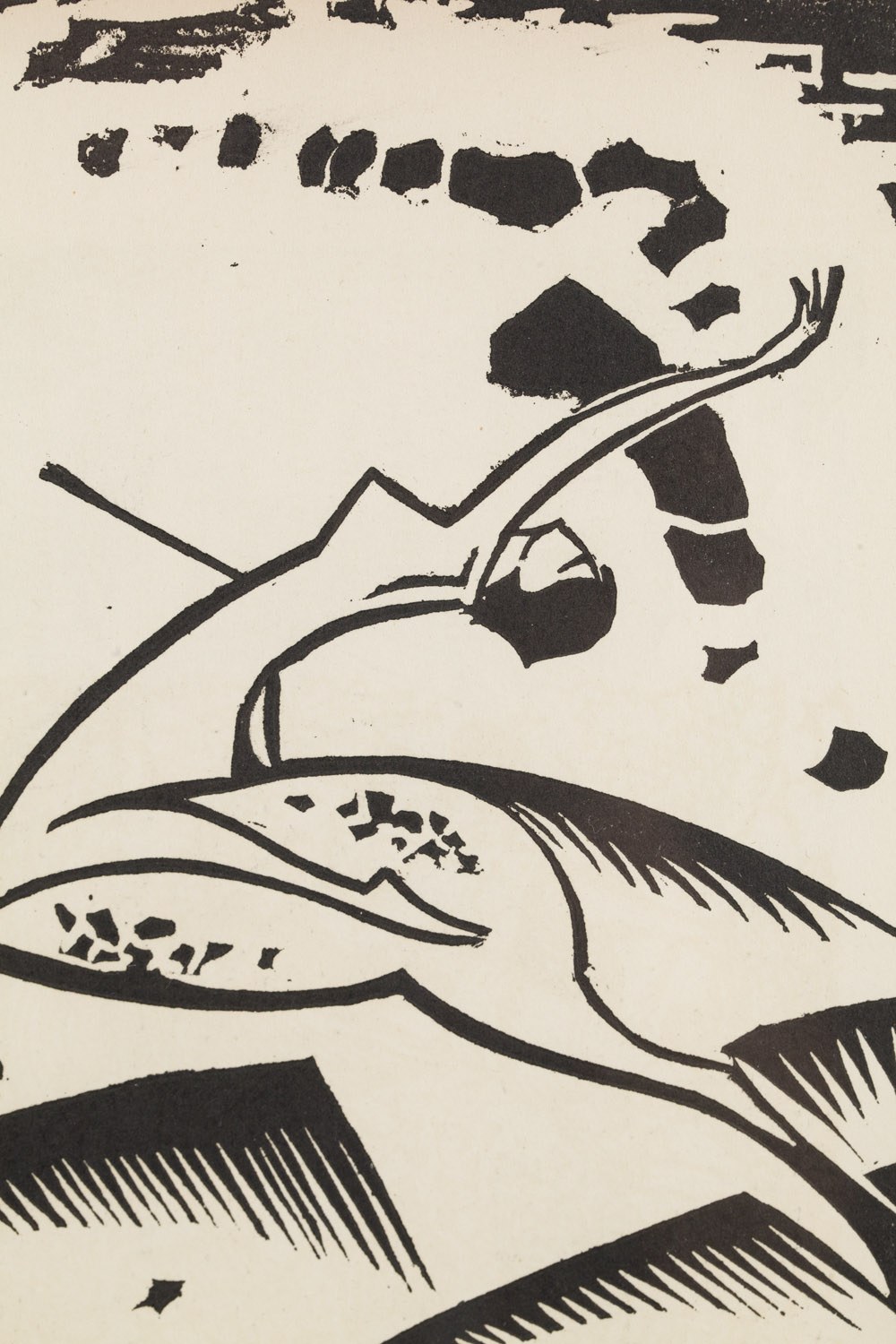
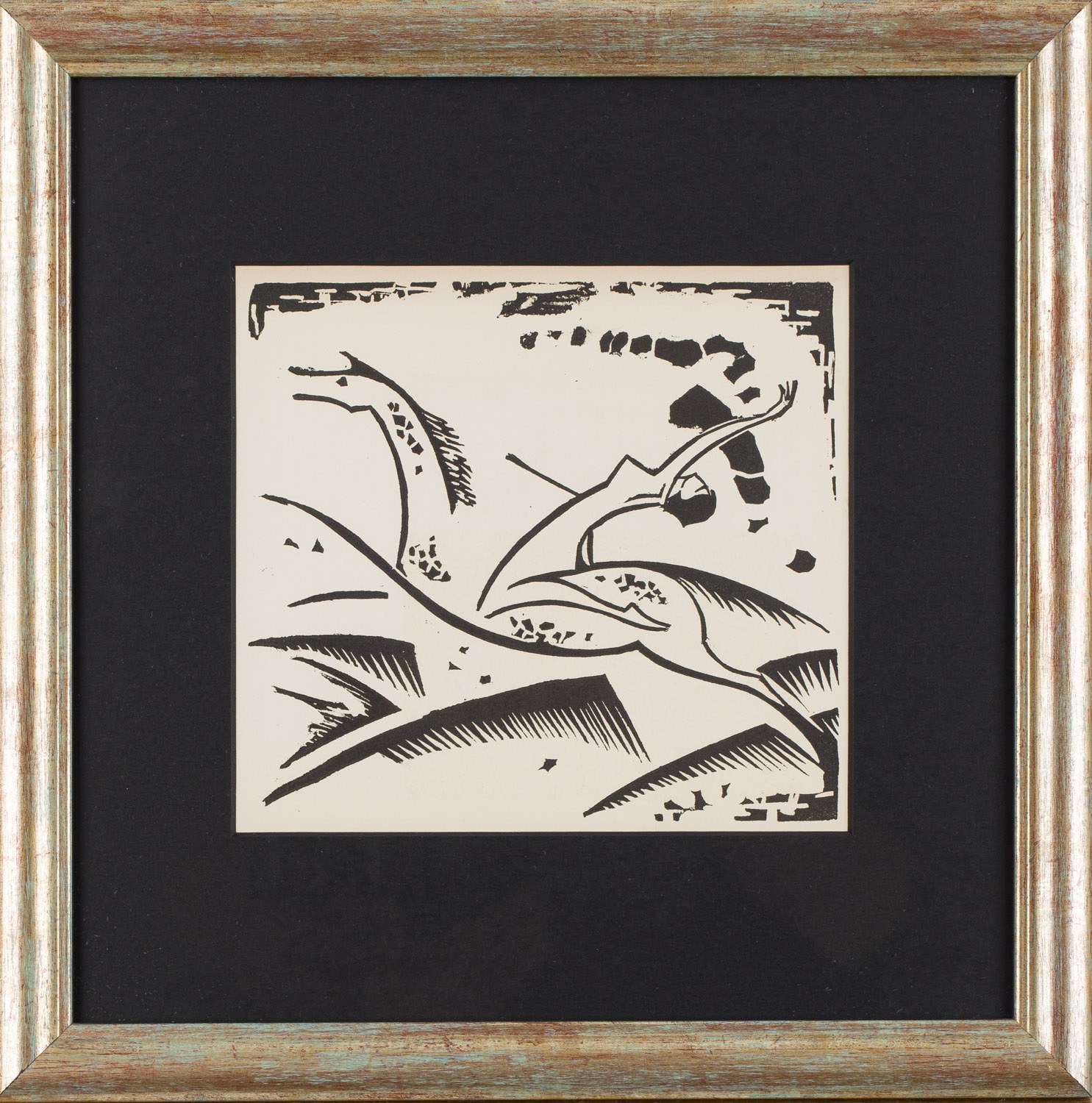
Dimensions: 17 x 18 cm
The work is from Roger Avermaete’s monumental monograph, published in Paris, "La gravure sur bois moderne de l'Occident," published in Paris in 1928, which documents the renaissance and evolution of modern woodcut and linocut in Western art during the first decades of the 20th century. The publication had a print run of only 1,000 copies, and most of the prints included in it (177 out of 239) are original prints (bois originaux) made directly from the artist’s original woodcut and linocut blocks on luxury paper.
Biography
He was a member of the artistic groups Bunt, ZPAG, and the Circle of Advertising Graphic Artists. He studied art at the Academy of Fine Arts in Kraków from 1904 to 1906, subsequently continuing his studies in Paris and Munich. He organized and directed the publishing company “Ostoja.” He was one of the leading figures and a theorist of Polish Expressionism. He published the biweekly “Zdrój” (1917–20), which he edited in collaboration with S. Przybyszewski. Hulewicz published his most outstanding works and most characteristic views, which had appeared in “Zdrój” between 1917 and 1919, in the volume *Brzask epoki* (Poznań, 1920), providing it with an introduction in which he articulated, among other things, the essence of the new art: “A view from within. Synthesis. A desire for substance; Form serving Content. Reaching the depths directly.” In later years, he took over as head of the literary department at Warsaw’s *Kurier Poranny* and also founded a private painting school. In his own visual art, he embodied the anti-aesthetic principles of the Bunt group. He painted visionary forms of monsters (somewhat reminiscent of Witkacy), nudes, portraits, and birds; expressive woodcuts with thick outlines and strong contrasts of black and white. He also worked as an illustrator (J. Słowacki, *Genezis z ducha*, 1918; E. Zegadłowicz, *Powsinogi beskidzkie* (1925, 2nd ed.); Czartak: A Collection of Poets from the Beskids, 1925). He published numerous articles, philosophical and aesthetic essays, as well as plays and novels. During the occupation, he collaborated with his brother Witold in publishing a clandestine underground newspaper. Jerzy Hulewicz’s paintings and manuscripts were destroyed during the Warsaw Uprising.










