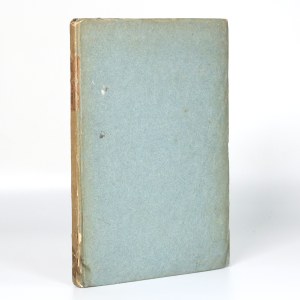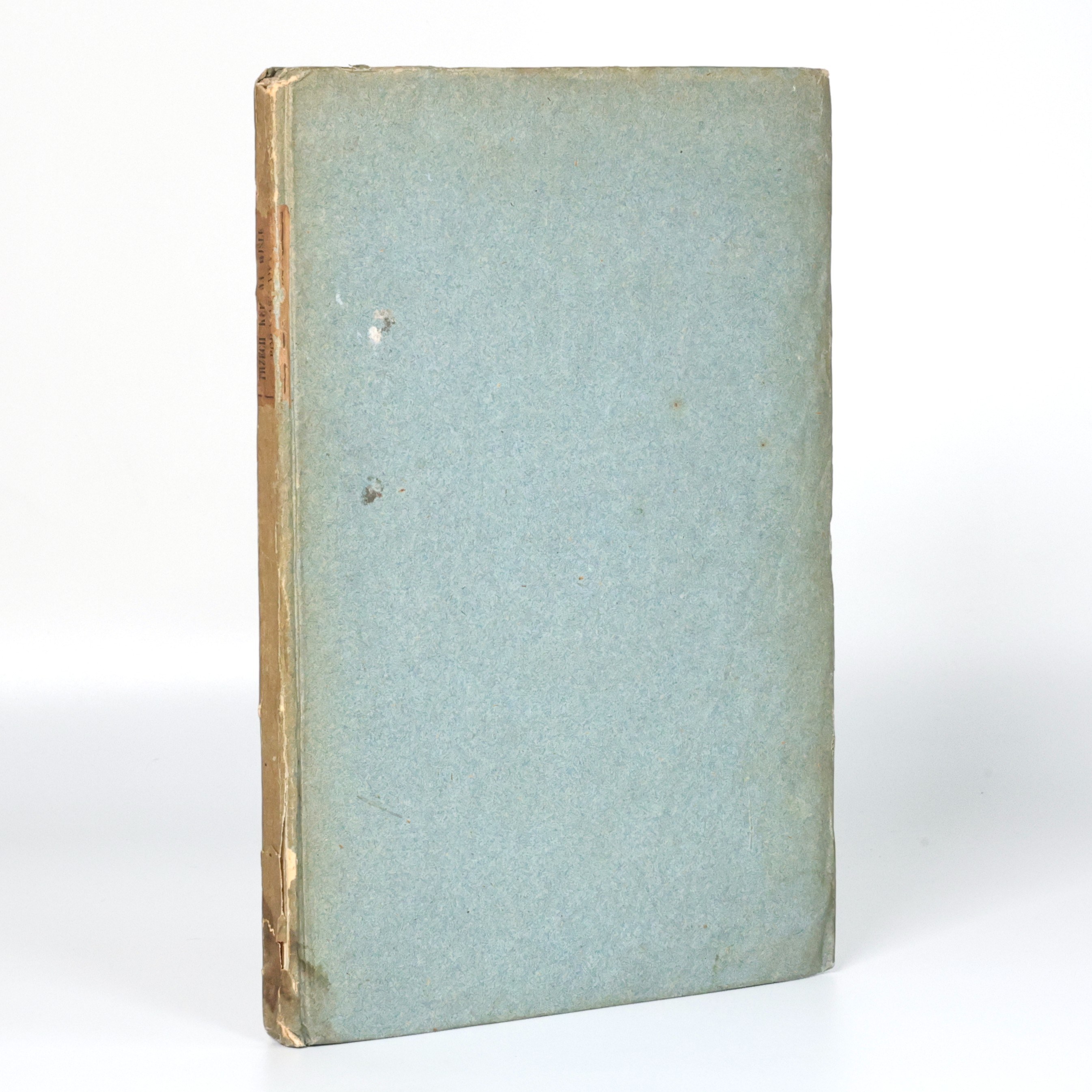
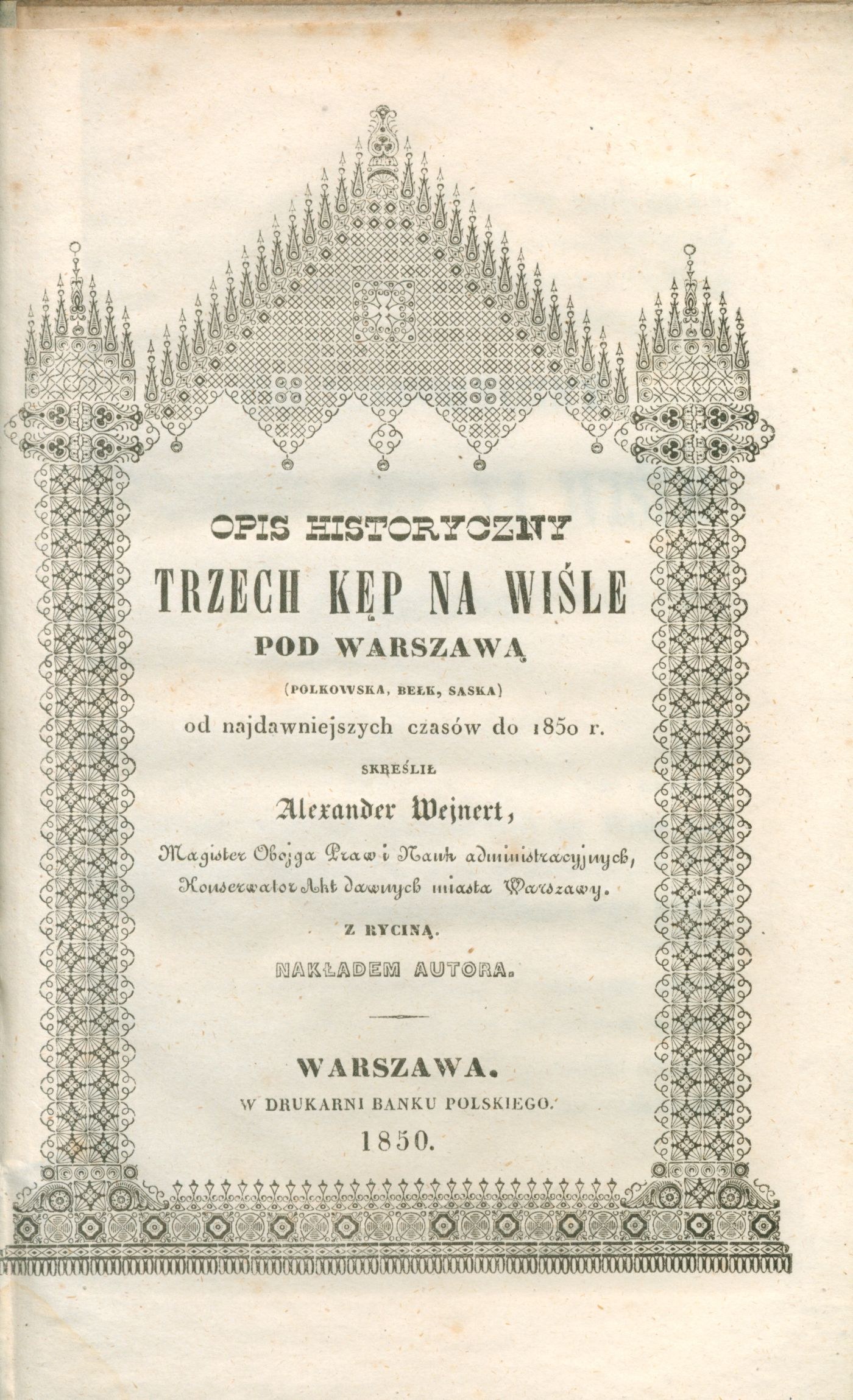
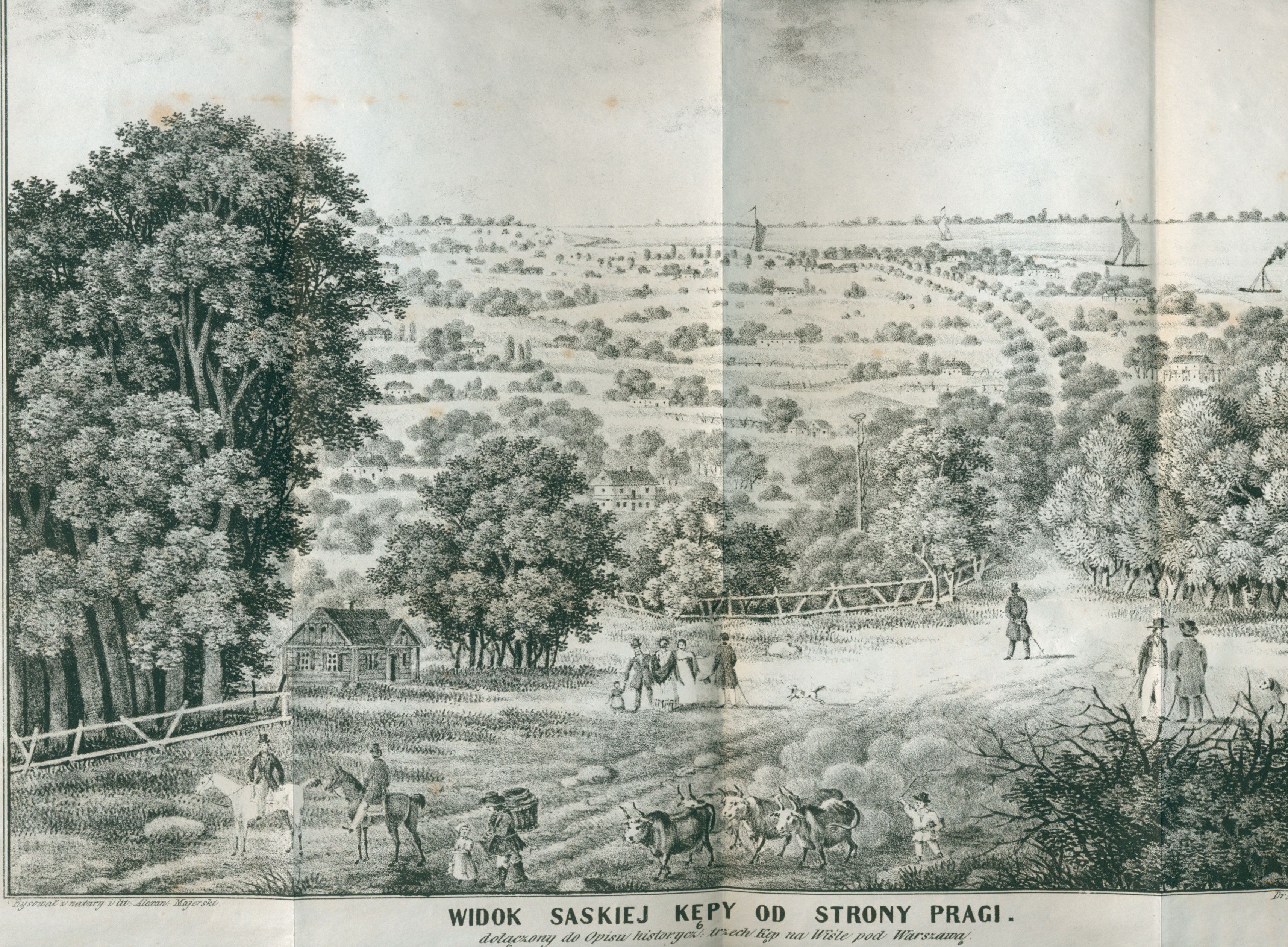

Wejnert Alexander/ Historical description of three kępa on the Vistula River near Warsaw (Polkowska, Bełk, Saska) from the earliest times until 1850/ Warsaw 1850/ Printed by the author, in the printing house of the Bank of Poland/ first edition/ epoch cardboard binding/ p.[4], 156/ fold-out table in lithography "View of Saska Kępa from the Praga side" Drawn from nature and lith.Alexand. Majerski. Printed in lit. by J.Herkner in Warsaw/ very good condition, minor rubbing of binding edges, slight bending of page corners. Very rare.
Variant lithograph not listed in OneBid or digital libraries, clearly richer in iconographic detail. In the foreground, a villager with a basket is accompanied by a little girl, and right next to them can be seen two gentlemen sitting on horses (which are not present at all in the other variant). In the central part, the genre scene has been expanded to include an additional pair of interlopers along with a dog. In turn, in the lower right corner of the composition, two talking men were placed, also accompanied by a dog.
A detailed study devoted to three former Vistula islands/oars associated with the history of the capital. The author takes up a subject neglected - as he himself points out - by earlier Warsaw historians, and reconstructs the history of these places on the basis of available archival materials.
The text has a factual arrangement: the Polkowska kepa is discussed separately (among other things, its location from the vicinity of the former Bolkow towards the area of Mostowa Street, the variability of the names: Polkowska - Zamkowa - Syrena, descriptions of the size and distance from the banks, mentions of the use of the kepa, among others. during the pestilence and in the context of warfare and defense of the city), further the kepa at Belk (origins and legal emoluments, privileges, income and leases), and the most well-known Saska Kepa (history of settlement, contracts and inventories of buildings, accounts of flood damage, as well as information on 19th-century hydrotechnical works to affect the Vistula current near Warsaw).
The study combines historical and topographical narrative with citation of documents (contracts, magistrate's resolutions, inventories, rent settlements), showing how the kępy functioned as economic space (meadows, use, rents), strategic space (fortifications, transportation, mills), as well as recreational and settlement space in the lives of Varsovians.
Weinert, Wejnert, Veinert, Wainert, Wajnert, Weynert Aleksander, *24 IV 1809 Warsaw, †27 XI 1879 Warsaw, Polish historian of Czech origin, son of Antoni. He was a conservator of ancient records and a magistrate's clerk; he published numerous articles in the press about old and contemporary Warsaw. A valuable historical source is his Starożytności warszawskie (6 vols., Warsaw 1848-58). [Source: Polish Music Library]