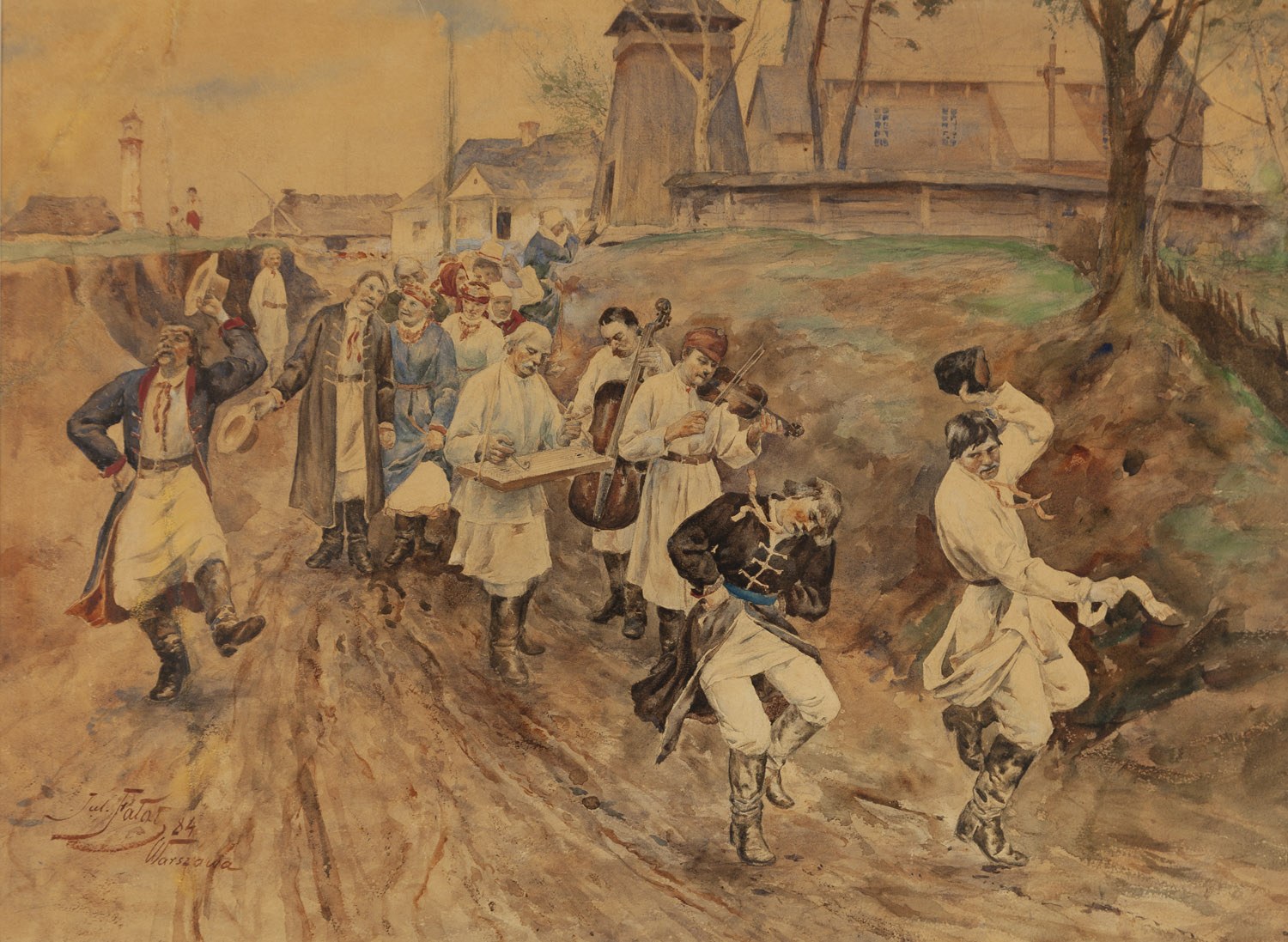
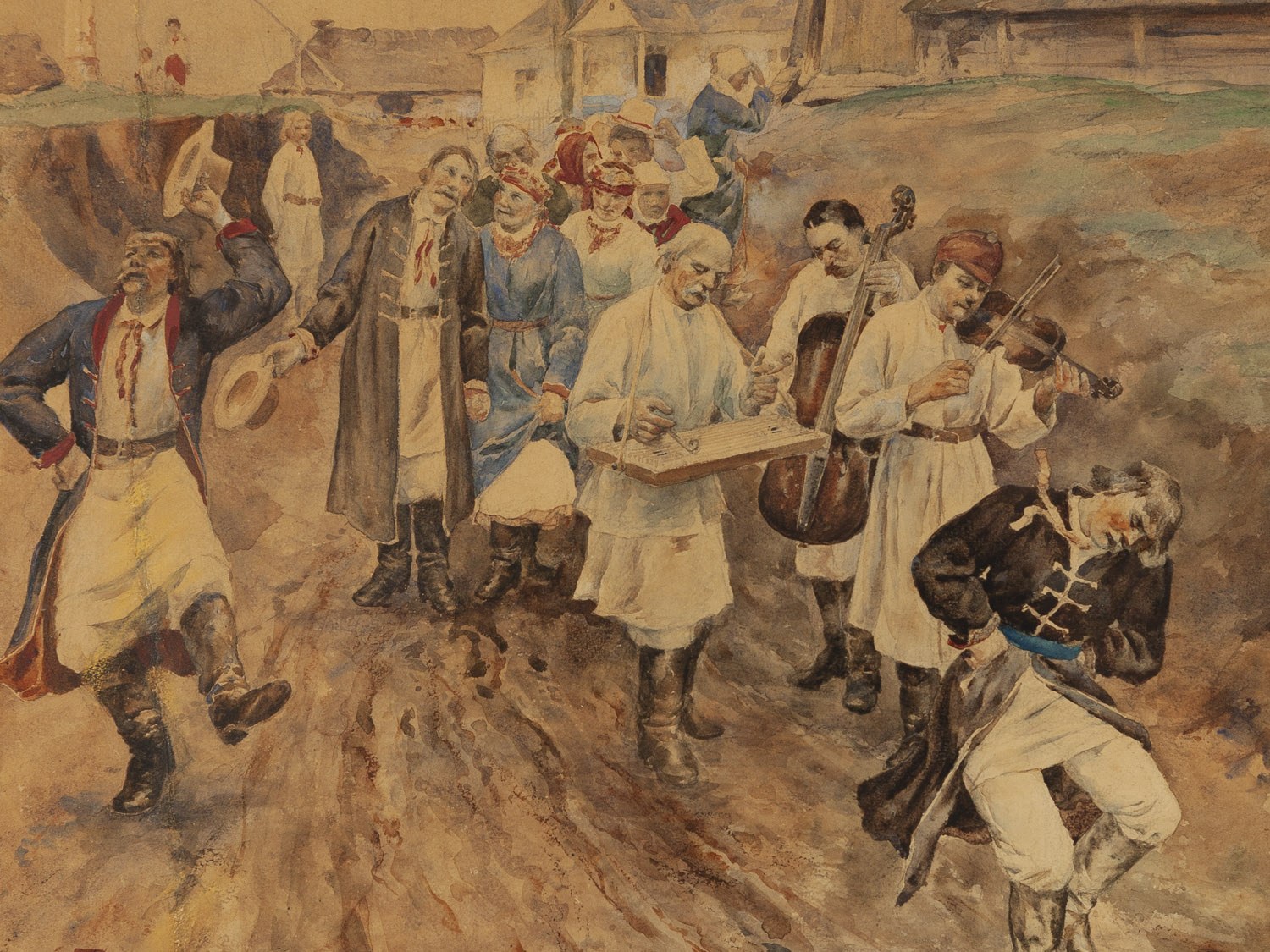
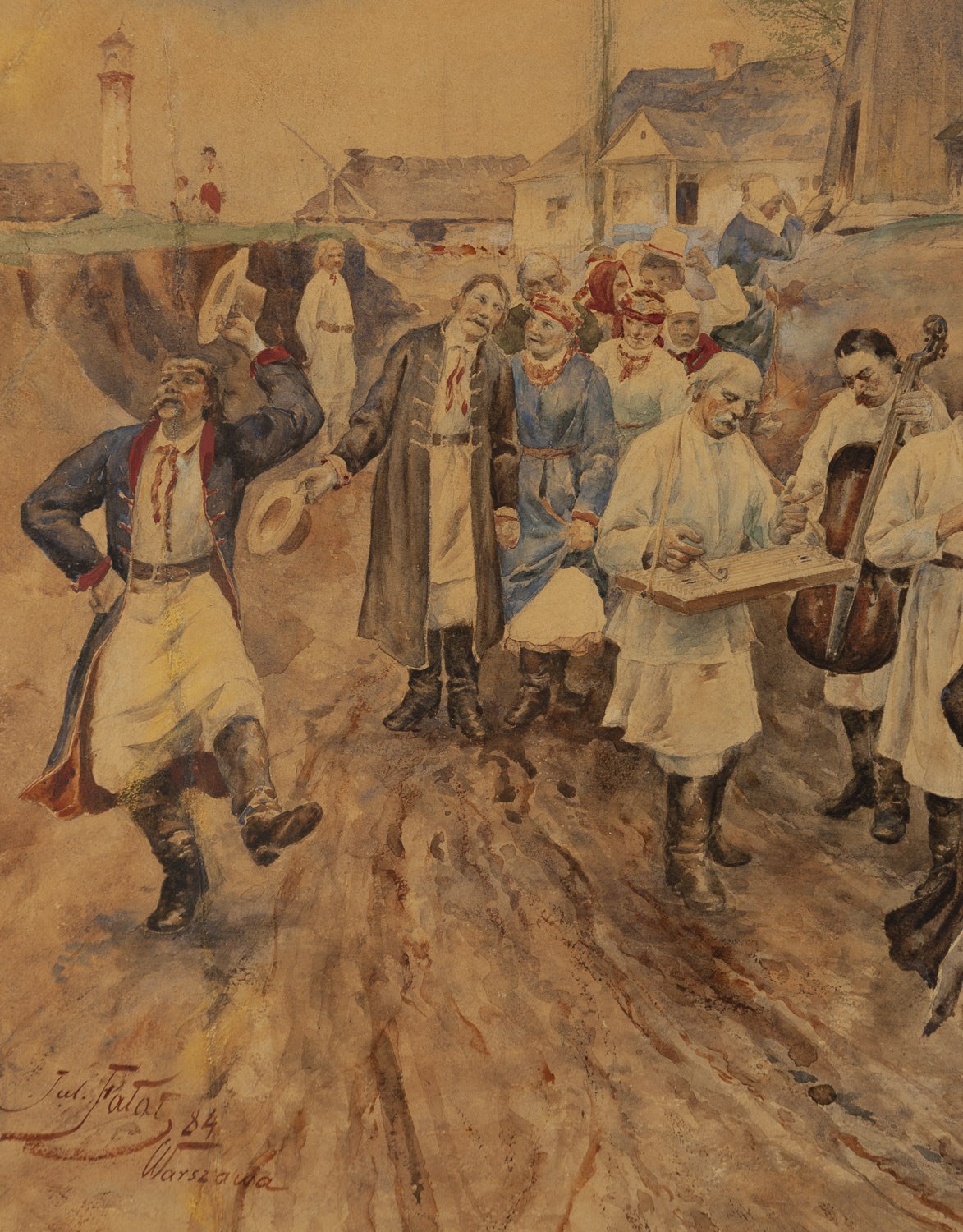
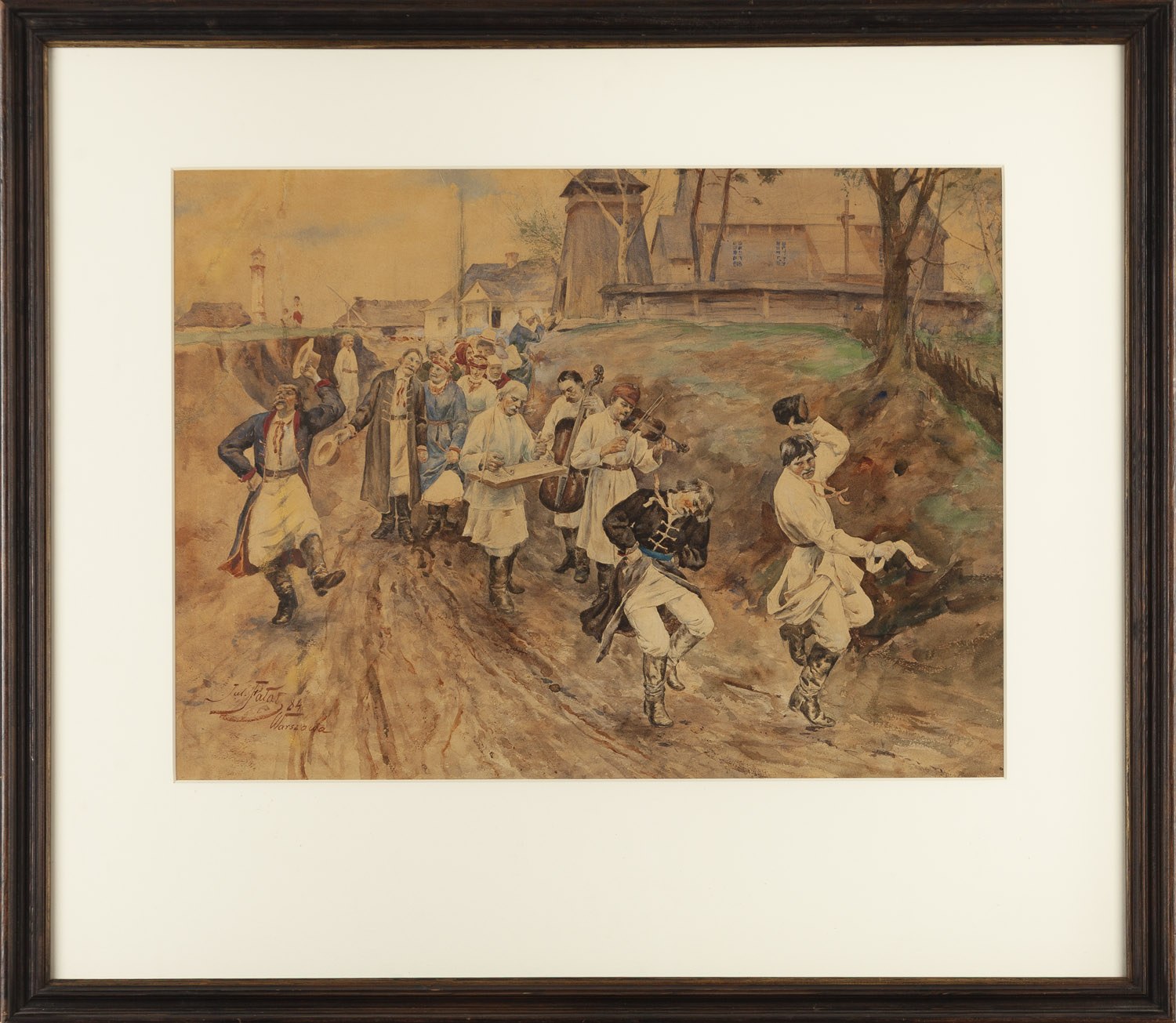
Dimensions: 45 x 61 cm (inside the mat)
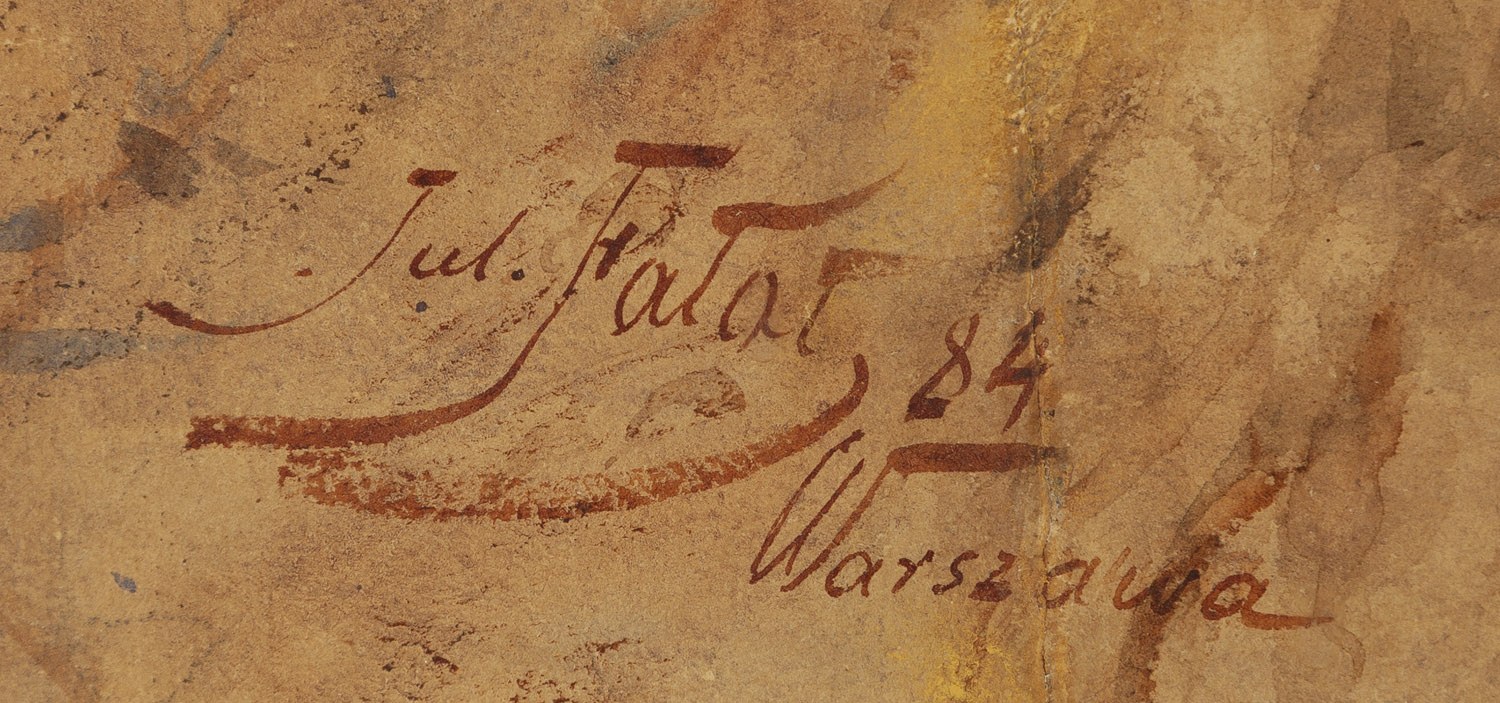
Signed, dated, and inscribed lower left: 'Jul. Fałat 84. Warsaw'
A partially preserved dedication on the reverse
Provenance
private collection, Warsaw
DESA Unicum, May 2020
private collection, Warsaw
Biography
Julian Fałat was a painter and educator—one of the most outstanding Polish artists of the turn of the 19th and 20th centuries. He was a member of Polish and European artistic associations as well as the Royal Academy of Fine Arts in Berlin. He was repeatedly awarded medals at international exhibitions for his paintings. From 1869 to 1871, he studied at the Kraków School of Fine Arts under Władysław Łuszczkiewicz and Leon Dembowski. He continued his studies at the Munich Academy under Alexander Strähuber and Johan Leonhardt Raab (1877–80). After completing his studies, he traveled extensively—visiting Paris, Rome, and Spain—and in 1885 he embarked on a trip around the world. In 1886, while hunting at the Radziwiłł estate in Nieśwież, he met the future German Emperor Wilhelm II—for whom he subsequently worked in Berlin as a court painter from 1886 to 1895. He was one of the founders of the Polish Artists’ Society “Sztuka.” After returning to Poland, he served as director of the School of Fine Arts in Kraków (1895–1910) and, from 1905 to 1909, as rector of the institution. After retiring in 1910, he settled in the village of Bystra near Bielsko-Biała. He was an outstanding watercolorist and also painted in oils. In his early career, he worked in the realist style; over time, he lightened and enriched his palette, and in his watercolors he introduced flowing patches of color. He became famous as a painter of hunting scenes, most often set in winter landscapes; he also painted landscapes, rural genre scenes, portraits, and cityscapes.