Dimensions: 41 x 28.7 cm
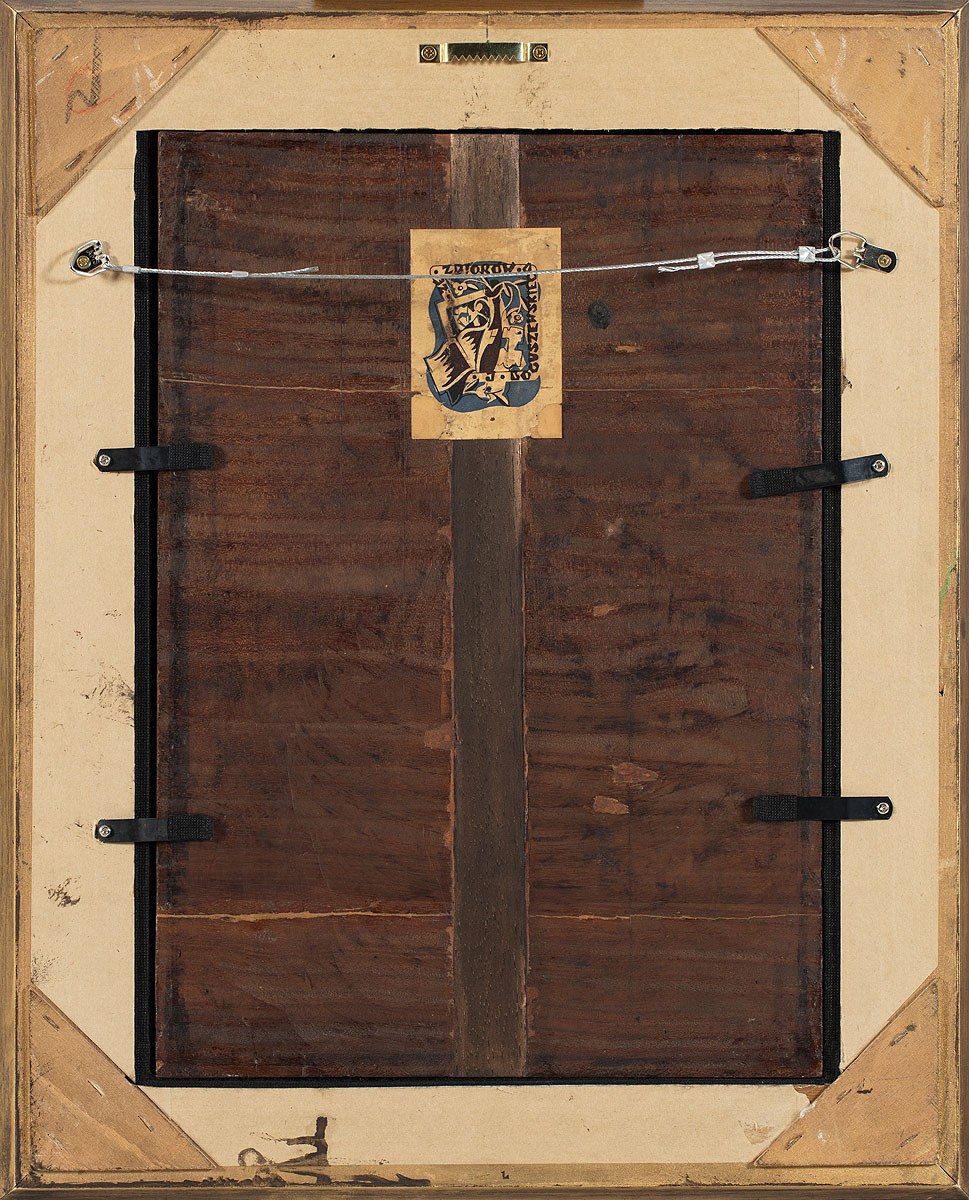
Signing: on the reverse side, ownership sticker: from the collection of J. Boguszewski
Provenance
Warsaw, private collection (since 1980s) Warsaw, collection of Józef Boguszewski
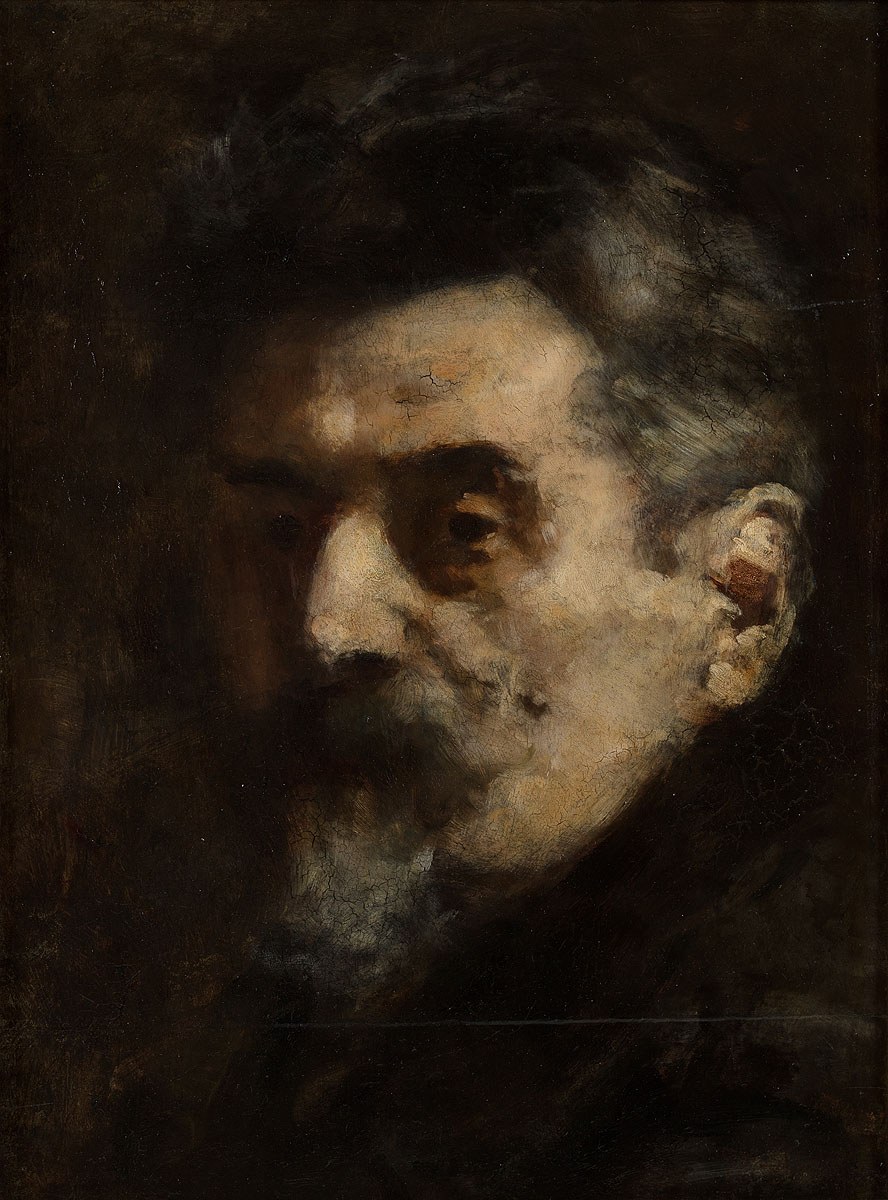
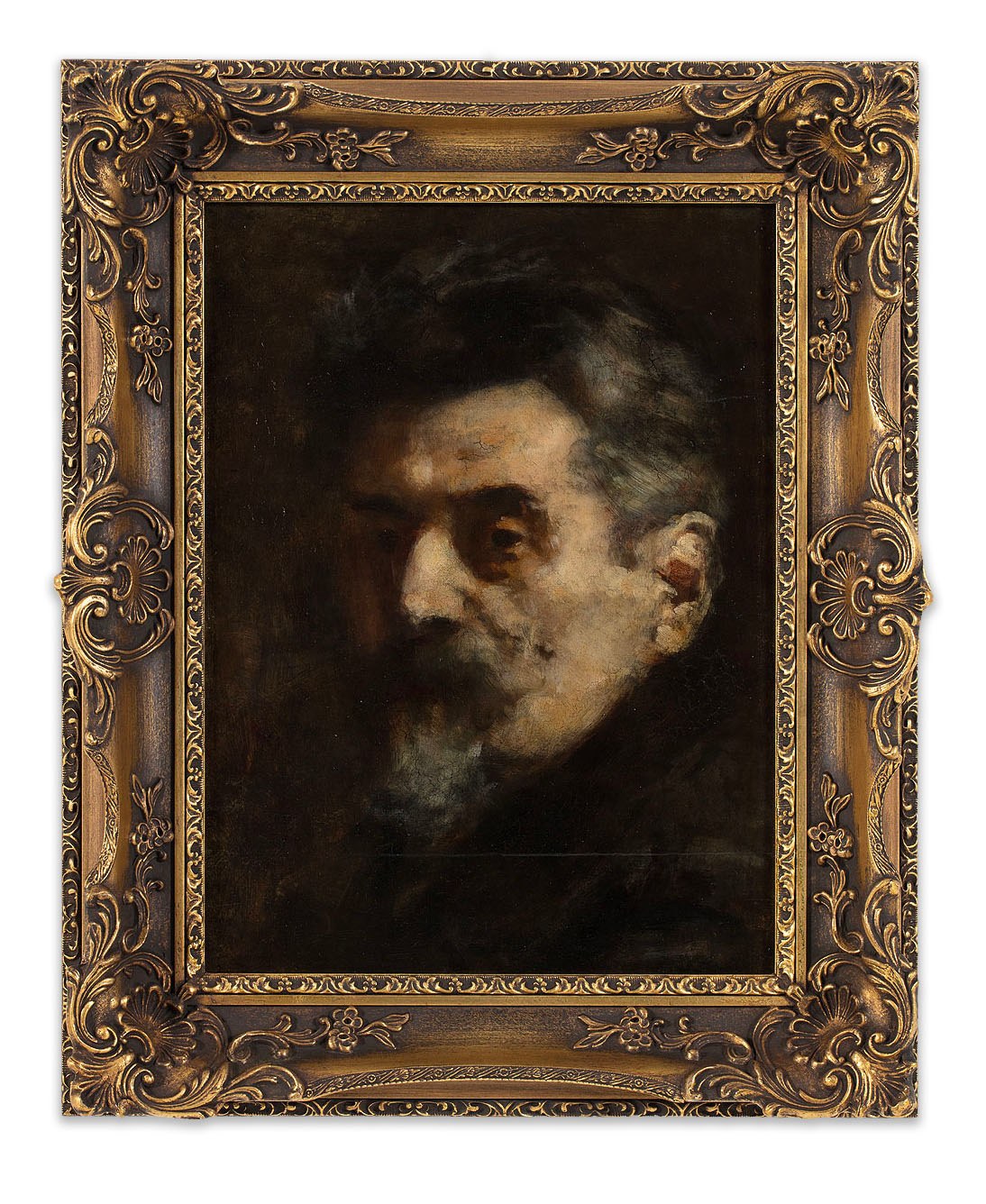
Franciszek Żmurko - one of the most popular salon painters of the late 19th and early 20th centuries - became famous as a master of sublime Art Nouveau sensuality and a virtuoso of feminine beauty. Although he is primarily known for his portraits of ladies and imaginative Orientalist compositions, he also left behind several self-portraits. The artist was also fond of photographing himself, probably not only for professional reasons: the photos also acted as a personal record of the passing of time, allowing him to observe his own physiognomy in the changing times. An analysis of these representations - both paintings and photographs - suggests that the offered self-portrait was created towards the end of Zmurka's life, around 1910.
The painting shows a mature man with partially graying hair, a distinctive pointed beard and a curled mustache. The strongest accent of the composition is his eyes: penetrating, intelligent, emerging from the twilight, emphasized by the contrast of light falling on his face. Zmurko paints himself impasto - with strong, precise brushstrokes, while the background and parts of his hair and clothing remain worked out more loosely, lasered, almost immersed in shadow. This play of light and dark gives the portrait an aura of concentration, seriousness and slight melancholy.
The painting comes from the collection of Jozef Boguszewski (1901-1986) - a firefighter, fire instructor of the Florian Union, and privately a great art enthusiast and collector. Boguszewski collected paintings, prints and exlibrises, and his many contacts testify to his close relationship with the most prominent historians and artists of the era. On the pages of his diaries and stammbuchs we can find entries by such figures as Stanislaw Lorentz, Kazimierz Michalowski, Mieczyslaw Wallis, as well as Kazimierz Pochwalski and Marian Mokwa. During World War II, Boguszewski served in the fire department in besieged Warsaw and was active in the underground. In 1945, he settled in Nieborów, where some of the staff of the National Museum in Warsaw found refuge. According to accounts, he was to participate with Stanislaw Lorentz in securing monuments in the Recovered Territories. It was in this environment - museum workers and art experts - that Boguszewski came into possession of the presented self-portrait of Żmurka, most likely received as a gift.