


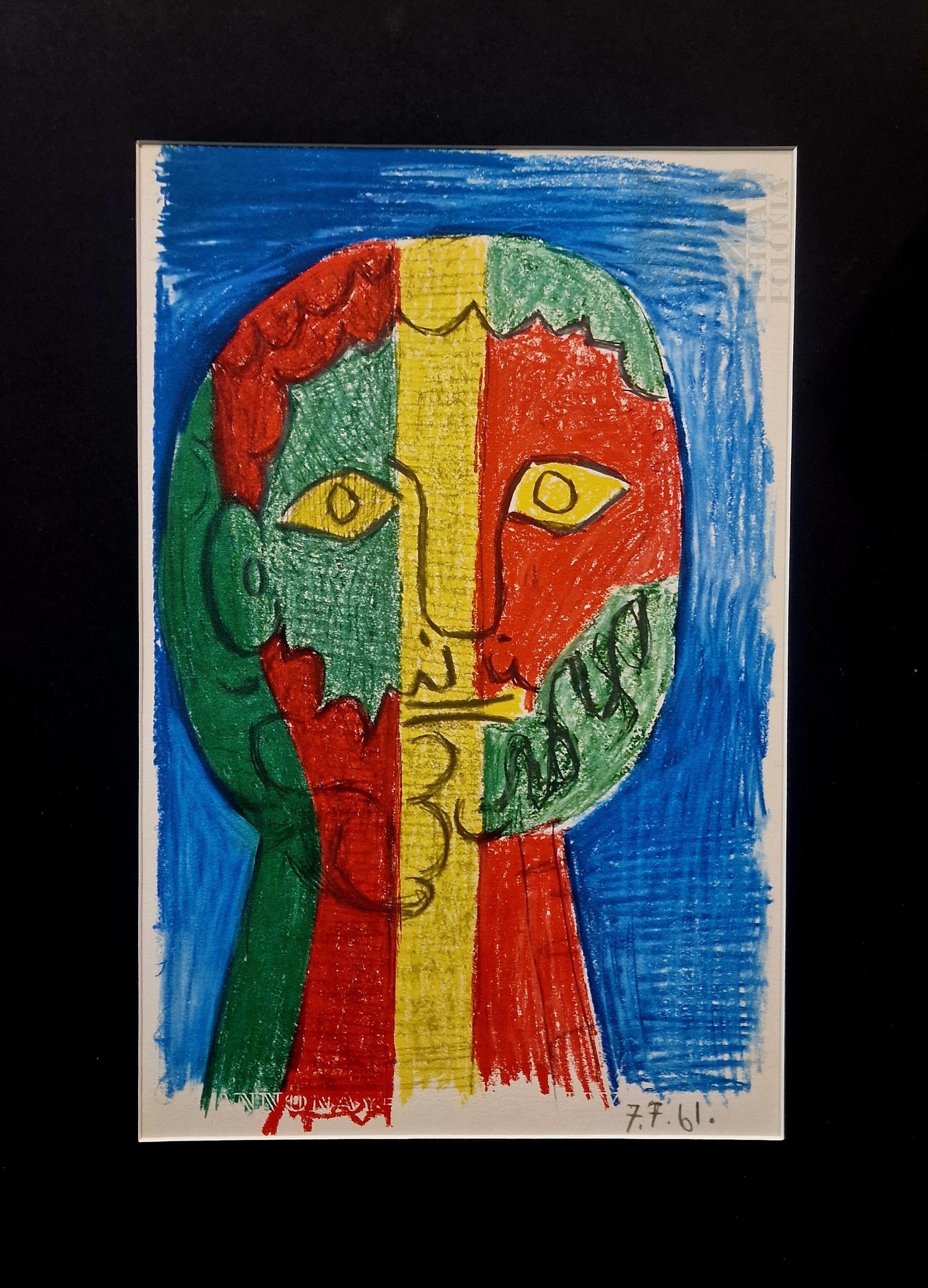
Color lithograph on Arches vellum paper, 38 x 24 cm (inside the passe-partout measuring 48 x 36 cm); dated lower right: 7.7.61; an exclusive edition funded by Banca Popolare di Milano. Publisher: Arti Grafiche Milanesi; produced at the Atelier Fernand Mourlot.
Pablo Picasso’s series titled “Luncheon on the Grass” (orig. “Le Déjeuner sur l’herbe”) is an extensive series of variations in which the Spanish master creatively engaged with Édouard Manet’s monumental and, for its time, controversial painting of the same title, known in Poland as “Breakfast on the Grass.”
The series was created mainly between 1959 and 1962 (though some works are dated as early as 1954, when the sketchbook was first created, and as late as 1964). Picasso created 27 oil paintings, over 150 drawings, sketches, lithographs, and linocuts.
Picasso was fascinated by Manet’s painting, which caused a scandal in Paris in 1863 and marked a turning point in modern painting. Through his variations, Picasso engaged in a dialogue with Manet and his approach to the subject of the nude and composition, while incorporating these motifs into his own unique artistic language.
In his series of works, Picasso subjects Manet’s original painting to a radical transformation in accordance with his post-Cubist aesthetic: he retains Manet’s main compositional scheme— two clothed male figures and a nude woman in the foreground, along with another female figure in the background bathing in a stream. Manet’s realism and treatment of light are replaced by Cubist—and at times Expressionist—deformations. Picasso employs a more intense, often brighter and simplified color palette, differing from Manet’s tones.
A unique aspect of the series is the realization of Manet’s scene in the form of outdoor sculptures. Picasso created models, which were then realized on a large scale by the Norwegian artist Carl Nesjar using concrete and sandblasting (e.g., the sculpture at Moderna Museet in Stockholm). The “Lunches on the Grass” series is a testament to Picasso’s late yet intense creative output, in which he demonstrated his freedom to draw from tradition while simultaneously deconstructing and transforming it.
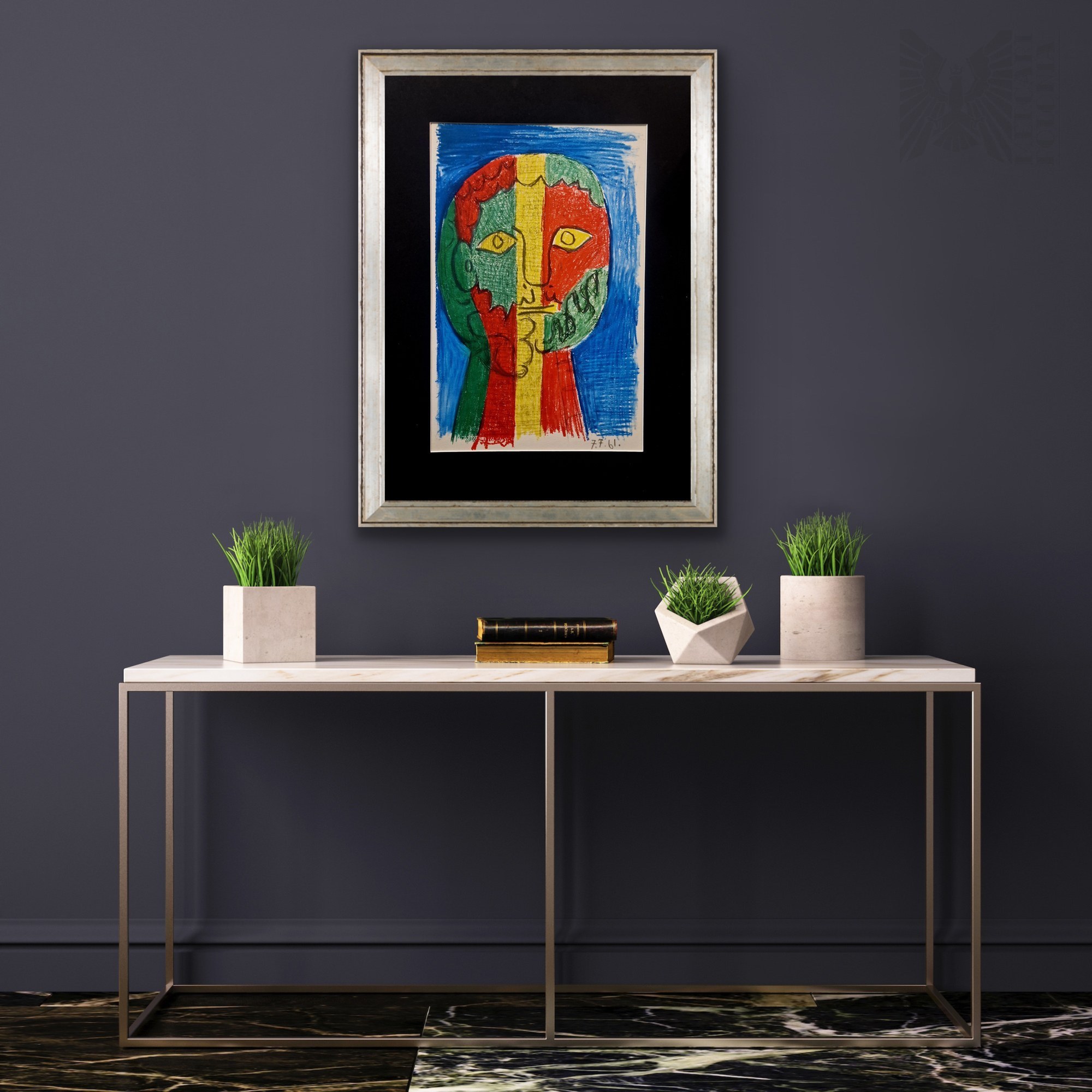
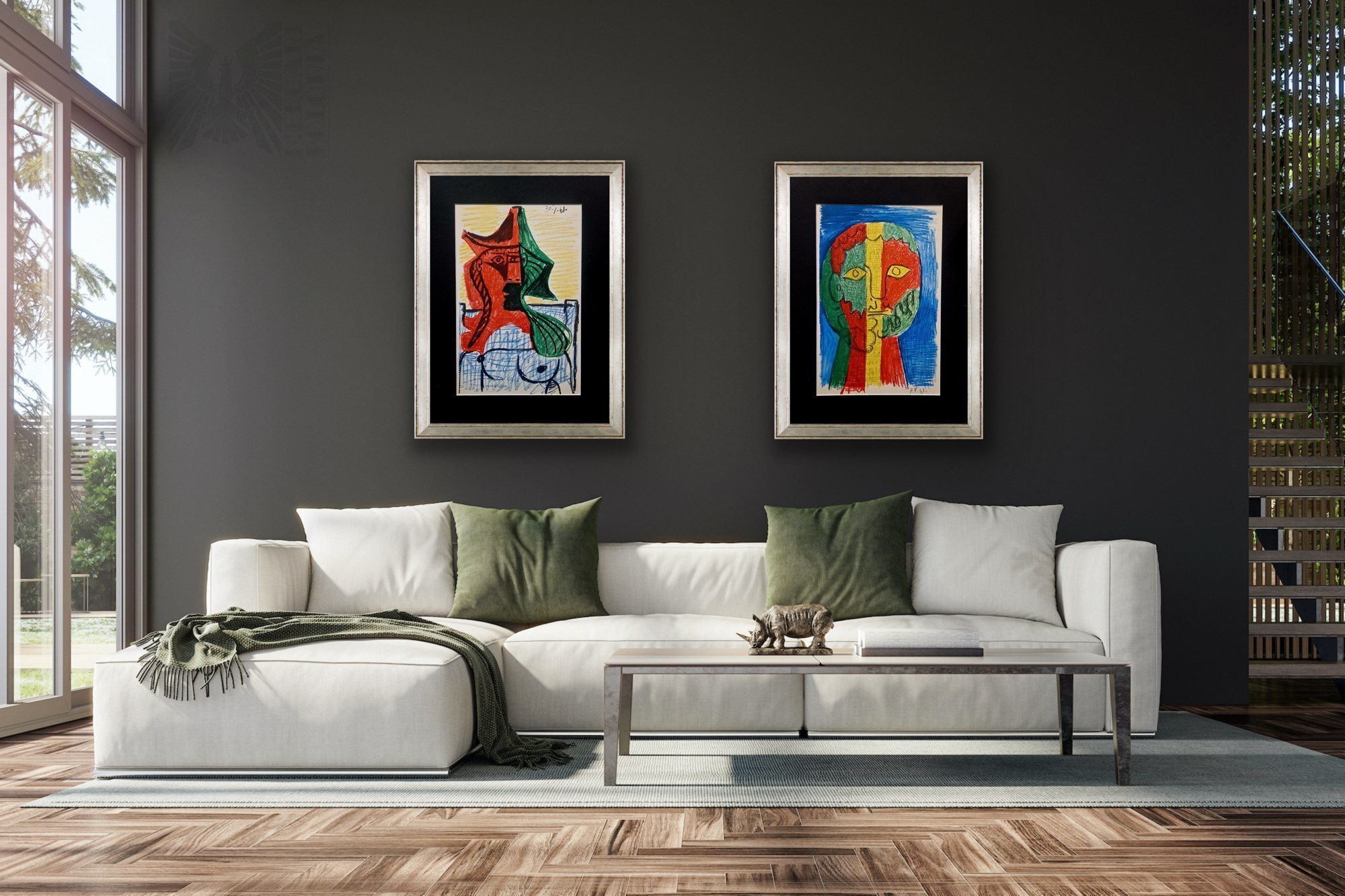
The frames shown in the renderings are for illustrative purposes only and do not constitute a commercial offer.











हाल ही में देखी गई
लॉट लिस्ट देखने के लिए कृपया लॉग इन करें
पसंदीदा
लॉट लिस्ट देखने के लिए कृपया लॉग इन करें